
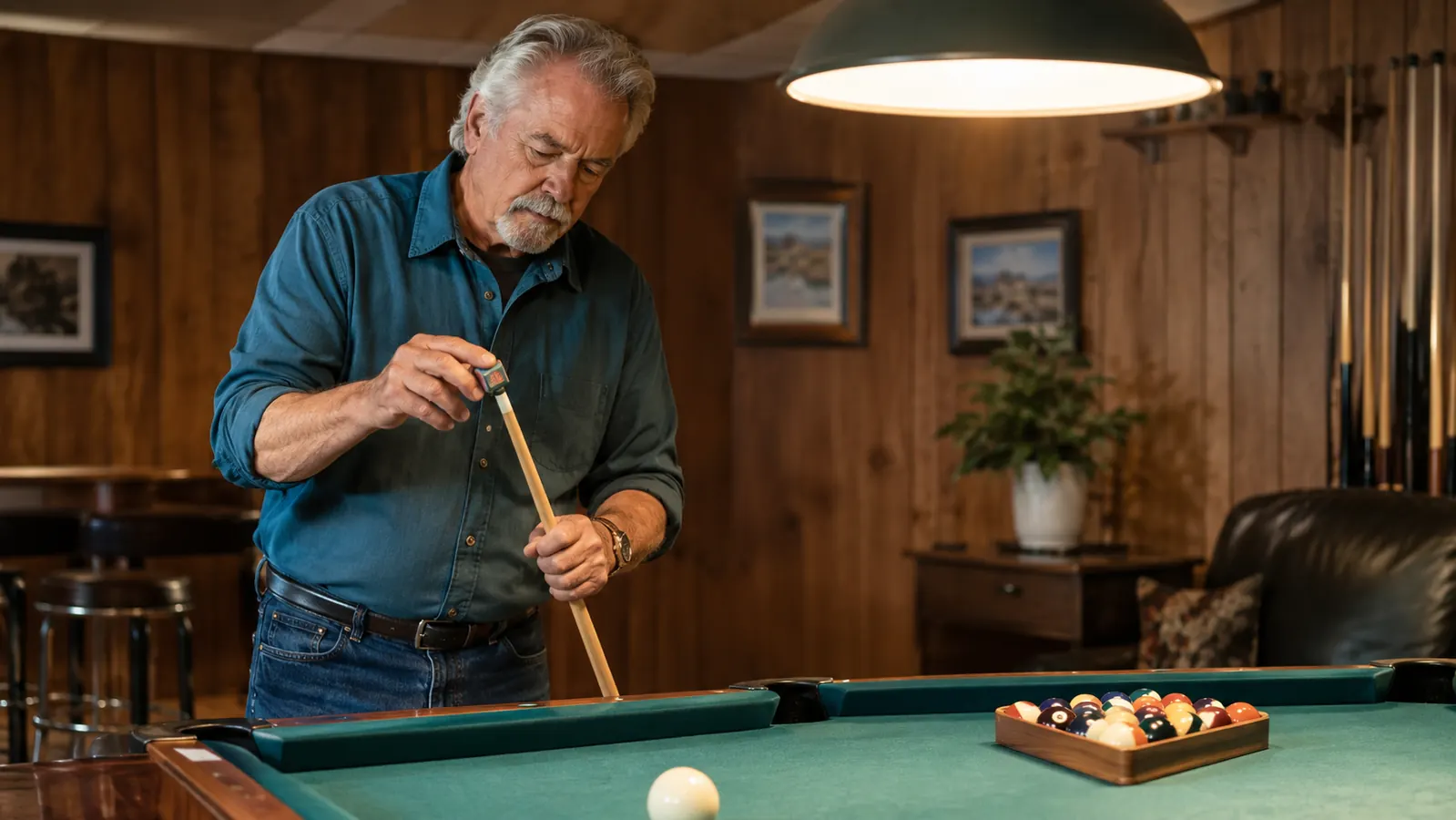
Twenty years of Tuesday night 8-ball, and for most of them I shot with whatever crooked house cue was left in the rack. You know the one. The tip looks like a mushroom, the shaft has a dent where somebody dropped it, and the joint works loose every third shot. I figured that was just how pool felt. Then I bought my own, a CUESOUL Rockin, 58 inches and 21 ounces, and the first thing I noticed was not that I suddenly ran racks. It was that the cue stopped changing on me between shots. That is the whole argument for a two-piece maple cue, and I will make it ten times below.
Here is what nobody tells you at the hall. A bar stick is built to survive, not to shoot. Every part of it is a compromise made by somebody who assumed it would get dropped, stolen, or leaned against a wall for a year. A cue you own does not have to make those compromises. It just has to be straight, and stay that way.
The cue I screw together every Tuesday
58 inches, 21 ounces, a kiln-dried maple shaft, a carbon fiber ferrule and a stainless steel joint that stays tight. This is the CUESOUL Rockin, and it is the one thing in my bag I stopped thinking about.
Amazon Check Today's Price on Amazon →The joint is the part you are actually paying for
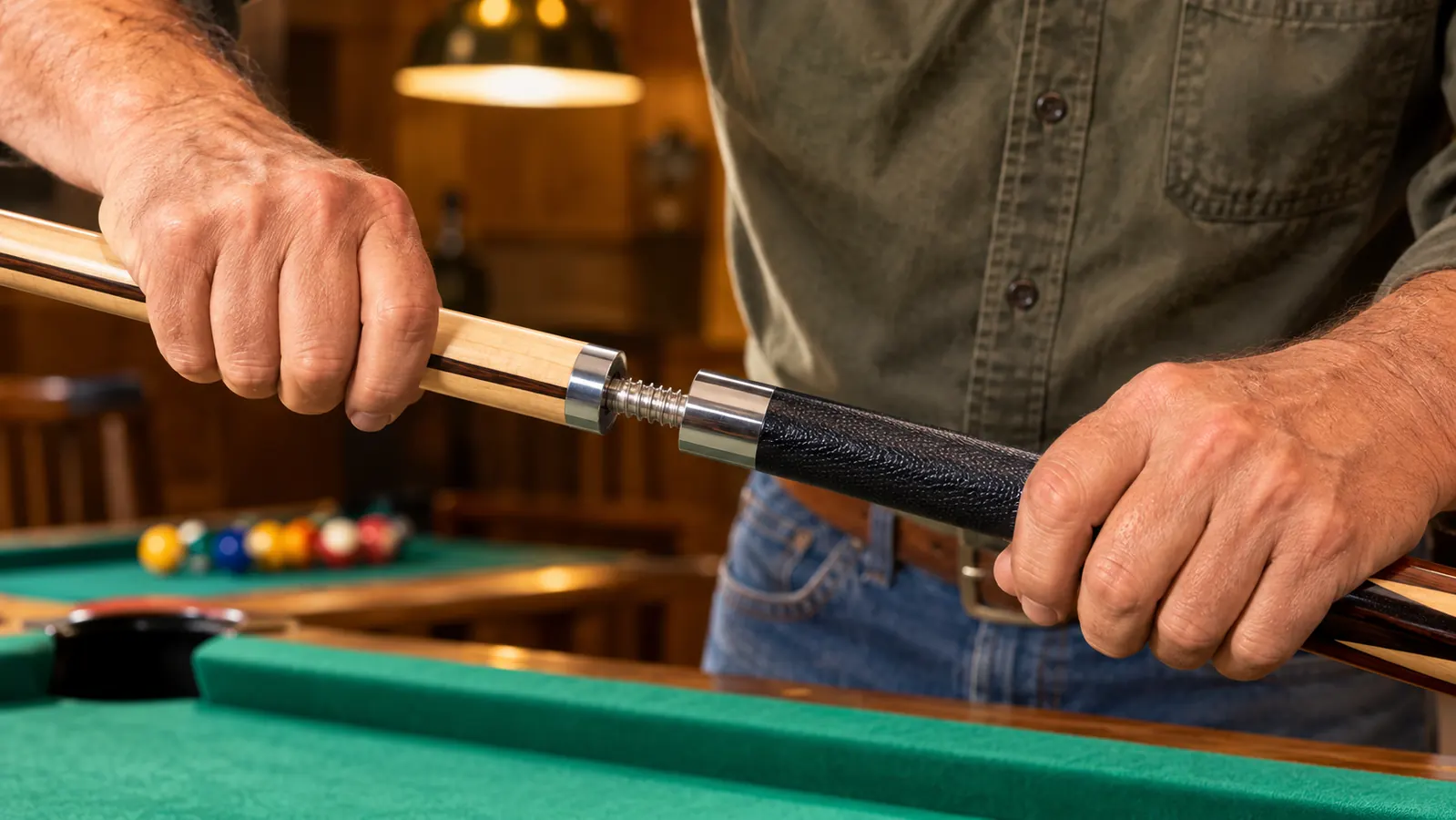
A house cue is one piece of wood that has been beaten by everyone in the building. The one I used had a joint that loosened every few shots, and when a joint loosens, the tip is no longer pointing where you think it is. The Rockin uses a stainless steel M/18 joint. Screw it together and it stays. That sounds like a small thing until you miss a straight-in nine because the cue shifted a quarter inch in your grip and you never felt it happen. The joint is not a convenience feature. It is the reason the front half of the cue can be straight at all.
A 12.75mm tip with a carbon fiber ferrule hits the same way twice
The tip on this cue measures 12.75mm, which sits in the middle between a skinny snooker tip and the fat pill on a bar cue. It is forgiving enough that a slightly off-center hit still sends the ball roughly where you wanted. Behind the tip is a carbon fiber ferrule, and that layer is what passes the hit into the shaft. Carbon fiber does not soak up moisture the way plain wood does. What you get is a hit that feels close to the same in July as it does in January, which is more than I can say for the cue I used for fifteen years.
The shaft is kiln-dried North American maple, not a painted question mark
You cannot tell what a bar cue's shaft is made of, because it has been painted, lacquered and dented into anonymity. CUESOUL uses a shaft of hand selected, kiln dried North American maple. Kiln drying pulls the moisture out before the wood is turned, so the shaft is less likely to wander as the seasons change. My table lives in a basement on Long Island, and a basement is a damp place. A year in, I have not had to fight the shaft. That is the only test I really care about.
The Irish linen wrap does one job and does it well
My hands sweat in the summer. Always have. On a lacquered bar cue that means the butt slides in your grip right as you accelerate through the ball. Irish linen wrap absorbs it. The cue stays put in your hand without you squeezing harder, and squeezing harder is the most common thing I see in league players who cannot figure out why they keep missing. It is a texture, not a technology. But it changes the shot, and you give up nothing to have it.
58 inches and 21 ounces is the size most players should be shooting
There is a reason the standard cue is 58 inches. Shorter and you are stretching at shots you should be able to reach comfortably. Longer and the cue starts to feel like a fishing rod on the follow through. At 21 ounces the Rockin sits in the heavier half of the normal range, which suits a player who likes to let the cue do the work on the break and on long draw shots. I am five foot ten and it fits me. My son Mike is taller and shoots it fine. It is not a specialty size, and that is the point.
You stop relearning your own cue every week
This is the one that actually changed my league night. When you pull a different house cue out of the rack every Tuesday, your brain has to recalibrate. Different weight, different tip, different amount of squirt on the cue ball. You never build the feel that tells you how far off center you can hit before the ball drifts wide. One cue, week after week, and that calibration finally sticks. It took me about two months to trust it. Now I know where the cue ball is going before I get down on the shot.
Two pieces means the shaft survives the trip
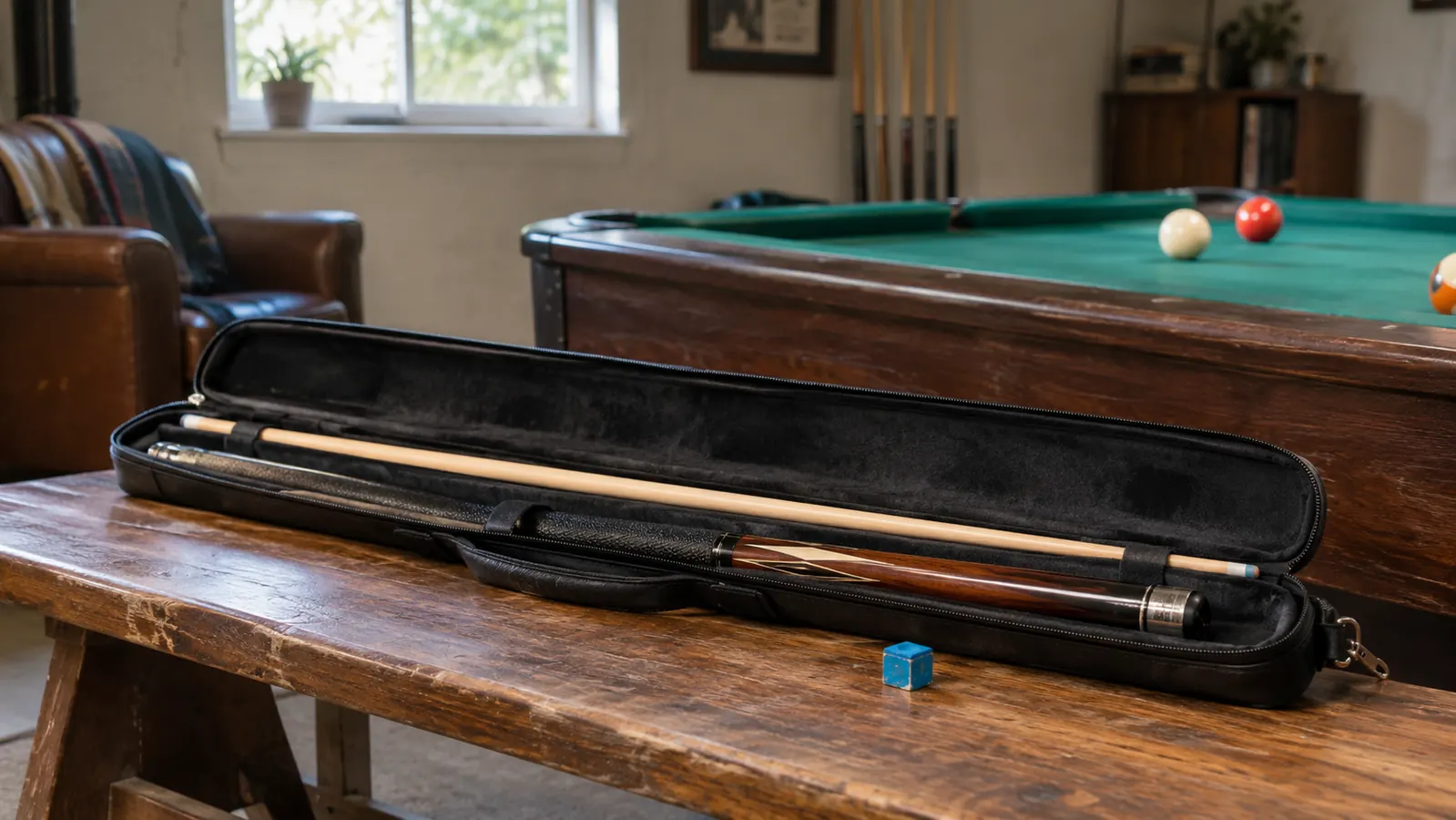
A one-piece cue lives in the corner of the room and gets knocked over. A two-piece cue comes apart, goes in a case, and rides in the trunk without the shaft leaning on anything. Storage is not a glamorous reason to buy something, but it is a real one. My old cue sat against the basement wall and picked up a bow I did not notice for a year. Now the Rockin lives in the bag with a couple of cubes of chalk and nothing else, and it goes back together dead straight.
The butt is dried hardwood, so the balance does not move around
The butt of the Rockin is imported dried hardwood. Dried matters. Green wood keeps moving after it is shaped, and when the butt moves, the weight sits somewhere different in your hand than it did last month. A cue whose balance point drifts is a cue you cannot trust on a soft touch shot. I have had this one through two humid summers in a basement and the balance feels the same to me now as it did in the first week. Not exciting. Exactly what you want.
The first thing I noticed was not that I ran more racks. It was that the cue stopped changing on me between shots.
The feedback tells you what your stroke actually did
A dead bar cue hides your mistakes. The hit feels like nothing, so you learn nothing from it. A maple shaft with a proper ferrule and a 12.75mm tip sends back a clear signal. Hit it fat, you feel it. Steer the cue, you feel that too. For the first month I owned this cue I was worse, because I could suddenly tell how sloppy my stroke had gotten. Then I fixed some of it. Gear does not make you a better player. It stops hiding the information you need to become one, and that is the most honest thing I can say about any cue.
After a while you stop thinking about the cue at all
The goal was never to own a nice cue. The goal was to get down on a shot and think only about the shot. Somewhere in the second year with the Rockin I noticed I had stopped noticing it. It comes out of the bag, it screws together, it feels the way it felt last week, and my head is free to worry about the angle instead of the equipment. That is what a two-piece maple cue gives you over a bar stick. Not talent. Just one less thing in the way.
What I'd Skip
If you are going to spend anything on your game, spend it here and skip the rest. I have watched teammates buy a low deflection shaft before they could draw a ball reliably, and it did not help them, because the problem was their stroke. I would skip the gloves, the chalk arguments, and the tip tools that cost more than the tip. A cue like this plus a case and a cube of chalk is the whole kit. Everything past that is a hobby inside the hobby.
I would also skip the idea that a cue fixes your game. It does not. It removes excuses. My break is still mediocre and my safety play is still the weakest part of my night. The cue just means that when I miss, I know it was me. The tip that ships on it is fine, and I replaced mine after about a year, which is normal for anybody who plays weekly. That is the only maintenance I have done beyond wiping the shaft down.
One less thing between you and the shot
You do not need a custom cue. You need one that screws together straight, weighs 21 ounces, and hits the same way every week. That is the CUESOUL Rockin, and it is still the only cue in my bag.
Amazon Check Today's Price on Amazon →