
Twenty years of Tuesday night 8-ball teaches you exactly what a bad cue costs you. Not money. It costs you the two inches of draw you needed to hold position, the cut shot you hit dead center that drifted right anyway, and the slow erosion of trust in your own stroke. I spent most of those years with a house-cue-quality two-piece and blamed my arm for everything. Then I put months into the CUESOUL Rockin, a 58 inch, 21 ounce cue from the Rockin Series, and a good number of shots I used to call my fault turned out to be the stick.
I am not going to tell you this cue made me a better player. Practice did that, and it took years. What I will tell you is what actually changed at the table: where the cue ball went when I hit it, how often the tip slid off the ball, and whether the thing still felt the same in hour four as it did in hour one. That is the whole job of a cue. Everything else is decoration. Below is what I found over a few months of league nights and weekend practice, including the two things that annoyed me.
The Quick Verdict
A 58 inch, 21 ounce two-piece with a 12.75mm tip that holds its hit all night and an Irish linen wrap that earns its keep in a humid pool hall. The stock tip needed reshaping early and 21 ounces is not for everybody.
Amazon Check Today's Price →The cue I racked with all winter, now with today's price attached
58 inches, 21 ounces, 12.75mm tip, carbon fiber ferrule, stainless steel M/18 joint, Irish linen wrap. Every detail in this review comes off the same cue.
Amazon Check Today's Price on Amazon →How I've Used It
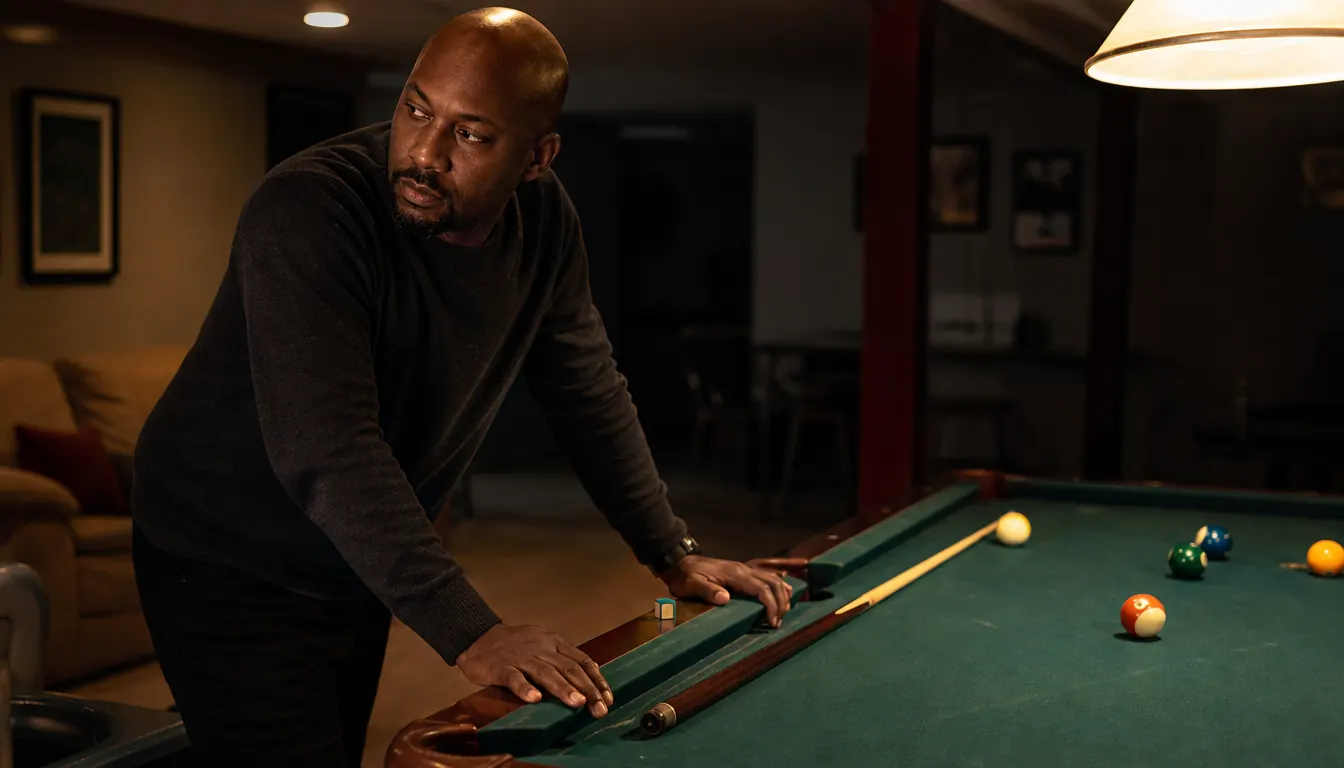
The Rockin lives in my basement next to an 8-foot slate table I bought used about twelve years ago. That table is not fast. The rails are honest, the pockets are tight enough to punish a lazy stroke, and the cloth has enough mileage on it that a cue with a tired tip will announce itself within ten minutes. It is a good place to find out whether a cue is doing its job or just sitting there looking like a cue.
Most of my time with it has been Tuesday nights at the league and weekend practice at home with my son Mike. He is a better shot maker than me and a worse position player, which makes him good company and a bad person to take advice from. League night is four hours on tables I do not control, in a room full of humidity and other people's chalk. Home is where I can actually pay attention to what the cue is doing on a soft shot instead of just trying to make the ball.
I have played it standing up, sitting on the rail between turns, and in a hall that gets warm enough by nine o'clock that your grip hand starts to notice. I have broken with it, though never hard, and I have played far more soft touch safeties with it than anything else. That is a fair test of a cue. Not eight shots at a counter while a salesman watches you.
One note on how I judge these things: I do not care what a cue looks like after the first week. I care whether it plays the same in month four. A cue that feels wonderful in October and dead in February is a cue that cost you a season of not knowing whether the problem was you or the equipment.
What 58 Inches and 21 Ounces Changes on the Table
Fifty-eight inches is the standard length for a reason. It is long enough that you can reach across most of a table without dragging out a mechanical bridge, and short enough that you are not fighting your own shirt on a tight cut. The Rockin is exactly 58 inches, which means the reach you have with any other standard cue is the reach you have with this one. Nothing to relearn about where your bridge hand goes or how far you have to stand from the table.
The 21 ounce weight is where it gets personal. A heavier cue feels steadier on long straight shots because you have more mass working for you, and it feels slower on finesse shots because it takes a more deliberate stroke to move that mass. Twenty-one ounces sits at the heavier end of what most players carry. On my table that showed up as steadier speed on the opening lag and on long safeties, and as a little more work required on the soft draw shots where I want the cue ball to come back four inches and stop.
If you have played 19 ounces your whole life, 21 will feel strange for about a week. Not bad. Strange. Your speed will be off on the first two sessions and then it will come back, and the shots where the extra weight helps will start to show up. Give it a few weeks before you decide anything. I have watched more than one league player write off a perfectly good cue because the first hour felt unfamiliar.
What the length and weight do together is make the cue feel planted. There is no wobble at the end of a long stroke and no sense that you are steering something light through the ball. For a player who tends to quit on the stroke, that is worth more than any spec on the page. For a player with a short, quick punch stroke, it will feel like work.
The Tip and Ferrule: Where Cue Ball Control Actually Comes From
The spec that matters most to me is the 12.75mm tip. That is a middle-of-the-road diameter and it is the right kind of middle. Under 12mm you get more precision and less margin for error. Over 13mm you get more forgiveness and a muddier sense of where the ball is going to go. At 12.75mm the Rockin gives you a tip wide enough that a slightly off-center hit still catches the ball, and narrow enough that you can see your aiming point clearly on a long cut. That combination is why my miscues dropped off after the first month, and it was not because I suddenly got better.
The ferrule is carbon fiber, which is not what you usually find on a cue in this range. A ferrule is the collar between the shaft and the tip, and it takes a beating on every single shot. Wood ferrules can crack, they take on moisture, and they accumulate chalk dust in the grain over a season. Carbon fiber holds its shape and does not soak anything up, so the front end stays consistent. What I noticed in practice is that the hit felt the same in month four as it did in month one. It did not go soft. It did not start clicking on off-center hits.
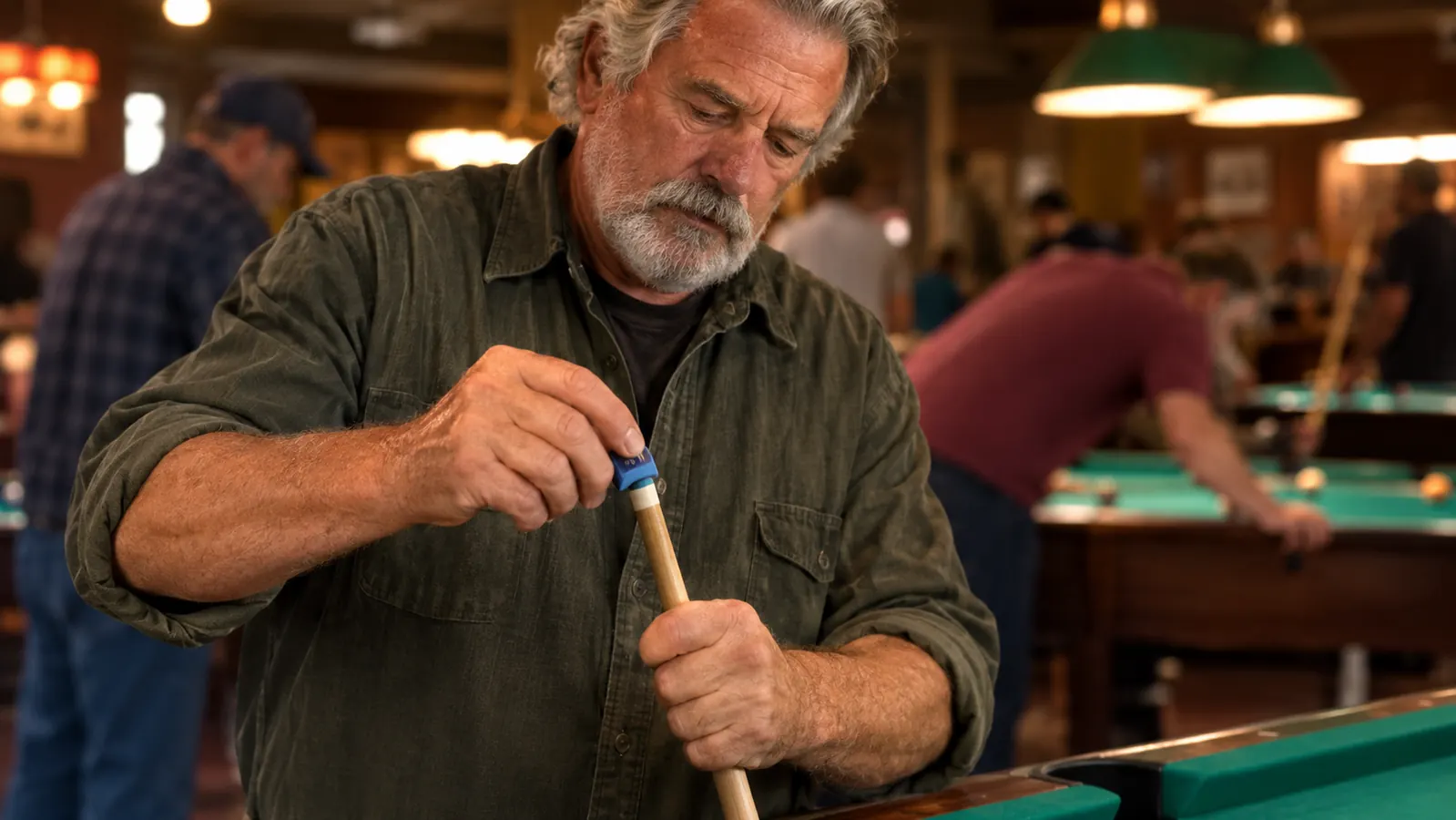
The tip that came on it I reshaped twice in the first month. It was not a bad tip, it was just softer than I like, and a soft tip on a heavier cue can mushroom on you if you play several nights a week. Once I scuffed it and let it settle, it held chalk fine and I stopped thinking about it. If I were handing this cue to someone new to the game, I would tell them to have the tip looked at by whoever does tips at their hall, just to get the radius checked. Five minutes and a couple of bucks, and it saves you a month of wondering why your draw shot is inconsistent.
The Joint, the Butt, and the Maple Shaft
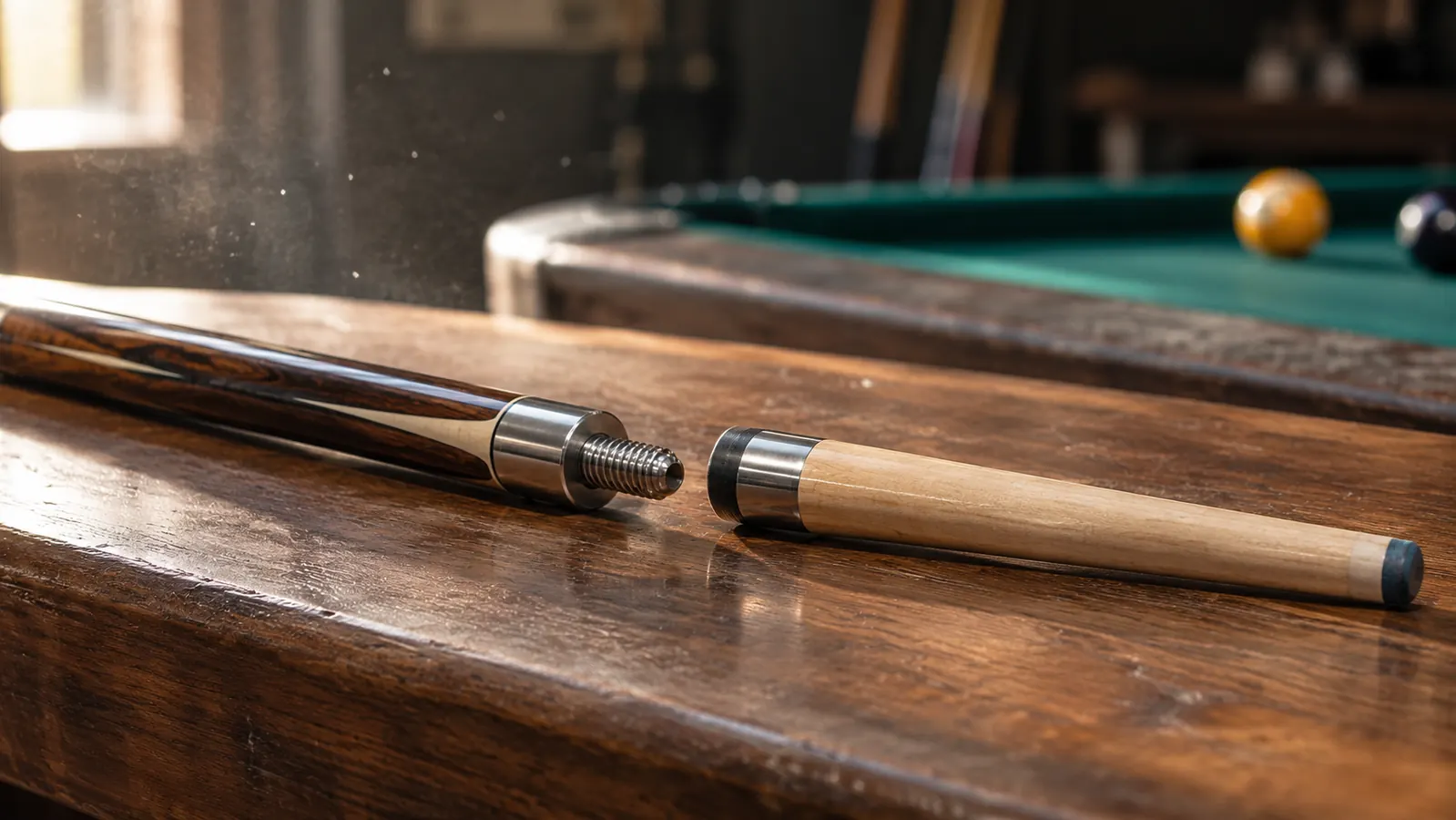
The joint is stainless steel with an M/18 thread, which is the common pitch. That matters more than people give it credit for. It means the shaft and the butt come apart and go back together the same way every time, with no soft spot and no wobble, and it means you are not locked out of buying a replacement shaft later from another maker. A cue with a proprietary joint is a cue you marry. This one you can date around with if you ever want to.
The shaft on the CUESOUL is North American maple, kiln dried and hand selected according to the listing, and the butt is imported dried hardwood. What that means at the table is a shaft with a straight, quiet hit. Maple is the default for a reason. It is stiff enough to move the cue ball without feeling boardy and it does not have the dead, thuddy feel that some cheap laminated shafts have when you hit off center. I rolled it on the table the day it arrived and it was straight. I checked it again weeks later. Still straight.
The cue feels balanced in the hand rather than butt heavy, and that is the difference between a cue that swings and a cue that feels like you are swinging a hammer. I play with my grip a little behind the wrap, which is not textbook, and this cue did not punish me for it. Nothing about the butt end felt clumsy or long.
The Irish Linen Wrap Over a Four-Hour Night
Irish linen wrap is the part of this cue that earns its keep in a pool hall rather than a showroom. Linen absorbs moisture. By the third hour of league night, when the room has forty people in it and the AC is losing the fight, a bare finished butt starts to feel slick and your grip tightens without you noticing you are doing it. The wrap on the Rockin stayed dry and stayed grippy through the whole night, every night I used it. That is a small thing that shows up in your score at the end of the season.
It also does not shred. Linen wrap eventually shows wear where your grip hand sits, and that is normal, and it takes years. Mine has a slight polish where I hold it, which is the wrap doing exactly what it is supposed to do. No fraying, nothing lifting at the edges, no loose ends to pick at during somebody else's turn.
Where It Gives Ground
Two things, and neither is a deal breaker. The first is the tip mentioned above, which is a small annoyance that costs a few minutes with someone who owns a tip tool. The second is the weight. Twenty-one ounces is heavy, and if your stroke is short and slow, this cue will fight you on soft shots until you adjust. I had to learn to hit a few shots with less arm and more patience. That is not the cue's fault, but it is a real adjustment and it is worth knowing before you commit to it for a whole season.
The third honest note is that this is not a custom cue and it does not pretend to be. The finish is even, the joint is tight, the shaft is straight, and the wrap is done properly. But you are not getting a hand-tapered shaft or a butt built to your measurements. If you are at the level where you can feel the difference, you already know that and you are shopping somewhere else. For everybody else, this does the job that actually gets done on a Tuesday night.
I will also say that a cue cannot fix a stroke that quit on the follow-through. If your problem is that you stand up on the shot, no amount of maple and linen is going to help you. This cue removes excuses about equipment. It does not remove the need to practice.
What I Liked
- 58 inch length matches a standard cue, so your reach and stance do not change
- 12.75mm tip gives a clear aiming point without punishing a slightly off-center hit
- Carbon fiber ferrule keeps the front end feeling the same across months of play
- Irish linen wrap stays dry and grippy through a four hour league night
- Stainless steel M/18 joint means you can swap shafts down the road
- Straight maple shaft, rolled on the table when it arrived and checked again later
Where It Falls Short
- 21 ounces is heavy for a player with a short, slow stroke
- The stock tip is on the soft side and needed reshaping early
- It is not a custom cue and it does not feel like one
By the third hour of league night, a slick butt starts to cost you. The wrap on the Rockin stayed dry through the whole night, every night I used it.
Who This Is For
This cue is for the player who shows up every week and has been shooting with whatever was on the wall rack. If you play league, or you have a table in the basement, or you are simply tired of picking up a house cue and finding a different tip every single time, the CUESOUL Rockin gives you one consistent object to build a stroke around. It is also a sensible first real cue for someone who wants a standard length, a standard joint thread, and a tip size that does not push them into a specialty diameter they are not ready for.
It is also for the player who practices at home and wants the cue in the basement to feel like the cue in the hall. Same length, same weight, same wrap, same hit, week after week. That consistency is the entire point, and it is the thing a house cue can never give you.
Who Should Skip It
Skip it if you already play with a cue that has been tapered or fitted to your hand. You will feel the difference and it will bother you, and that is a fair reason not to buy something. Skip it if 19 ounces is your number and you have no interest in spending a month relearning your speed, because you will spend that month whether you plan to or not. And skip it if you are looking for a project cue to customize, because the joint, the wrap, and the shaft are already done properly and there is not much left to change.
If you are brand new to the game and still figuring out whether you even like it, borrow a cue for a few more months first. Gear is not the thing that keeps people playing. The thing that keeps people playing is the first time they run three balls in a row and understand why.
One cue, every Tuesday night, for the next twenty years
58 inches, 21 ounces, 12.75mm tip, carbon fiber ferrule, Irish linen wrap. If your stroke is already decent, this is the piece that stops the equipment from getting in the way of it.
Amazon Check Today's Price on Amazon →