

Twelve years ago I bought a used eight-foot slate table, took it apart in a stranger's garage, and rebuilt it in my basement. For the first few years I cleaned the felt the way most people do: a brush, a vacuum nozzle, and a vague sense that I was taking care of it. I wasn't. I was pushing chalk dust down into the weave and pulling the nap up, then wondering why the table played slow and dull. A teammate on my Tuesday league handed me a bottle of David Hodges' Quick-Clean and told me to throw the brush away. I have not used one since.
Here is what the bottle actually is. A spray and wipe cleaner made for pool table cloth, sixteen ounces, linen scented, chlorine free. Safe on all types and grades of cloth, which matters when you bought your table used and have no idea what is on it. The manufacturer claims a full table in under sixty seconds. The claim that changed how I treat my table is the other one: it extends the life of your cloth by 40 to 50 percent by getting rid of the brushing and vacuuming that wear it out.
Stop brushing chalk into the cloth and call it cleaning
Sixteen ounces of spray, one clean cloth, under a minute per table. Safe on all cloth types and grades, chlorine free, no brushing required.
Amazon Check Today's Price on Amazon →Chalk Is an Abrasive, and It Sits Exactly Where the Balls Roll
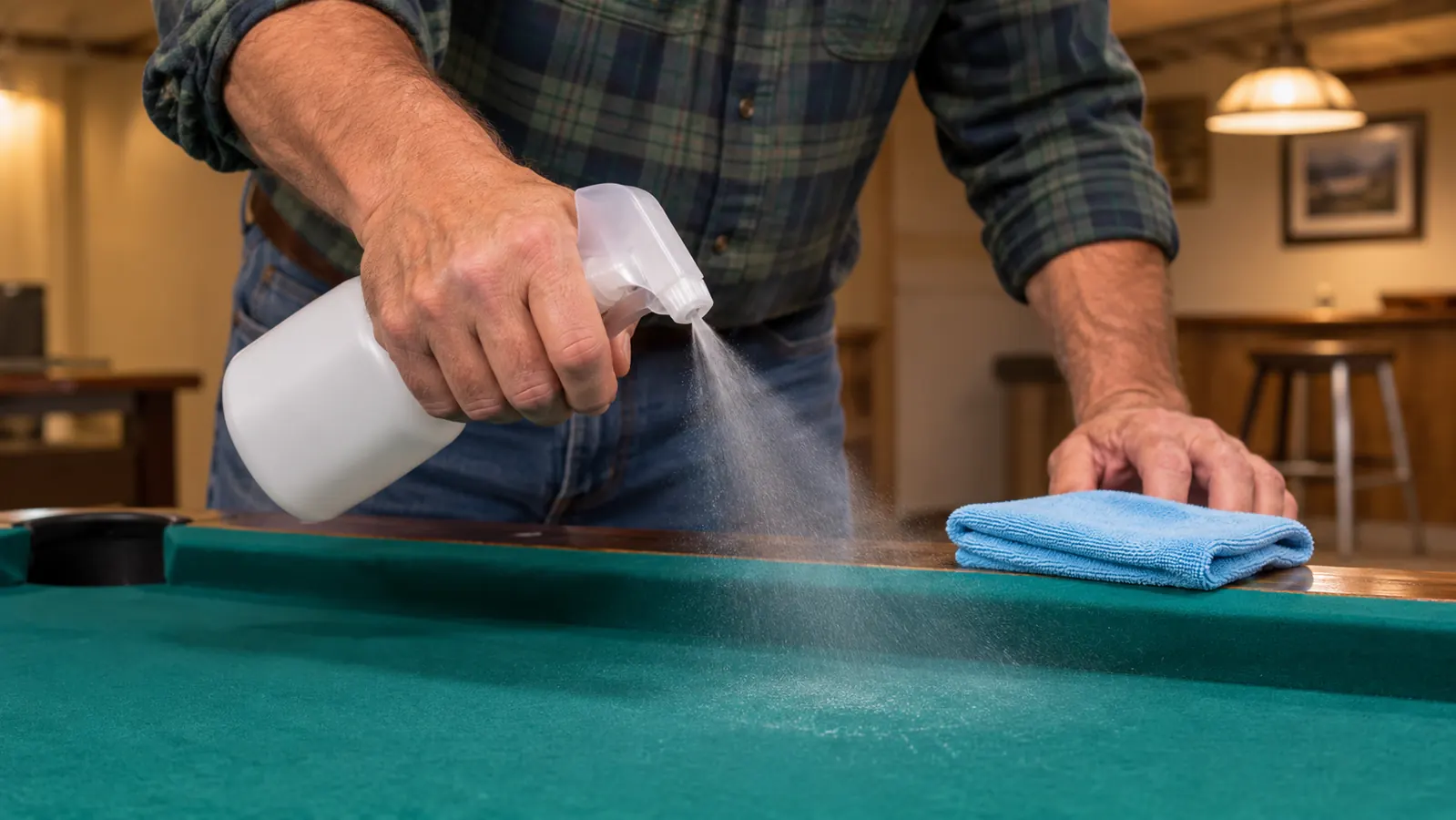
The block on your hand is a mild abrasive by design. That is how it grips the tip. Every time you chalk, a little of it lands on the cloth, and every time a ball rolls through that patch it gets pressed into the weave and dragged along. A brush moves it around the table. David Hodges' Quick-Clean lifts it off the surface so a cloth takes it away instead of grinding it deeper into fibers that have to last years.
Brushing Drives Grit Down Instead of Lifting It Out
Bristles bend when they meet cloth. The tips go into the weave, flick the grit loose, and a good share of it settles right back where it started, only lower. I used to brush before league night and feel productive. What I was doing was redistributing the problem across the whole playing surface. Spraying and wiping works the other direction. The dust comes up to the surface and stays on the cloth in your hand, and then it goes in the laundry.
A Vacuum Nozzle Pulls the Nap Up and Slows the Roll
Vacuuming felt sounds logical until you watch what it does to the surface. Suction lifts fibers, the cloth goes fuzzy, and a ball rolling across fuzz loses speed and wanders. The manufacturer calls out harmful brushing and vacuuming directly, and after years of doing both, I believe them. Wool and worsted cloth both want their nap lying one direction. A nozzle does not care about direction. A wipe does what you tell it to do.
Sixty Seconds Is the Entire Job
I timed it once out of curiosity. Spray, wipe, done, and I was back to racking before the coffee went cold. The manufacturer says under sixty seconds for a table. My basement is not a showroom, so call it a minute and a half when I take my time. Either way it is short enough that I actually do it, which is more than I can say for the brush and vacuum routine I used to put off for weeks at a stretch.
It Adds 40 to 50 Percent to the Life of the Cloth
Cloth is the part of a table you do not want to replace. The manufacturer claims 40 to 50 percent longer life by eliminating brush and vacuum wear, and that lines up with what I see on my own table. I have reclothed mine once in twelve years and I would like to keep it that way. A surface that gets wiped instead of scrubbed keeps its fibers intact longer, and intact fibers are what you are paying for when you buy cloth.
It Brings the Original Color Back Out of Tired Cloth
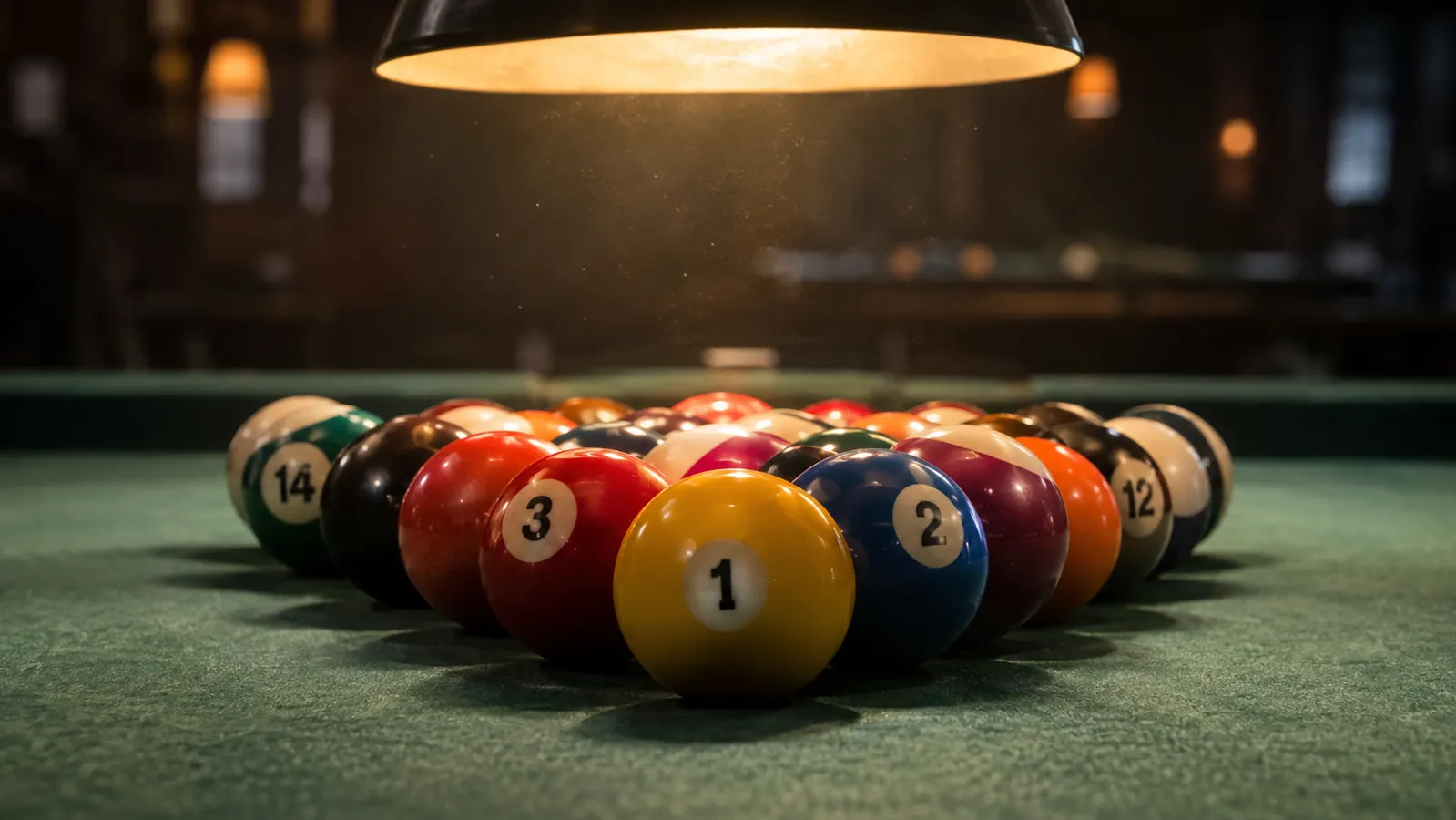
Old cloth does not always need replacing. A lot of what makes it look finished is embedded chalk and dust sitting in the top of the weave, and no amount of brushing gets it out because brushing is what put it there. The listing says the spray brings older cloth back to its original color, and that matched what I saw the first time I used it. The table looked closer to what it looked like when the cloth went on.
It Kills the Slide You Get on Brand New Cloth
New cloth is fast and it slides. You set a ball down and it drifts a quarter inch while you are lining up. The manufacturer says the spray eliminates the table slide you get with new cloth, and I noticed it settle down faster after the last stretch I did. Less drift means your speed control means something again, instead of you adjusting your stroke to compensate for a surface that will not hold still.
Clean Cloth Plays at the Speed It Was Made to Play
Every table has a speed. Dirty cloth slows it down and makes it unpredictable, and unpredictable is worse than slow. When the surface is clean and consistent, the same stroke gives you the same roll, and that is the entire reason to practice at home. You cannot learn speed control on a surface that changes week to week. You can learn it on one that plays the same on a Tuesday night as it did on Sunday morning.
It Is Safe on Whatever Cloth You Actually Have
I do not know the grade of cloth on my table. I bought the table used from a guy who did not know either. What I do know is the bottle is chlorine free and rated for all types and grades, so I am not standing there guessing whether I am about to ruin a surface I would rather not replace. If you are the type who reads the back of a bottle before you use it, this one gives you a straight answer.
A Minute After League Night Beats a Big Production Once a Season
Most home tables get cleaned in a panic before company comes, then nothing for months. That is backwards. A quick spray and wipe with David Hodges' Quick-Clean after a Tuesday of eight ball, while the chalk is still sitting on top instead of worked in, takes a minute and keeps the table in the same shape all year. Small and often beats big and rare, same as anything else worth maintaining. My table has not had a bad month since I started doing it this way.
What I'd Skip
Since we are being straight with each other, here is what I would not bother with. Skip the brush entirely, and skip the vacuum nozzle on felt. Skip the scrub instinct too, because scrubbing is just brushing with more effort behind it. Wipe, do not scrub, and let the cloth do the lifting. I would not buy a kit with six accessories either. One bottle of David Hodges' Quick-Clean and a clean cloth covers it. And I would keep the spray on the cloth, not on the rails or in the pockets, because cloth is the only thing on that table that needs it.
The brush was never cleaning my table. It was moving the grit around and wearing out the cloth while it did it.
One bottle, one clean cloth, and the brush goes in the trash
Sixteen ounces goes a long way at a minute per table. Safe on all types and grades of cloth, chlorine free, and it does the one job you actually need done.
Amazon Check Today's Price on Amazon →