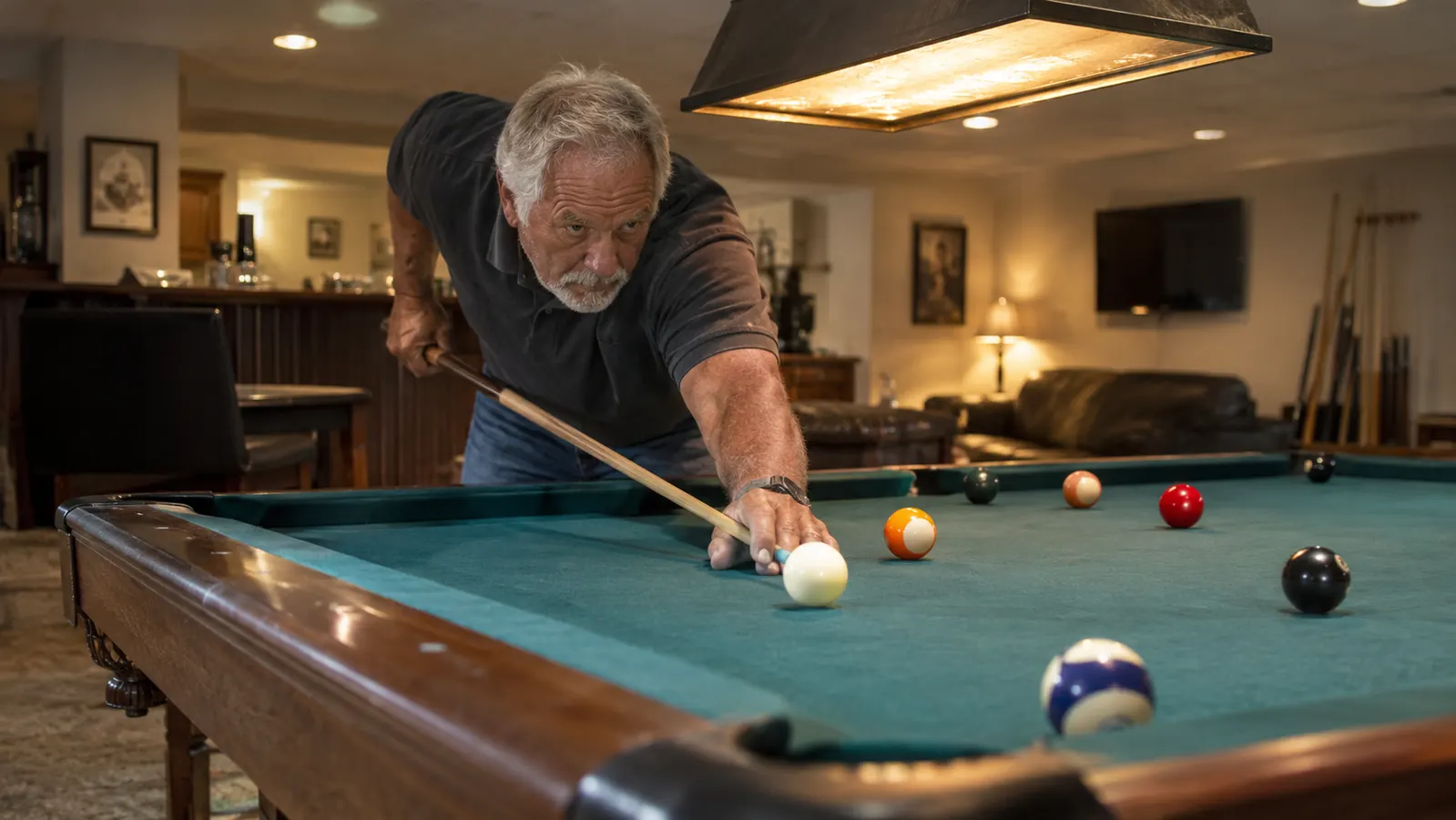
I spent the better part of twelve years brushing my table. Same used 8-foot slate table in the basement, same brush hanging off the rail, same Saturday morning: drag the bristles the length of the cloth, knock the chalk into the drop pockets, hang the brush back up, tell myself the table was clean. It looked clean. That was the problem. Clean-looking and clean are two different things on a pool table, and it took me a dozen years and a pale, fuzzy patch under the rack spot to work out which one I had been getting.
So here is the short answer, since that is what you clicked for. Brushing alone moves chalk around. David Hodges' Quick-Clean is an 18 ounce spray-and-wipe cloth cleaner, and it lifts the chalk out of the weave and into a towel instead of pushing it down into the nap. That is the whole difference in one sentence. The brush is not evil and I still keep one. But if you had told me ten years ago that a spray bottle belonged anywhere near a slate table, I would have laughed at you. Now there is one under my table next to the ball tray.
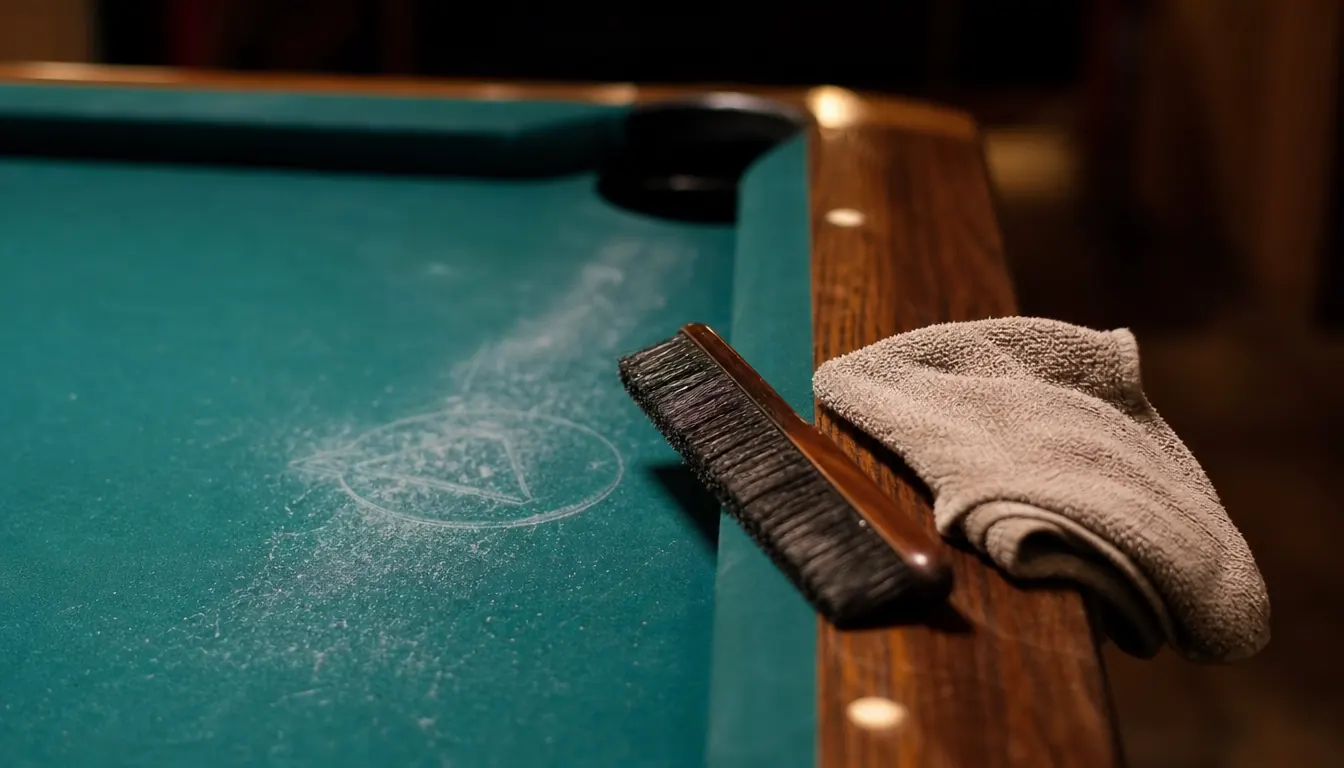
The brush came with the table and I never questioned it. Brushing is what my father did. It is what the room I play league in does between sessions, and it is what every article on the subject tells you to do. What made me look sideways at it was the cloth itself. Two years of Saturdays and the nap under the rack spot had gone pale and fuzzy, and the chalk I swept off on Saturday was back on the cloth by Tuesday. It was not coming back. It had never left. Brushing pushed it a little deeper into the weave every week and the nap paid the bill.
The Two Ways to Clean a Table, Side by Side
| David Hodges' Quick-Clean | Brushing alone | |
|---|---|---|
| What you are doing | Spray the cloth, wipe the chalk into a towel, dry pass over the same area | Drag bristles across the cloth and knock the dust toward the pockets |
| Time per cleaning | Under 60 seconds, which is what I timed on my 8-footer with a stopwatch | Two to four minutes depending on how thorough I felt, longer with a vacuum |
| Where the chalk ends up | Lifted into the towel and carried off the table | Pushed into the weave and packed along the rail groove |
| Wear on the cloth | No bristles on the nap. The maker claims 40 to 50 percent longer cloth life by eliminating brushing and vacuuming | Bristles abrade the nap a little on every pass, and more on a dry cloth |
| New cloth that slides | Maker says it knocks down the slide on new cloth, and it did on mine, quicker than letting chalk and humidity break it in | Does nothing for slide, and a stiff brush can fuzz a fresh nap |
| Old, tired cloth | Brought the color and the speed back up on a cloth I had already written off | Makes it look tidy for a day. Does not touch the color or the speed |
| Grit, crumbs, a spilled snack | Wants a vacuum first for the heavy debris, then the spray | A brush gets the big stuff off fast and a vacuum pulls it out of the weave |
| Rail dust and a quick mid-week touch-up | A full spray and wipe for what is really a rail problem | Thirty seconds with a brush along the rails and you are done |
| What it leaves behind | A linen scent for an hour or so, plus a dry pass needed after the wet one | Nothing added to the cloth at all |
| Longevity | The bottle empties with use, so it is a consumable you restock | A decent brush outlasts the cloth it is cleaning |
| Cloth types | Maker says safe on all types and grades. I have only run it on the worsted that is on my table | A brush is a brush on any cloth |
Read that table the way I wrote it, which is honestly. The spray wins the things I care about most: time, wear, and how the cloth plays. The brush wins the things nobody puts on a label: it never runs out, it leaves nothing behind, and it is the only sensible tool when the table is genuinely filthy or when the table is not yours. Neither column is empty. Anybody who tells you one tool takes every row is selling something.
Where Quick Clean Wins
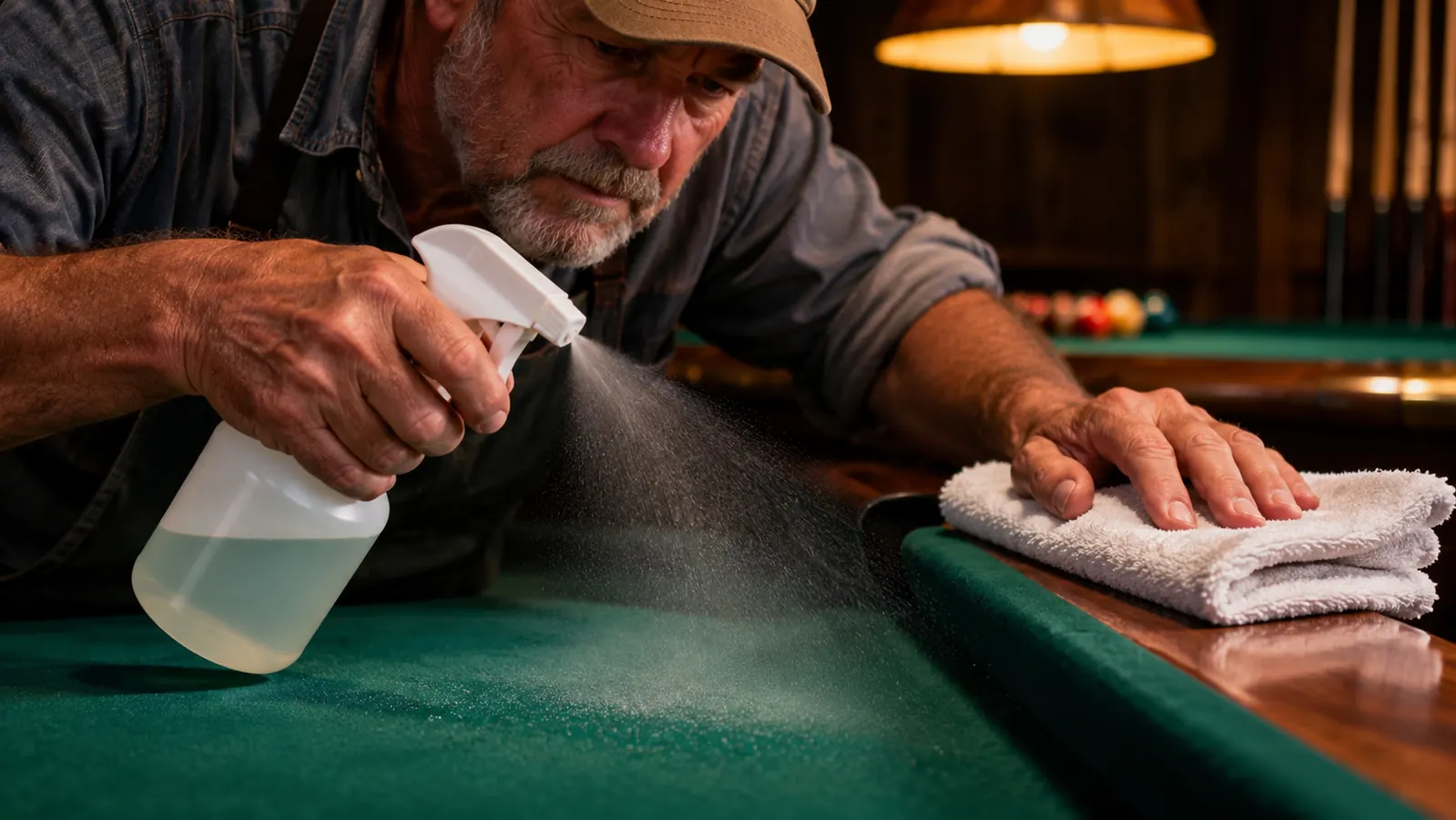
The first thing David Hodges' Quick-Clean won was time, and I did not expect to care. The maker claims a table in less than 60 seconds and I timed myself on the 8-footer with a stopwatch on my phone. Fifty-something seconds, and that included folding the towel. Twelve years of brushing took me two to four minutes depending on how thorough I felt, plus a vacuum every third week. That is not a huge slice out of a Saturday, but it is the difference between a job I put off and a job I actually do. I clean the table more often now. That by itself changes how the cloth wears.
The second thing it won was wear. Bristles are abrasive. Run them over a nap long enough and you are sanding the cloth, slowly, once a week. David Hodges' Quick-Clean claims 40 to 50 percent longer cloth life by cutting out the brushing and the vacuuming, and while I cannot verify a number like that off one table, I can tell you the fuzzy patch under the rack stopped getting worse the week I stopped dragging a brush across it. The maker also says the spray brings older cloth back toward its original color and playing speed. That part I did see. My cloth was two seasons past due and it came up a shade closer to what it looked like new.
Then there is the slide on new cloth. If you have ever put a fresh cloth on and watched the cue ball skate for the first month, you know the feeling. The maker says the spray knocks that down, and on my table it did, faster than the usual break-in of chalk and basement humidity. Small thing, unless you are the one playing on it four nights a week.
Where Brushing Alone Wins
The brush wins the mess. If somebody knocks a plate of crackers onto the felt, or a grandkid drags a snack across the rail, you do not want to wipe that into the weave with a towel. You want a brush and a vacuum, in that order, and then the spray afterward if you feel like it. A spray is a cloth cleaner, not a debris remover. I keep the brush for exactly that reason and I would not be without it. It also gets the chalk out of the rail groove where a flat towel cannot reach without me folding it into a corner and fussing.
The brush also wins on residue and on the long haul. It adds nothing to the cloth. No scent, no moisture, no dry pass afterward to make sure you got the wet off. My basement smells like a basement, and while the linen scent from the spray is not unpleasant, it hangs around for an hour and my son Mike noticed it from the stairs before he noticed the table looked better. And a brush does not run out. Mine has been on the rail since the table came in the door. The spray is a consumable, so you are always going to be the guy checking whether he has another bottle.
The bottle that ended twelve years of brushing
One spray, one folded towel, under a minute on an 8-foot table. That is the whole routine now, and the nap under the rack spot stopped going fuzzy.
Amazon Check Today's Price on Amazon →What It Actually Changes on the Table
Here is the part that matters more than a clean-looking cloth, and it is the part I was slow to believe. Chalk is grit. Grit on the cloth is drag, and drag is one more variable between your cue ball and where you wanted it. When the cloth is slick in one spot from old chalk and slow in another from a fresh brushing, a lag or a slow roll does something you did not ask it to do. Cleaning the cloth properly takes that variable off the table. Your stroke is still your stroke. The table just stops arguing with you.
None of this makes you a better player. I want to be plain about that. Practice makes you a better player. What a clean cloth does is stop a dirty one from charging you for shots you actually hit well. If you have ever missed a thin cut by a hair and could not say why, that is the kind of miss a chalk-loaded cloth hands you. It is not a fix for a bad stroke. It is one less thing standing in the way of a good one.
The chalk I swept off on Saturday was back on the cloth by Tuesday. It was not coming back. It had never left.
How I Use It, Start to Finish
The routine is short enough that I actually do it. I start at the foot end and spray a section about the width of my forearm, then wipe it with a folded towel, working with the nap rather than against it. Wet pass first, then a dry corner of the towel over the same area. Down one side, down the other, then the middle. I do the rails last so the chalk I knock loose lands on cloth I have already done instead of cloth I am about to do. Total time on my 8-footer is under a minute, and the towel goes in the laundry with the rest of the rags.
Two things I learned the hard way. Do not soak the cloth. A light pass lifts the chalk, and a heavy one wets the nap and leaves you waiting around for it to dry. And brush or vacuum the big debris off first if the table has been sitting under a cover with the windows open, because a towel will drag grit across the weave and that is worse than the chalk you started with. The spray is a cloth cleaner. It is not a shop vac.
The Parts I Do Not Love
The scent. Linen is a fine smell and it is not strong, but this is a basement with one small window, and for the first hour after a cleaning the room smells like a hotel laundry. Mike asked me twice what I spilled. It fades and it is not a dealbreaker. It just is not nothing, and if you are the sort who notices that kind of thing, clean the table a few hours before you plan to be down there shooting.
The other thing is that it is one more step and one more object to own. A brush is a stick with bristles on it. The spray needs a bottle, a towel, and a spot to live. And I have only run it on the worsted cloth that is on my own table, so I cannot personally vouch for the maker's claim that it is safe on all types and grades. I believe it. I just have not tested it, and I am not going to tell you I did.
One more point worth making, because it comes up when I talk to teammates. This is a home table tool. In the league room the tables belong to somebody else, and nobody is handing you a bottle and a towel at 7:55 on a Tuesday night while the first match is racking. Brush there, spray here. That is not a knock on the product. It is just what the situation allows, and it is why my brush still has a job.
Who Should Buy Which
If your table gets played on and the cloth under the rack is going pale and fuzzy, the spray is the tool that fixes it and the brush is part of what caused it. If your table mostly sits under a cover and comes out twice a month, a brush and an occasional vacuum will do you fine and you can put your attention somewhere else. Where I have landed is both, each used for what it is good at: brush or vacuum first when the table is genuinely dirty, spray and wipe for the actual cleaning, every time. That order is the whole method, and it took me twelve years to arrive at it.
Stop brushing chalk deeper into the nap
Spray, wipe, dry pass. Under a minute on an 8-footer, and the cloth keeps its color and its speed a good deal longer than it does under a brush.
Amazon Check Today's Price on Amazon →