
League night ends the same way most Tuesdays. I rack the last rack, I lose it, and I carry my cue out the back door into the parking lot behind the hall. A few winters back I leaned the cue against the car while I dug in my pocket for the keys, the wind took the door, and it swung shut on the shaft. I heard a crack that I felt in my back teeth. I stood there in the cold holding a two-piece cue and thinking about how I had hauled that thing around unprotected for the better part of twenty years.
Turns out it was the joint collar that cracked and the cue lived. But it changed how I thought about the whole business. Twenty years in a Tuesday 8-ball league and I had been carrying a cue around in a soft sleeve that offered about as much protection as a sweatshirt. So I started looking at hard cases. The one I landed on is the BY SPORTS 2x2 hard cue case, and I have been using it long enough now to have an opinion worth giving you.
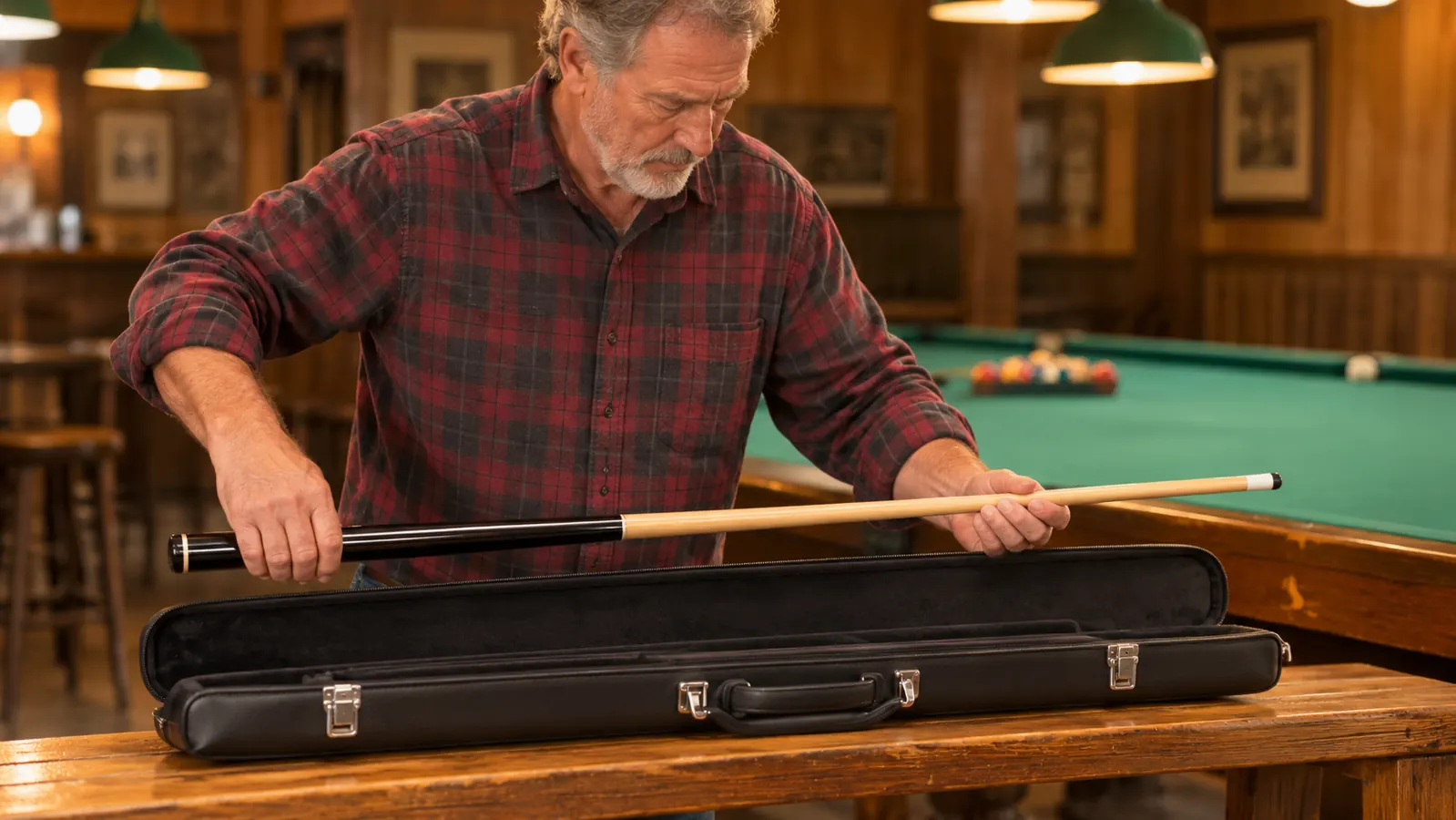
Here is the part nobody tells you when you buy your first decent cue. Cues do not usually die from a car door. They die slow. They live in a trunk in July, they sit in a damp basement, they lean against a wall in a hall that smells like beer and mop water, and the shaft takes on a bend you cannot take back out. A warped shaft is a dead cue. You can re-tip it and you can clean it, but you cannot straighten it. I have watched two guys on my team find that out the expensive way.
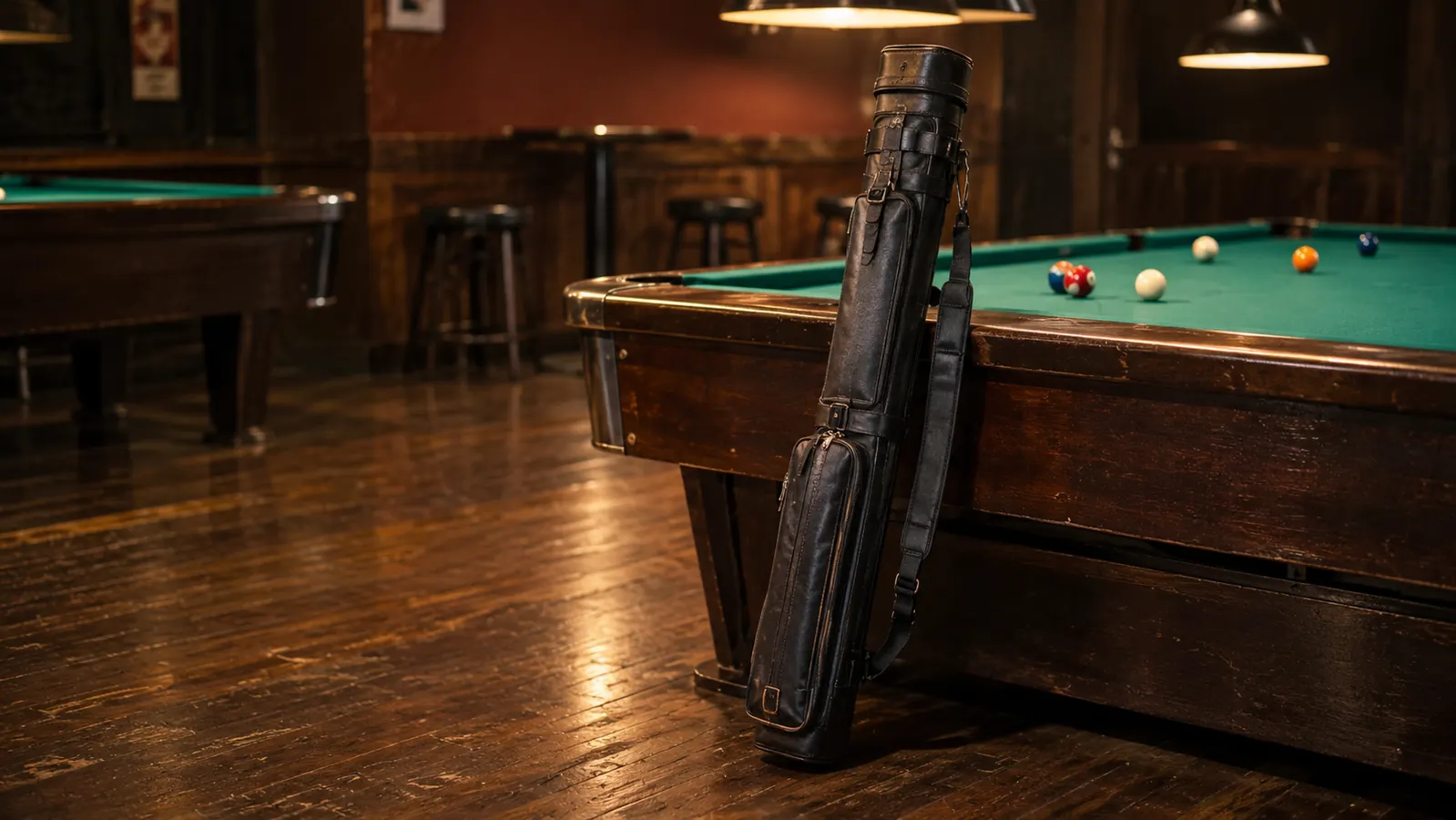
That is what a hard case is for, and it is the only reason to own one. The BY SPORTS case is a hard shell wrapped in synthetic leather with a zipper down the side. It holds two butts and two shafts, so it fits two full two-piece cues at 58 inches, and it measures 34 inches end to end. I carry one cue. There is room for a teammate's if he is riding with me and does not want his own banging around in the back of the truck.
First thing I noticed is that it does not flex. You squeeze a soft bag and you can feel the cue right through the fabric. You squeeze this and you are squeezing a box. That is the whole point, and it is worth saying plainly, because a lot of what gets sold as a hard case is stiff nylon with a nice picture printed on the side.
A case will not make you a better player. It makes sure the cue you practiced with all week is the same straight cue you show up with on Tuesday.
Twenty years of carrying a cue in a sweatshirt, and this is what fixed it
Hard shell, synthetic leather, a zipper that closes, and room for two full two-piece cues at 58 inches. It is the difference between protecting your cue and hoping nothing happens to it.
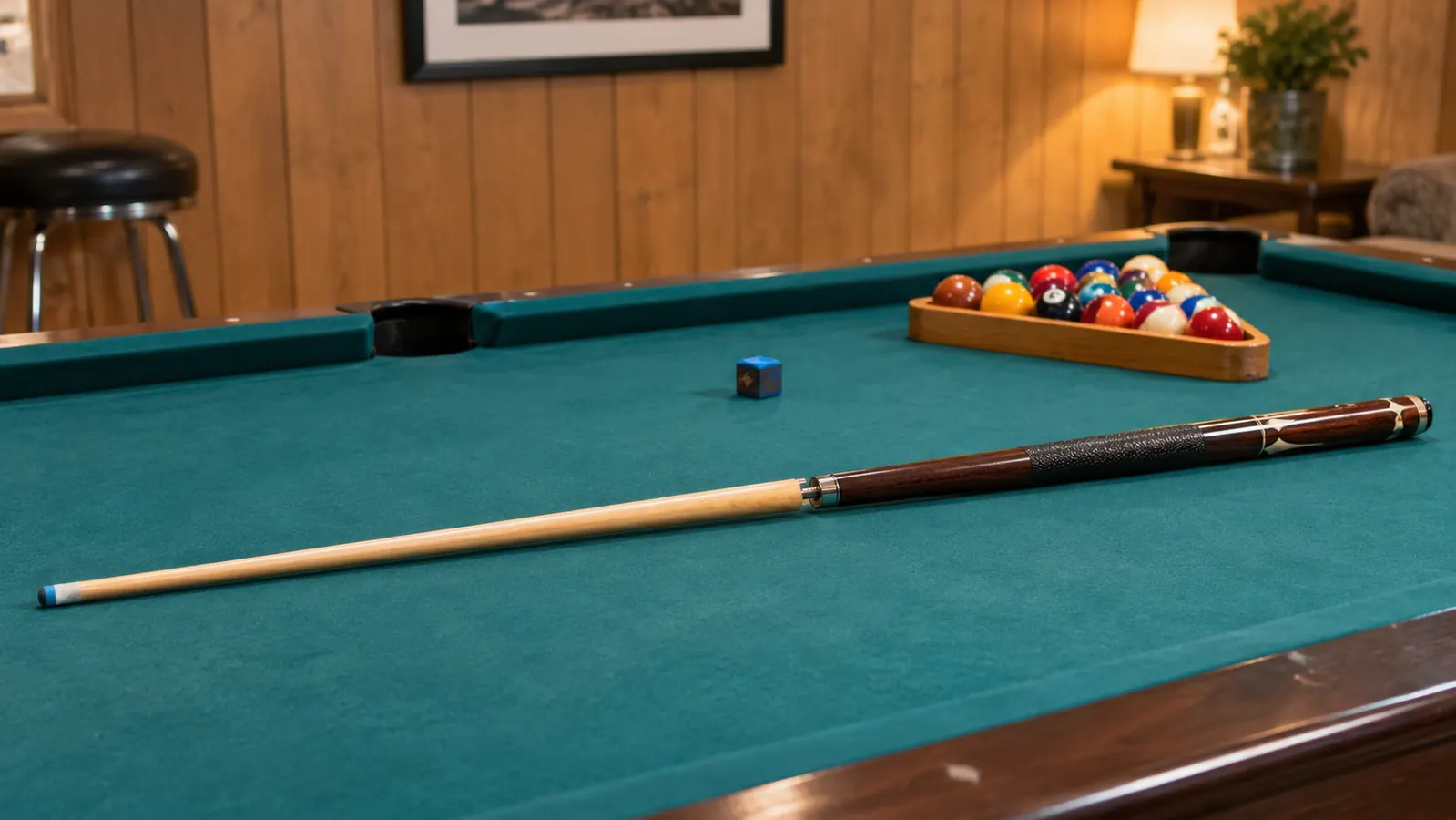
Amazon Check Today's Price on Amazon →I have had it through two full league seasons now. It rides in the trunk, it sits on the floor of the basement next to the table, it has been rained on walking into the hall, and it has been dropped exactly once, off the tailgate, onto asphalt. The cue inside is still straight. Every few weeks I roll the shaft on the felt of my 8-foot table at home, the way you check for a bend, and it has not moved.
The pockets turned out to be more useful than I expected. There is a small one up near the top, about six inches by three, and a larger one lower down at sixteen by three. The small one holds a scuffer and a spare tip. The large one holds chalk, a cloth, and my keys so I stop leaving them in the car. Four compartments inside, so butts and shafts each get their own slot and do not rub against each other on the ride over.
The strap is adjustable and goes over the shoulder, which matters more every year the walk from the lot gets longer. It is not a heavy case. Thirty-four inches long and a little over four inches across, so it slides behind the seat of a pickup without a fight. My son Mike borrowed it for a weekend tournament and handed it back without a complaint, which for Mike counts as a strong review.
None of this changes your stroke. I want to be clear about that, because you will read a hundred pages telling you gear makes you a player and it does not. What it changes is variance. When the shaft is straight and the joint is tight and the tip has not been crushed under a bag of groceries, the cue ball goes where you sent it. When the shaft has a bend in it, you are aiming a curve and then blaming your stroke for the result. Most of the fellas I hear complaining about inconsistency are playing with a cue that lives in a trunk.
Small thing, and it bothers me more than it should. You unzip it, you take the cue out, and you zip it back up, because a hard case left open on the floor of a pool hall is an invitation for somebody to step in it. That is not a knock on the case. It is the nature of the thing. A soft bag you can leave flopped open. This you cannot.
What I'd Tell You If We Were Sitting at My Kitchen Table
I would tell you not to buy another cue until you have something to keep it in, because you are already spending on the cue and then throwing it in the back seat. I would tell you that two-by-two is more case than a one-cue player strictly needs, and that I would buy the BY SPORTS case again anyway, because the extra room adds almost nothing in weight and the day a friend needs a lift you have it. I would tell you the honest drawback too. A 34-inch hard case takes up real space. It does not fold, it does not squash into a backpack, and if you walk to league night instead of driving you will notice it on your shoulder. That is the trade. A soft bag is easier to carry. A hard case is the reason your cue is still straight in five years. Pick which one you care about and stop reading reviews after that.
If your cue rides in the trunk, it should ride in this
Hard shell, synthetic leather, adjustable shoulder strap, four inside compartments, fits two 58-inch two-piece cues. Mine has spent two seasons in a trunk and the shaft is still straight.
Amazon Check Today's Price on Amazon →