
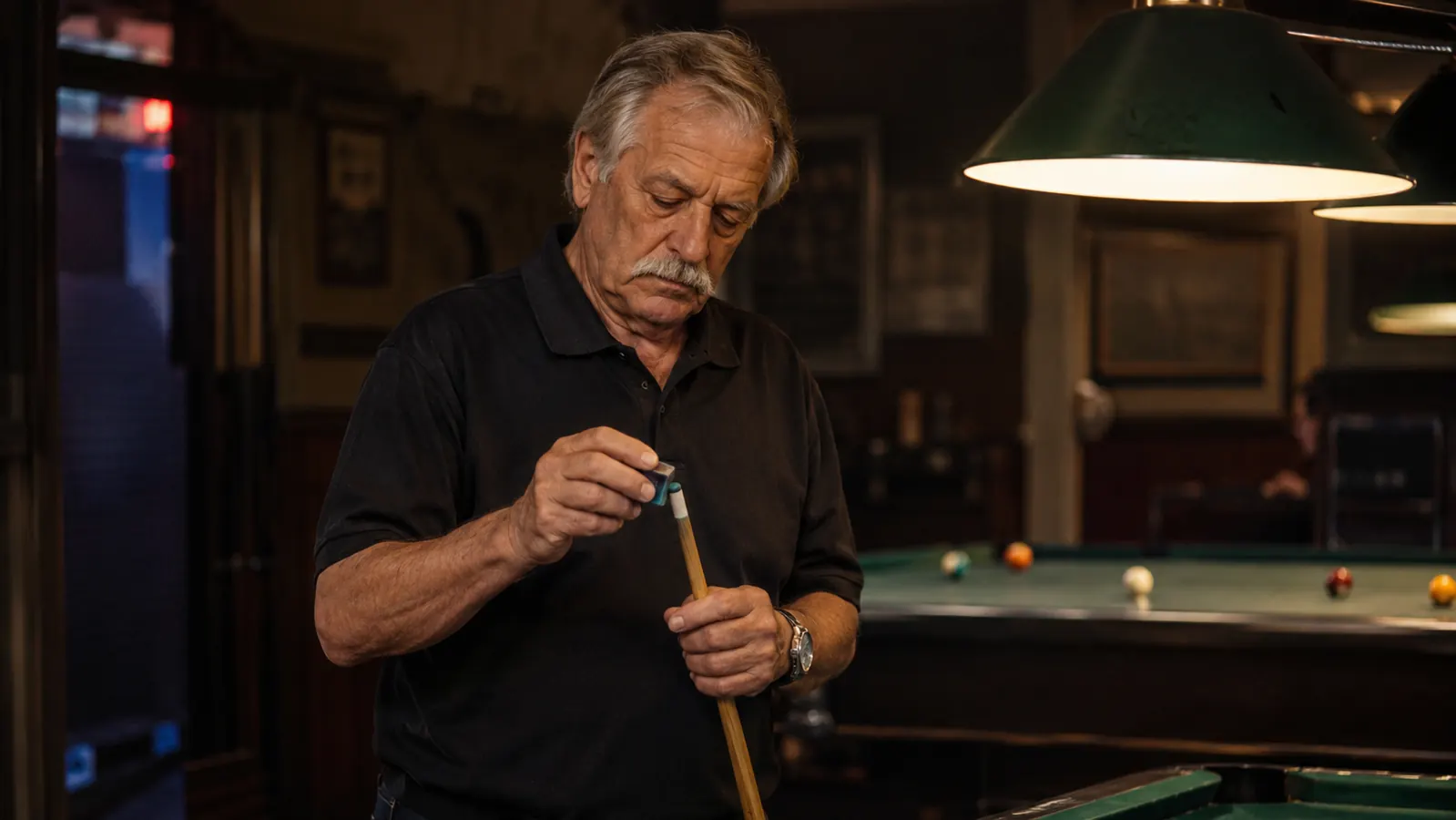
I bought my first hard cue case after a league teammate pulled a warped shaft out of a soft bag that had spent the winter in his garage. The wobble was easy to see when he rolled it on the table. He had bought a decent cue, then let a bag undo it. I have played Tuesday night 8-ball on Long Island for about 20 years, and I practice most weekends on the 8-foot slate table in my basement. When I switched to the BY SPORTS 2x2 Hard Cue Case, I was not looking for a status symbol. I wanted a case that would keep two cues straight, dry, and ready to play. This is the comparison I have walked a few teammates through since then.
Short answer: if your cue lives in a car trunk, a garage, or a basement that gets damp, the BY SPORTS hard case is the safer home. If you walk to the hall with one cue, have a shallow closet, and want a bag that folds flat while the cue is on the table, a soft cue bag still makes sense. Neither one will improve your stroke. Practice does that. The right case just stops the equipment from fighting you.
| BY SPORTS 2x2 Hard Case | Soft Cue Bag | |
|---|---|---|
| Shell | Hard shell made of synthetic leather that holds its shape. | Fabric or thin synthetic shell that flexes with whatever is beside it. |
| Moisture and warp protection | Waterproof PU artificial leather surface and a hard shell keep damp air and knocks away from the cue. | Soft fabric does little against a wet floor, a damp trunk, or a hard knock. |
| Cue separation | Four compartments for two butts and two shafts, with room for two 58-inch two-piece cues. | Most bags hold a similar load, but the cues sit closer together and can rub. |
| Pockets | Large pocket is 16 by 3 by 1 1/3 inches, small pocket is 6 by 3 by 1 1/3 inches. | Pockets vary by bag, and many are smaller than that large pocket. |
| Standing and leaning | Rigid case stands or leans without slumping around the cue. | Soft bag slumps and can press against the cue when it is set down. |
| Weight | The hard shell and rigid body are not the lightest way to carry a cue. | A soft bag is the lighter choice for a long walk or a lot of stairs. |
| Empty storage | At 34 inches long and 4.67 inches wide, it takes up shelf or closet space even when empty. | Folds or collapses when the cue is out, so it stores in a smaller space. |
| Tight trunk | The rigid 34-inch length does not bend around other gear. | Flexes and squeezes into a crowded trunk or back seat. |
| Carry strap | Adjustable shoulder strap. | Most soft bags also have an adjustable shoulder strap. |
| Quick access | Zipper closure opens the case, then the cue comes out of its compartment. | A single large opening can be quicker for one cue, but it depends on the bag. |
Where BY SPORTS Hard Cue Case Wins
The BY SPORTS case wins on the thing that matters most to a cue: a stable home. A cue is a straight piece of wood, and it stays straight when nothing pushes on it. The hard shell and the synthetic leather surface take the knocks that would otherwise reach the shaft. The listing describes the PU artificial leather as waterproof, and that matters in a basement or a garage where the air gets heavy in July. I have seen more cues damaged by a damp corner than by a break shot. The case also prevents the small scratches that come from sliding a cue in and out of a bag with a zipper and a loose tip tool.
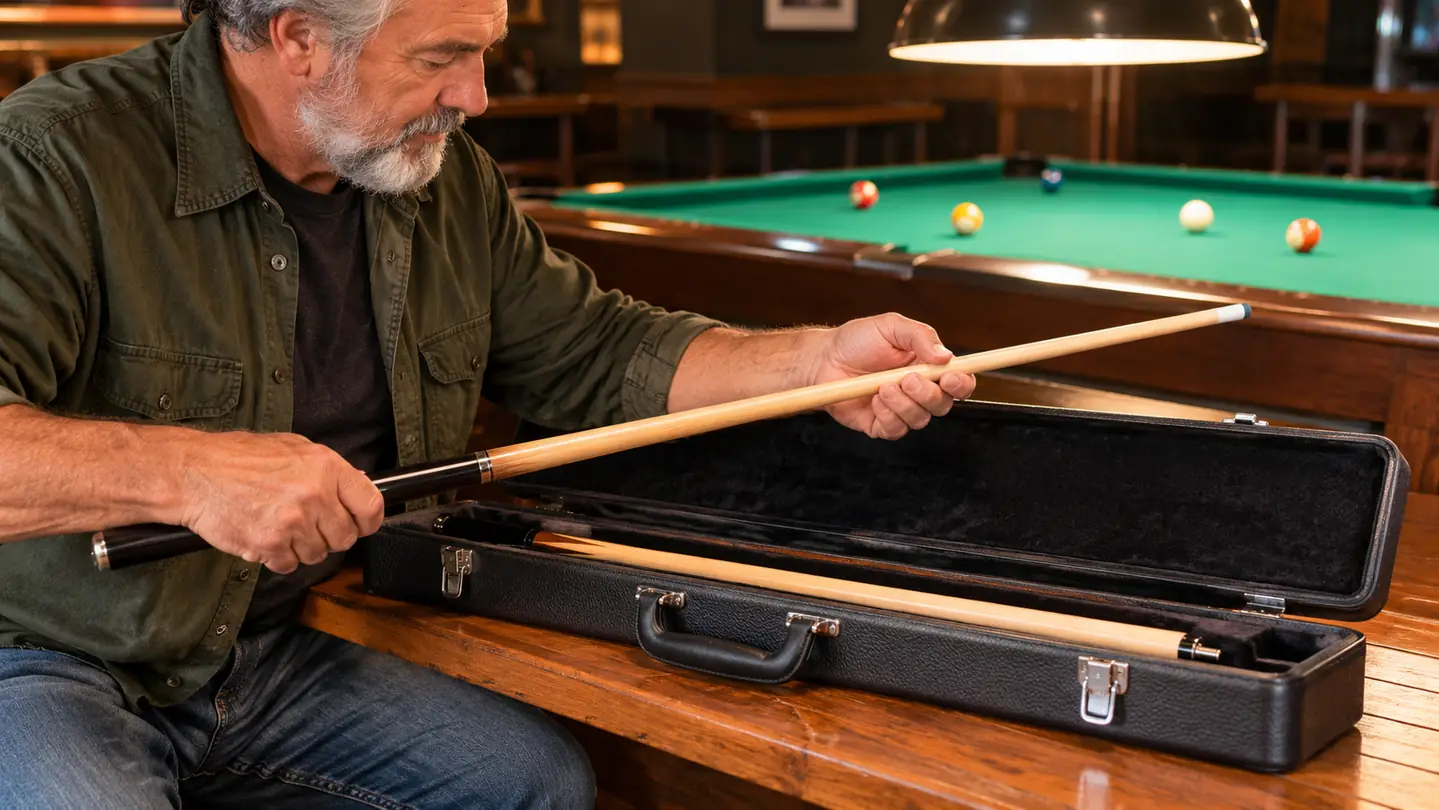
Inside, the BY SPORTS case is set up for two butts and two shafts in four compartments. It fits two 58-inch two-piece cues. That is the load most league players carry, and the separate compartments keep the shaft from rubbing against a butt with a metal joint collar. The pockets are useful without being a junk drawer. The large pocket is 16 by 3 by 1 1/3 inches, which takes a tip tool, a piece of chalk, and a small cloth. The small pocket is 6 by 3 by 1 1/3 inches, which is about right for a scuffer or a spare tip. The zipper closure and adjustable shoulder strap are plain, but plain is what I want in a case. I do not need extra features I will never use.
Where a Soft Cue Bag Wins
The soft bag wins on weight and give. If you park three blocks from the hall and carry your cue on your shoulder, a fabric bag that flexes against your side is easier to live with than a rigid 34-inch case. It also wins when the cue is not in it. A soft bag folds down, gets pushed behind a car seat, or hangs on a hook in a closet. The hard case does not do that. It is a fixed 34 inches long and 4.67 inches wide, and it wants a dedicated spot.
The soft bag also wins in a crowded trunk. I have a small trunk in my car, and a rigid case takes a lane of its own. A soft bag can be squeezed beside a folding chair and a bag of groceries. For a player who keeps one cue, plays once a week, and never leaves gear in a hot or damp place, the soft bag is enough. It is not enough for a cue that lives in a garage. That is the line I would draw.
Keep Two Cues Straight in a Damp Basement
The BY SPORTS 2x2 Hard Cue Case holds two butts and two shafts in four compartments, with a hard shell and a waterproof PU artificial leather surface. If your cue has been living in a soft bag on a concrete floor, this is the change that stops the slow damage.
Amazon See the BY SPORTS Case on Amazon →What the BY SPORTS Case Changes on League Night
The case does not change how I aim. It changes what I unzip. On league night I take two cues: a playing cue and a backup with a different tip. Both butts and both shafts go in the BY SPORTS case in their own compartments. When I get to the hall, I open the case, take out the cue I want, and leave the other one protected. In a soft bag, the spare shaft would be lying against the first one, and I would be checking for dings before the first rack. That is a small thing until it happens twice in a season.
The hard shell also makes a difference when the case is on the floor beside my chair. People move chairs, put bags down, and kick things. A soft bag gives when it gets kicked. The hard case takes the hit and keeps the cue away from the shoe. I have had a case take a knock that would have gone into a shaft. That is the sort of damage you cannot fix with a new tip.
The pockets are not a fashion statement, but they keep the small stuff from floating around. Chalk, a tip tool, a scuffer, and a cloth all have a place. The large pocket is 16 by 3 by 1 1/3 inches and the small pocket is 6 by 3 by 1 1/3 inches. If you carry a lot of extras, measure them before you buy. The case is not a toolbox. It is a cue case with useful pockets.
The Soft Bag's Real Job
I do not want to make a soft bag sound useless. It is the right tool for a player who keeps a cue in the house, walks to the table, and does not need a hard shell around the cue. It is also easier to store. If you live in an apartment and your closet is already full, a soft bag that folds down is a practical choice. The cue can still be safe if you treat the bag with care and keep it away from damp floors and hot cars.
The trouble starts when a soft bag becomes permanent storage. A cue left in a soft bag on a concrete floor is still a cue left in damp air. A cue left in a soft bag in a trunk is still a cue in a hot car. The bag is not the villain. The storage is. That is why I would not say a soft bag is bad. I would say it is not protection against neglect.
A Word About Cue Care
A cue case is only one part of keeping a cue straight. I wipe down my shaft after league night, keep the cue out of the car, and store it in the basement where the air is dry. The case helps with the last part. It does not replace the first two. If you put a wet cue into any case and leave it there, you are asking for trouble. If you put a straight cue into a hard case and keep the case in a dry spot, you are doing the simple thing that works.
The BY SPORTS case is not a magic box. It is a hard shell with compartments, pockets, a zipper, and an adjustable shoulder strap. That is the whole list. The value is in what it prevents: a warped shaft, a scratched butt, a cue that has been knocked around in a trunk. If you already have a soft bag and your cue is straight, you may not need to change anything. If you have a wobble, start with the storage before you blame the cue.
The Part Nobody Thinks About Until Winter
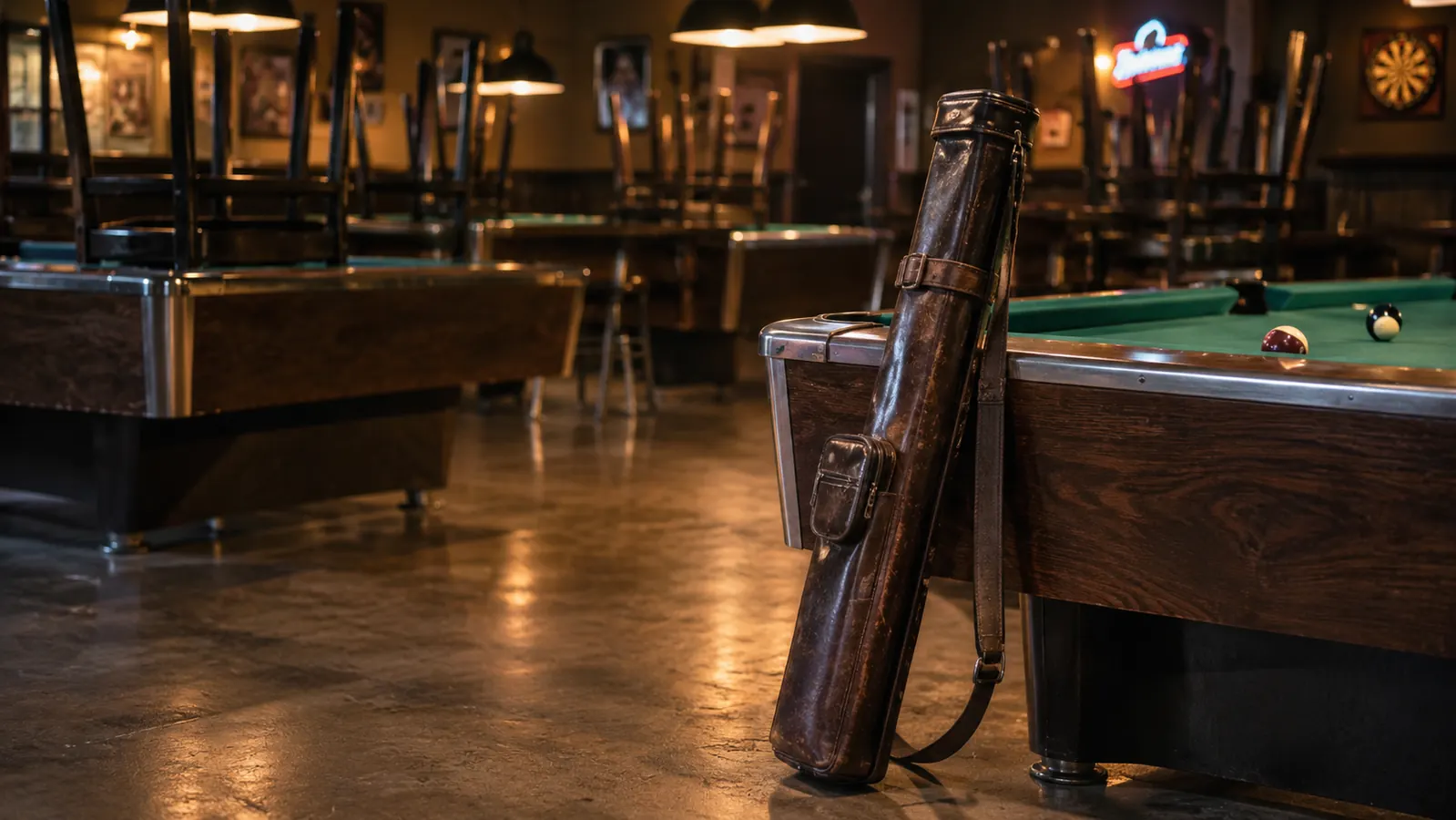
Cue damage is usually slow. A shaft does not warp in one night. It warps over a season of small temperature swings, a damp floor, and a bag that lets the cue rest against a cold wall. In my basement, the table stays covered and the room stays dry enough, but the corner by the back door gets damp when the weather turns. That is where my old soft bag used to sit. I moved the hard case to a shelf in the same room, and the difference is simple: the cue is not touching the floor or the wall.
The BY SPORTS case also keeps the cue from rolling around in a trunk. A soft bag will let a shaft shift if you take a turn too fast. The hard case holds its shape, so the cue stays in the compartment where you put it. That is not exciting. It is the whole point. The case does not add spin or fix a crooked stroke. It keeps the tool straight so your practice is not wasted on a cue that has a wobble.
I still use a soft bag for a quick trip to the hall when I am only taking one cue and the weather is dry. It is lighter and easier to stash. But the cue comes out of the hard case for the league night, and it goes back in the hard case when I get home. That routine has kept my two playing cues out of the damp and away from the door.
A cue does not warp in one night. It warps over a season of small neglect.
What the BY SPORTS Case Does Not Do
The case does not make a cue invincible. If you leave it in a car in the sun, the heat can still do damage over time. The hard shell protects against knocks and moisture, not against a closed car in August. It also does not hold more than two butts and two shafts. If you bring four cues to league night, this is not the case for that job. The 34-inch length also will not fit in a small locker or a tight gym bag.
It is not a lightweight option. The hard shell and the rigid body have a cost in weight and space. The adjustable shoulder strap helps, but a soft bag is still easier on a long walk. I would not buy this case for a cue that never leaves a climate-controlled room. I would buy it for a cue that gets moved, stored, and knocked around.
How I'd Choose Between Them
I would start with where the cue sleeps. If it sleeps in a garage, a basement, a shed, or a car trunk, buy the hard case. If it sleeps in a closet inside the house and you carry it to the hall once a week, a soft bag is fine. The cue does not care about style. It cares about moisture, pressure, and knocks. The BY SPORTS case handles all three better than a soft bag.
Then I would look at how many cues you carry. The BY SPORTS case is built for two butts and two shafts, and that is a real advantage if you keep a break cue and a playing cue. A soft bag can hold two cues, but the compartments are not as separated in most bags. If you carry one cue and a jump cue, measure the load and check the pockets. The large pocket on this case is 16 by 3 by 1 1/3 inches, and the small one is 6 by 3 by 1 1/3 inches. That tells you what will fit.
Who Should Buy Which
Buy the BY SPORTS hard case if you play league, keep a cue in a basement or garage, carry two cues, or have ever pulled a shaft out of a bag and felt a wobble. Buy it if you want a case that stands in the corner and does not fold around the cue. Buy a soft cue bag if you walk to the hall, carry one cue, have a small closet, and keep your gear inside the house. Buy the soft bag if you want something that collapses when the cue is on the table. I would not talk a casual bar player out of a soft bag. I would talk a league player with two cues and a damp storage spot into the hard case.
Give Your Cue a Hard Home
Two butts, two shafts, four compartments, and a hard shell with a waterproof PU artificial leather surface. If your cue has been living in a soft bag on a concrete floor, the BY SPORTS 2x2 Hard Cue Case is the practical fix.
Amazon See the BY SPORTS 2x2 Hard Case on Amazon →