
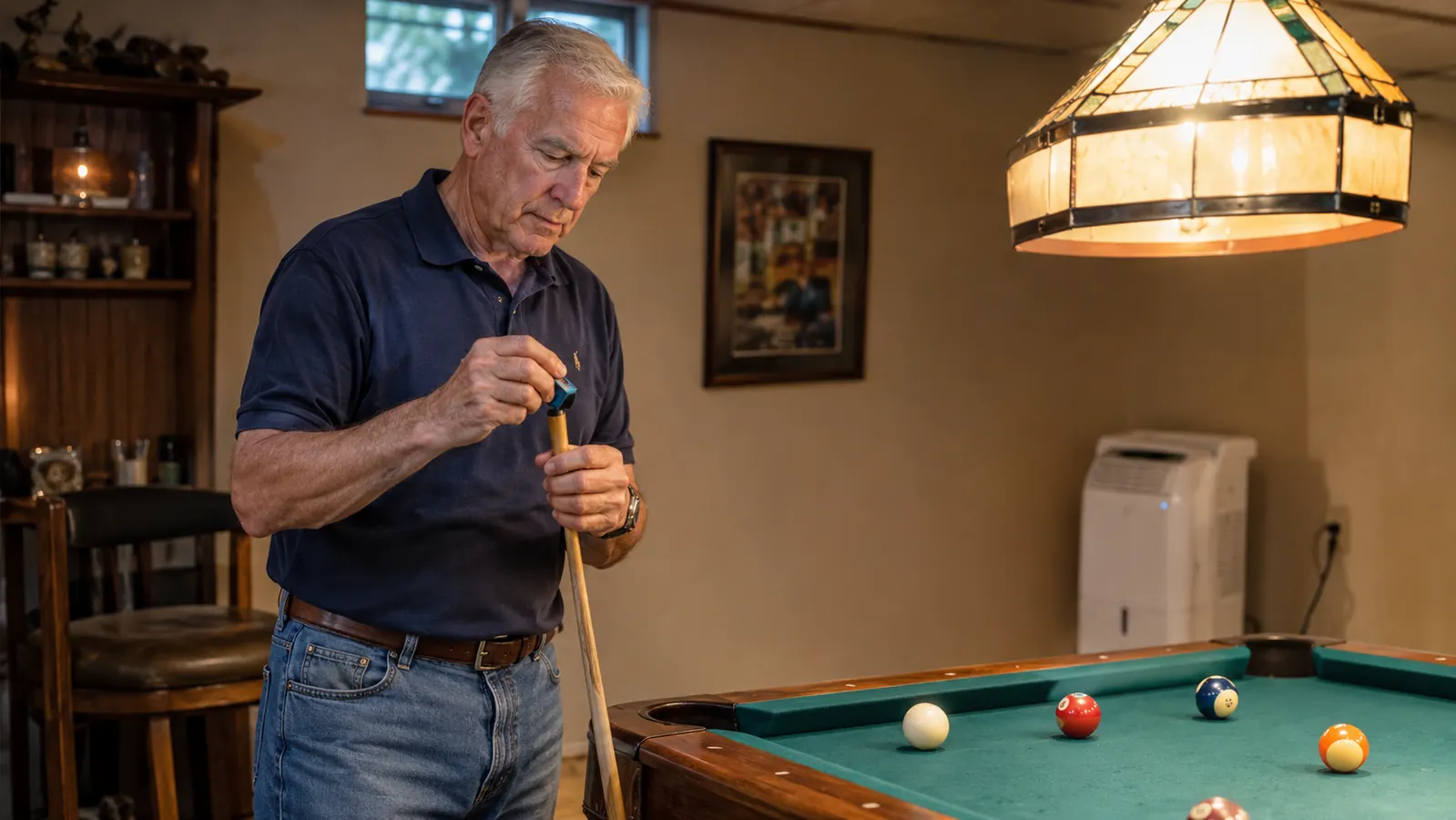
The first thing I will tell you about the CUESOUL Rockin is that it did not make me a better pool player. Twenty years of Tuesday nights in a league did that, and most of it happened long before I ever touched a cue nicer than the ones hanging on the wall at the hall. What the CUESOUL Rockin did was stop getting in the way. That is a smaller claim than most cue writing makes, and it is the honest one. I have had this 58 inch, 21 ounce cue in my bag for the better part of a year, playing league and practicing on the 8 foot slate table in my basement, and I have a fairly clear picture of what it does and what it does not.
Here is what nobody tells you before you buy a cue like this. The difference between a cheap cue and a decent one shows up in the boring places. Not on the shot you would put on a poster. On the shot where you are stretched over the rail, trying not to move anything but your forearm, and the cue either feels like a piece of furniture or it feels like part of your arm. The CUESOUL sits on the right side of that line for me. But it is not a magic wand, and there are three or four things about it I would want to know before spending my own money, which is what the rest of this is.
The Quick Verdict
A solid 58 inch maple cue with a 12.75mm tip, a carbon fiber ferrule and an Irish linen wrap that rewards a steady stroke and tells on a lazy one. Buy it for the tip and the wrap, not for the promise of a quick fix.
Amazon Check Today's Price →It Will Not Make You Better. It Stops Making You Worse.
That is the whole case for this cue, and it is a good case. The 12.75mm tip and the linen wrap do the real work here. Worth a look at today's price before you read the rest.
Amazon Check Today's Price on Amazon →How I've Used It
My home table is an 8 foot slate I bought used about twelve years ago and leveled myself with a carpenter's level and a lot of patience. It lives in the finished basement, next to a dehumidifier that runs all summer. Most weekends my son Mike and I play eight ball until one of us gets annoyed enough to quit, and he is thirty now and still shoots too fast for his own good. The rest of the time it is drills, and it is mostly the same four drills I have run for years. That is the setting. Nothing dramatic. A basement, a dehumidifier, and two guys who are not going to be on television.
League is the other half. Tuesday nights, eight ball, a local hall with nine tables and carpet that has seen better days. The CUESOUL travels in the bag and gets played on tables that are not mine, at speeds I do not know, with cloth that varies from slick to shaggy depending on which end of the room you are on. That is a better test of a cue than a basement, in my opinion, because you find out pretty quickly whether a thing feels the same in your hand in a room full of noise as it does in your own quiet space. It has.
One more thing about how I use it. I do not baby it. It rides in a bag in the back of a truck, gets leaned against walls, and has been knocked off a chair onto a concrete floor at the hall, which is the sort of moment where you find out what a two piece cue is actually made of. It came through fine. I am not recommending you drop yours. I am telling you that a cue that lives in a bag does not stay pretty, and this one has held up.
The drills are worth mentioning because they are where this cue made its case. I run a straight in drill from each of the four diamonds, then a cut drill, then a stop shot ladder. Boring work. Twenty minutes. The kind of thing nobody watches. With my old cue I could feel the handle start to move in my hand by the fourth or fifth rack, and the drill would fall apart. With the linen wrap that stops happening, and the drill keeps going. If you do not run drills, this cue is going to spend most of its life feeling good in your hands and telling you nothing.
What the Listing Doesn't Tell You
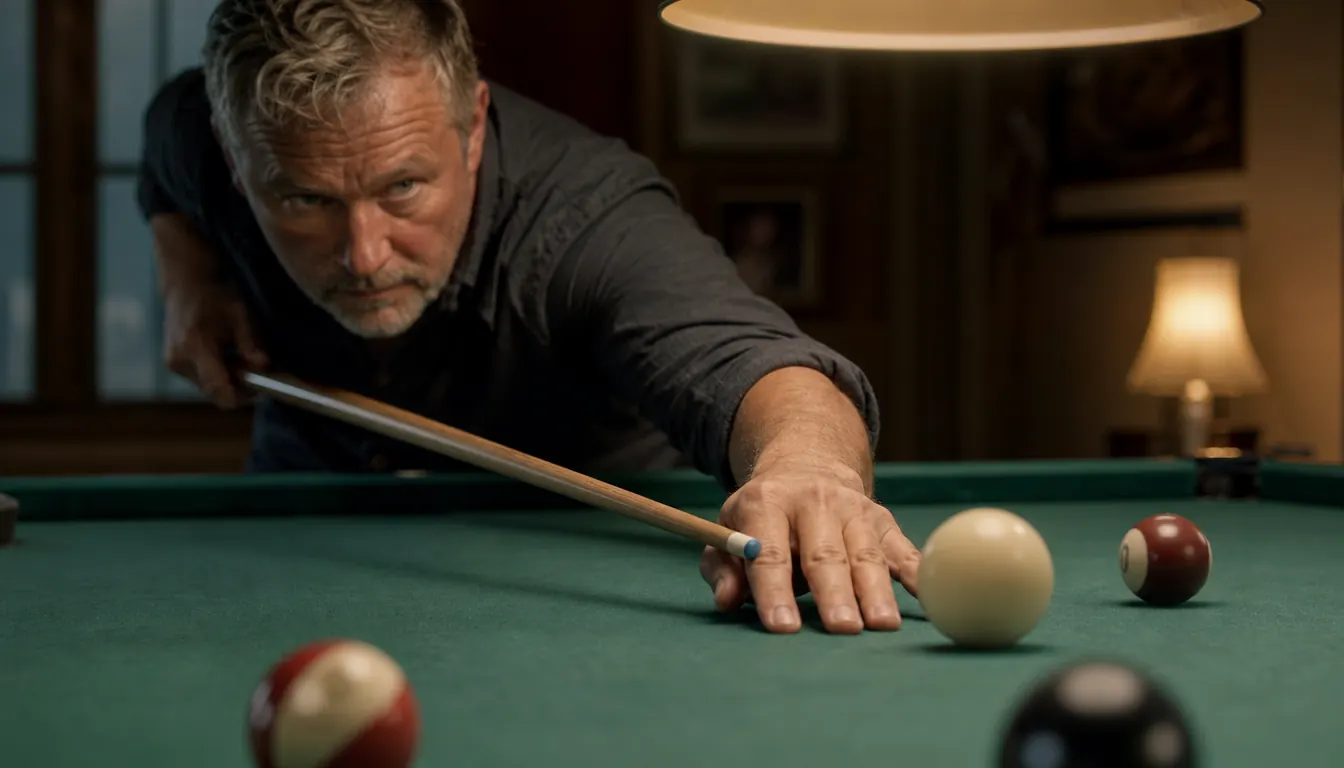
The Amazon listing gives you the numbers and they are accurate as far as they go. Fifty eight inches, 21 ounces, a 12.75mm tip, a carbon fiber ferrule, a stainless steel joint, a butt of imported dried hardwood, a shaft of kiln dried North American maple, and an Irish linen wrap. What it does not tell you is how those numbers combine in your hand, which is the only thing that actually matters. You can read a spec sheet all day and never learn whether a cue feels muzzle heavy, whether the joint goes together clean, or whether the wrap grabs your palm on the third game or turns slick by the sixth.
What I can tell you is that the balance sits where I want it, a little forward of the wrap, so the cue does not feel like it is pulling away from my bridge hand on a long follow through. The stainless joint tightens with a solid feel and no wobble, and it comes apart and goes back together the same way every time, which sounds like a low bar until you have owned a cue where it was not true. The maple shaft is straight. I have rolled it on the table more than once, the way you do when you are suspicious of anything you bought online, and it is straight.
The listing also calls this a kit. That word does different things depending on the seller, and it changes between listings. Look at what actually ships in the box on the listing you are buying from rather than assuming, because the cue itself is the part I can vouch for and I would rather not describe something I did not open myself. The cue is the purchase. Everything else is packaging.
The 12.75mm Tip Is Most of the Story
Most production cues come with a 13mm tip. This one is 12.75, which is a quarter of a millimeter smaller, and that quarter of a millimeter does more to change how the cue plays than anything else on the spec sheet. A smaller tip puts less of the cue ball under your tip at contact, so you see the line a little cleaner and you get more bite on the edges of the ball. It also means the cue is slightly less forgiving. Hit the ball a quarter tip off center and you will find out about it. With a 13mm you might get away with it. With this one you generally will not.
The first month I played with it, my long straight in shots got better and my cut shots got worse. That is the trade, and nobody puts it on the box. The cue was telling me the truth about my stroke and I did not love hearing it. It took a few weeks of drills before the cuts came back, and when they came back they were better than they were before, because the smaller tip rewards a clean hit and I had finally started making clean hits. If you are the kind of player who wants a cue to cover for a loose stroke, this is not that cue. If you are willing to be told the truth by a piece of wood, it is.
The first month, my long straight shots got better and my cut shots got worse. That is the trade, and nobody puts it on the box.
The carbon fiber ferrule is the other half of the front end. It is light, it does not take on moisture, and it holds its shape. The practical effect for me is that the cue feels quick at the front and I do not have to work as hard to move the ball with a soft touch. On a slow roll down the rail, the kind of shot that decides a lot of league games, I can stroke it instead of pushing it. That is worth something. It is not worth as much as practice, and I want to be clear about that, because cues get sold like they are the answer and they are not.
The 21-Ounce Weight Is Not for Everybody
Twenty one ounces is on the heavy end of what most people play. Standard is more like eighteen or nineteen, and plenty of players never go above twenty. A heavier cue is steadier. On a slow roll, a heavy cue does some of the work for you, and if your hand is not as steady as it was at forty, that matters. I am sixty one and I notice it. My long straight shots in the first hour of a league night are more consistent with this cue than they were with a lighter one, because there is more mass behind the stroke and less of my hand in it.
The cost of it is touch. A heavy cue takes more out of you on the soft shots, and it takes a while to learn how little you actually need to do. If you have always played with a light cue and you like the way you can feather the ball around the table, twenty one ounces is going to feel like swinging a hammer for the first week or two. Mike picked it up, played three games, handed it back, and told me it felt like a fence post. He is thirty, he plays fast, and he does not want mass. He wants speed. Both of us are right. That is why they make different weights.

The Wrap, the Joint, and a Long Island August
I want to say a word about the Irish linen wrap, because it is the part of this cue I did not expect to care about and now I would not buy a cue without it. In August on Long Island, a basement with a dehumidifier running still gets damp, and a bare handle gets wet in your hand in twenty minutes. Linen absorbs. That is what it is for. It gives you a grip even when your palm is not cooperating. My old cue had nothing on the handle and I spent fifteen years wiping my hand on my shorts between shots. I have not done that once this summer.
The stainless joint is the other piece that earns its place. It gives the cue a firm feel at the balance point, and it holds up to being taken apart and put back together a few hundred times without getting loose or gritty. What it does not do is make the cue silent. This is not a quiet cue. There is a click at contact that you will either like or you will not, and it took me about a month to stop hearing it. Now I do not notice it at all, except on a quiet night in the hall when I can hear the same click from the next table over, which is a little strange.
What I Liked
- A 12.75mm tip that gives a clean line and real bite on the edges of the ball
- Irish linen wrap that keeps its grip through a humid summer basement
- Carbon fiber ferrule holds its shape and feels quick on soft touches
- Stainless joint goes together solid every time and does not work loose
- Straight maple shaft and a butt that holds up to life in a bag
Where It Falls Short
- 21 ounces is heavy and it takes the soft touch away from players who rely on it
- A smaller tip is less forgiving on off center hits, especially at first
- The joint click is noticeable and not everyone likes the sound
- Not a cue that hides a loose stroke, so expect to be told the truth
What It Won't Fix
A cue does not fix a stroke. If you drop your elbow, if you stand up on the shot, if you are aiming with your head instead of your feet, this cue will show you all of that more clearly than the house cue ever did. That is useful if you want to improve and miserable if you do not. I have watched league teammates buy a nice cue and shoot exactly the same with it, because the cue was never the problem. The cue gets out of the way. It does not walk you around the table.
It also will not fix your table, your cloth, or your eyes. I leveled mine myself and it is close but it is not perfect, and no cue on earth compensates for a table that rolls off. Same for a tired set of balls. If you are chasing a problem and you do not know where it lives, start with the cheap stuff, which is your setup and your practice, before you start spending on gear. I say that as a man who has spent on gear.
One more thing it does not do. It does not make league night easier or shorter, and it will not stop you losing to the guy who plays three times a week and shoots a thirty year old cue with a tip he has never changed. Gear is not a ladder. It is a step you take once and then forget about. I bought this cue, I stopped thinking about cues, and my attention went back to the table, which is exactly what I wanted out of it.
Who This Is For
This is for the player who already has a stroke and wants a cue that stops arguing with it. League players, mostly. People who play two or three times a week and are tired of pulling a different house cue off the wall every Tuesday. If you are comfortable at twenty one ounces and you have been meaning to move up from the two piece that came with the table, the CUESOUL Rockin is a sensible place to land. It is also a good fit if you play in a humid climate or a damp basement, because the linen wrap and the carbon fiber ferrule both handle moisture better than what most budget cues offer.
Who Should Skip It
Skip it if you like a light cue with a lot of touch, because twenty one ounces will fight you all night. Skip it if you are brand new, not because the cue is too good for you, but because a 12.75mm tip will punish every mistake you are still making and you will spend more time frustrated than learning. Start with something forgiving and come back to this in a year. And skip it if you want a cue to make you better. Nothing in the box does that. The box has a cue in it.
Twenty Years of House Cues, and This Is What I Bought
A 58 inch maple cue with a 12.75mm tip, a carbon fiber ferrule and a linen wrap that holds in a damp basement. If that is the cue you have been looking for, check today's price and see if it matches what I described.
Amazon Check Today's Price on Amazon →