

The first cue I ever owned was a two-piece I grabbed off the rack because it was there and I did not know any better. I played league with it for years, and for most of those years I blamed my stroke for everything that went wrong. Pulled a shot left, stroke. Missed a thin cut, stroke. Miscued on a draw shot, stroke.
Some of that really was my stroke. But some of it was a cue that was heavier than I wanted, had a tip shaped like a nickel that I never once scuffed, and a joint that worked itself loose every couple of weeks because it never occurred to me to check it.
Here is what I would tell anybody standing in front of a wall of cues. A cue does not make you a better player. Table time does that. What the right cue does is stop adding problems to a stroke you already have. And there are three things worth knowing before you spend anything: how heavy it is, how wide the tip is, and how it is built where the shaft meets the butt.
The CUESOUL Rockin is a 58 inch two-piece with 21 oz of weight, a 12.75mm tip, a carbon fiber ferrule, a stainless steel M/18 joint, a shaft of kiln dried North American maple, and an Irish linen wrap. That is the whole spec sheet, and it is a fixed set of numbers. The only question left is whether those numbers fit your arm and your eyes.
For context on where I am coming from: I am 61, a retired electrician, and I have played Tuesday night 8-ball in a local hall for about 20 years. There is an 8-foot slate table in my basement that I bought used a dozen years ago, and I practice on it most weekends, usually with my son Mike or whichever teammate wants to come over. I am not a shortstop. I am a guy who wants the cue to be the same every week so I can tell what I am doing wrong.
The Numbers Are Settled. The Only Question Is Whether They Are Yours.
58 inches, 21 oz, 12.75mm tip, carbon fiber ferrule, steel joint, maple shaft, linen wrap. If that reads like the cue you have been trying to describe to yourself, stop describing it.
Amazon Check Today's Price on Amazon →Step 1: Decide the Weight Before Anything Else
Twenty-one ounces sits at the heavy end of what a normal player uses. Most off-the-rack cues land between 19 and 21, and most people who have never thought about it are holding something around 19 or 20 without knowing it. So the first decision is whether you want to be at the top of that range.
A heavier cue feels planted. On a long straight-in shot down the rail, mass does some of the work for you. The cue does not wander, the follow-through stays on line, and the cue ball goes where you sent it. If your stroke is slow and deliberate, if you play a lot of center ball and stop shots, and if you like the feeling of the cue pushing through the ball rather than flicking at it, 21 oz will feel right.
Where it costs you is late in the night and on the soft stuff. By the fourth game of league a heavy cue starts to feel like work, and when your arm gets tired your stroke gets short. And if you like delicate draw shots and small position adjustments, a heavy cue can feel like it is overrunning the shot. My rule of thumb: quick wristy stroke, go lighter. Plodder like me, heavy is fine.
If you are not sure which way to go, test it for nothing. Most halls keep house cues in a couple of weights on the rack. Play a full game with a 19 and a full game with a 21, and pay attention to the last three shots of each game, not the first three. The last three tell you what the cue will do when you are tired, and league matches get decided when you are tired.
Step 2: Pick a Tip Diameter You Can Actually Hit With
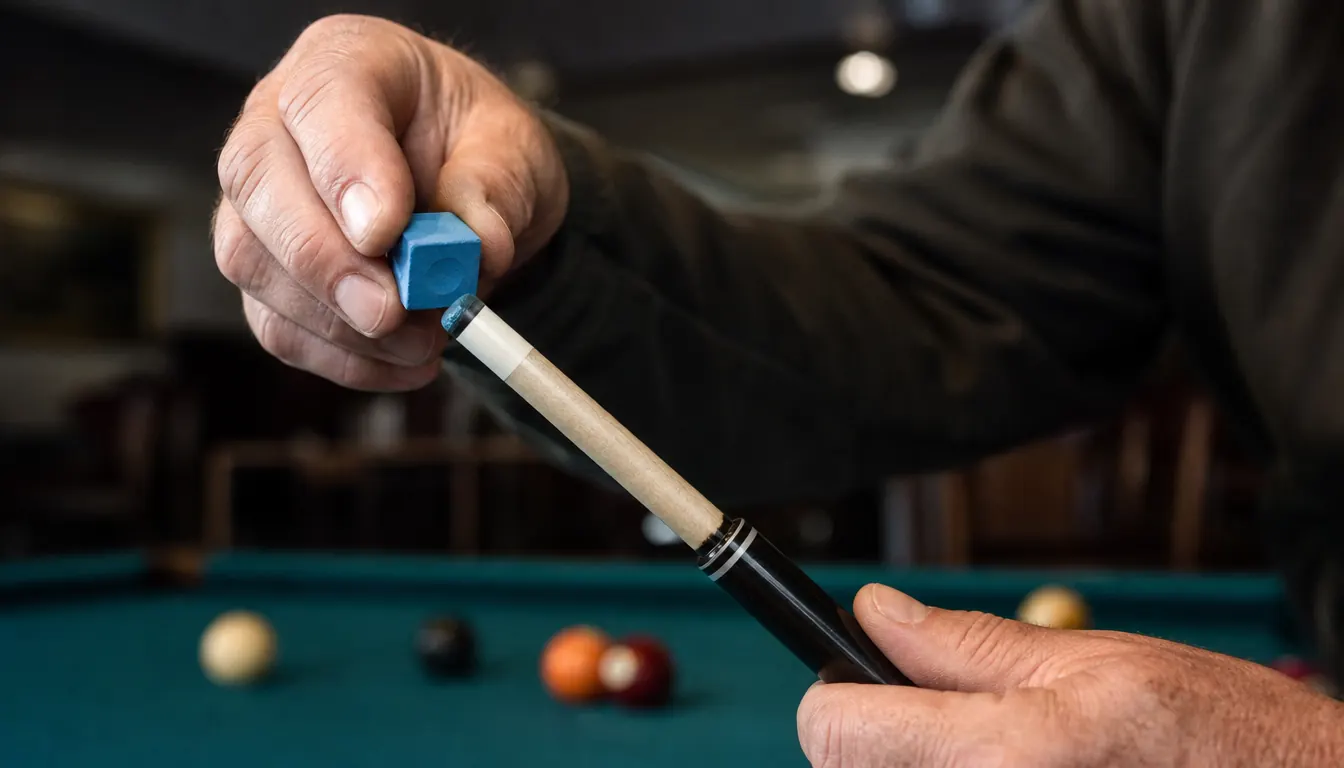
The tip on the CUESOUL Rockin is 12.75mm, which is right in the middle of the useful range and the safest place to start. A standard tip runs around 13mm. Anything down near 11.75 to 12 gives you a smaller contact patch and more room for spin, and it also punishes a wandering stroke.
What the diameter actually changes is how much of the ball you can see yourself hitting. A 12.75 tip is narrow enough that you can pick a spot on the cue ball and get close to it, and wide enough that being half a tip off center still catches leather instead of sliding off into a miscue. For a league player who shoots once a week and practices on the weekend, that forgiveness matters more than a few extra revolutions of spin.
If you already shoot with something in the 11.75 range and you like it, this cue will feel a little blunt at first. If you have been playing a 13mm house cue your whole life, you will barely notice, which is the point. Do not buy a narrow tip because a pro uses one. Buy the tip that lets you hit where you are aiming.
One practical note. Diameter and hardness get talked about as if they are the same thing and they are not. Diameter is geometry. Hardness is feel and how the tip grabs the ball. You can change hardness at your next tip replacement. You cannot change diameter without changing the whole shaft. Get the diameter right first and worry about the rest later.
Step 3: Look at the Ferrule and the Joint, Because Nobody Else Does
The joint and the ferrule are the two parts nobody looks at and the two parts that decide how the cue feels in your hand. The CUESOUL Rockin has a stainless steel M/18 joint and a carbon fiber ferrule.
A steel joint gives a firm, crisp hit. You feel the ball leave. Some players find that feedback useful and some find it harsh, and the ones who want a soft hit usually go for a wood-to-wood joint instead. That is a taste question, not a quality question. Steel is the standard for a reason: it holds up, it stays tight, and it does not change character over a couple of seasons.
The carbon fiber ferrule is the part I care about more. Traditional ferrules are wood or a synthetic that dings, stains, and eventually develops a hairline crack where it meets the shaft. Carbon fiber does not absorb chalk and does not swell in a damp basement. My table sits in a finished basement on Long Island and the humidity down there swings hard from July to February. A ferrule that does not move with it is one less variable to think about.
There is a maintenance angle too. A steel joint stays tight. A wooden collar can swell in humidity and sit proud of the shaft, and then the cue does not seat flat and you get a click on hard shots that you will chase for weeks. If the cue lives in a basement, steel is the lower-maintenance choice.
Step 4: Check the Shaft Wood and the Wrap
The CUESOUL shaft is kiln dried North American maple, hand selected per the listing. Maple is the default because it is stiff, straight, and stays that way if it was dried properly before it was turned. The kiln drying is the part that matters. Wood that was rushed still holds moisture, and a shaft with moisture in it will warp no matter whose name is on the butt.
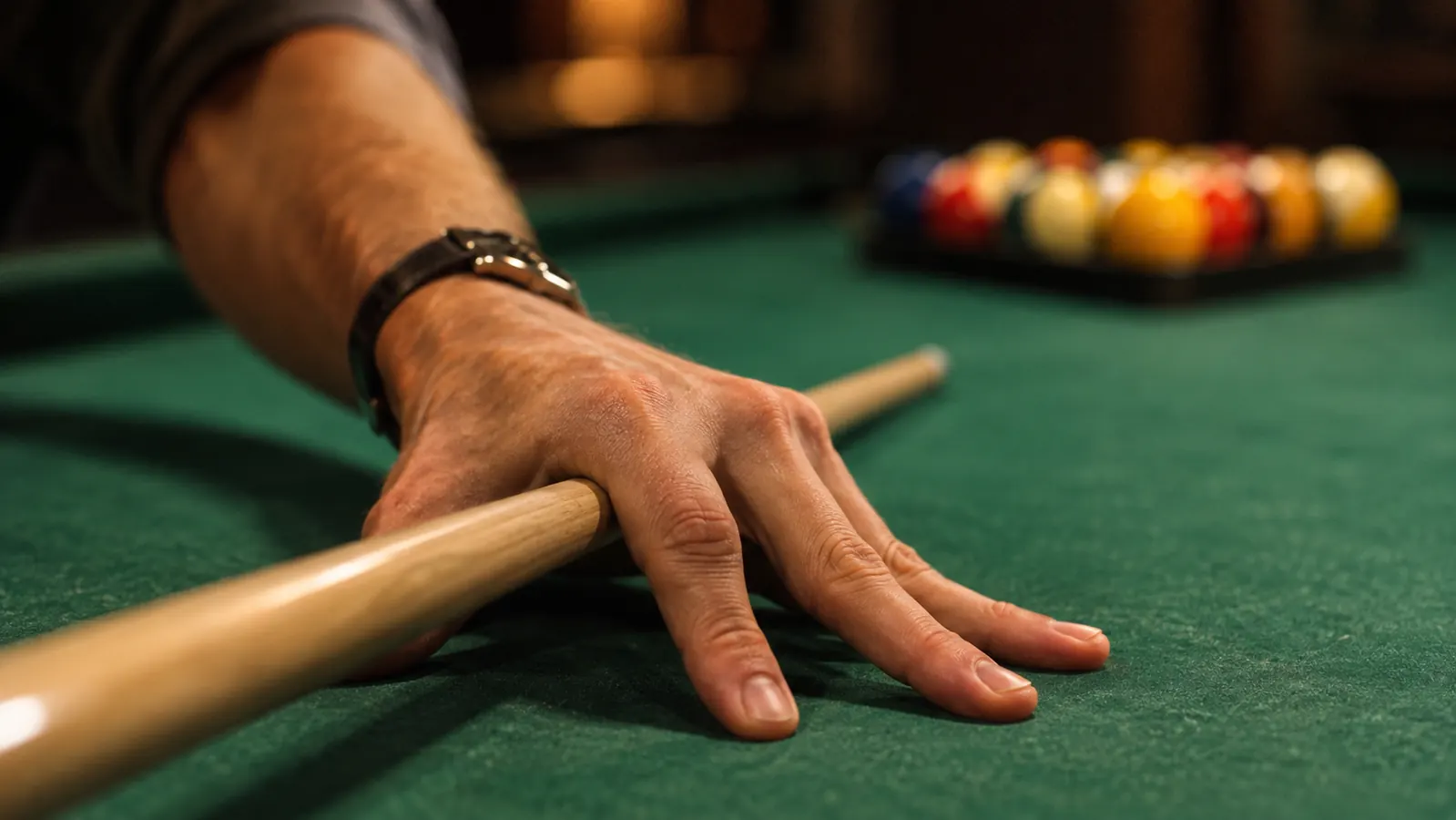
The Irish linen wrap is the part you will notice on every single shot. Linen absorbs sweat and gives you something to hold onto. On a hot night in a pool hall, or in a basement in August, a bare butt gets slick and the cue starts to twist in your hand. Linen does not. It also has a texture to it, a little like coarse fabric, and some players love it and some cannot stand it. Put your hand on one before you commit and see which camp you are in.
One more thing about wrap: it wears. Linen is durable but not permanent, and after a few years of league nights it will smooth out where your grip sits. That is normal and it is not a defect. It is the price of having something that actually grips.
What I check in the first thirty seconds with any cue is straightness. Roll the shaft on the cloth and sight down it like a rifle barrel. Any wobble at the tip end is a pass. It does not matter how good the wood looks on paper. Straight is the only spec that matters and it is the one nobody prints on the box.
Step 5: Set It Up Right and Give It a Month
The CUESOUL Rockin arrives in two pieces, and the first thing to do is check that the joint seats all the way down with a firm hand tighten. No gap at the collar, no wobble. Then take a tip tool and rough the tip up. Factory tips come glazed and slick, and a slick tip is a miscue waiting to happen.
Then play with it for a month before you decide anything. I mean it. The first week with a new cue is worthless for judging, because everything feels strange and you will blame the cue for shots you have been missing with your old one for years. Play four or five sessions. Once you stop thinking about the cue in your hands, you will know whether it is helping or fighting you.
And change one thing at a time. If you buy a new cue, do not also switch tips, switch chalk, and start fiddling with a new stance in the same month. You will have no idea what caused what, and you will end up blaming a perfectly good cue for a grip change.
Keep a note if you are the type. Nothing fancy, just a line after each session on how many shots you missed and what kind of miss they were. Two months of that tells you more about whether a cue suits you than any review, including this one.
A cue does not fix a stroke. What it does is stop adding problems to a stroke you already have.
What Else Helps
Chalk is the cheapest improvement in this game and the most neglected. A cube of good chalk, applied with a twist rather than a stab, will do more for your miscue rate than any upgrade. Scuff the tip every few weeks with a tip tool. Wipe the shaft with a damp cloth and burnish it, and never soak it.
A hard case is not optional once the cue leaves the house. A two-piece cue that rides loose in a trunk will warp, and a warped shaft cannot be fixed by anything you screw onto the butt end of it.
The other thing that helps is having the cue within reach. If it lives in a case in the closet, you will play less. My CUESOUL Rockin hangs on a rack by the basement stairs, which is the best thing I ever did for my game, because it takes ten seconds to pick it up and run a few racks while the coffee is brewing.
And the least popular advice I can give: the gear is maybe ten percent of this. The rest is table time. A player with a decent cue and a hundred racks a month will beat a player with a great cue and ten. Buy the cue that stops getting in the way, then go get in the way of some balls.
If These Are Your Numbers, Stop Shopping and Start Practicing
21 oz, 12.75mm tip, carbon fiber ferrule, steel joint, maple shaft, linen wrap. Nothing on that list is a gimmick. If it matches how you play, this is one cue decision you can put down for a while.
Amazon Check Today's Price on Amazon →