

Most miscues do not come from a bad stroke. They come from a tip that had nothing on it. I have watched guys in my Tuesday night 8-ball league stroke a ball perfectly and still rattle it in the jaws, and most of the time they chalked once at the start of the rack and figured that was enough. I did the same thing for years with a house-cue-quality two-piece I owned forever. Then I started paying attention to what was actually on the tip when I got down on the cue ball, and the difference was not subtle.
I have played league for about 20 years and I have an 8-foot slate table in my basement that I bought used about 12 years ago. My son Mike and I play most weekends. What I settled on is the Master cue chalk from Imperial, the 12-cube box. It is not fancy and it will not fix a crooked stroke. What it does is put a smooth, even coat on the tip every time, and that removes a whole category of problem from the table. Here are ten reasons it earned a permanent spot in my case.
Twelve cubes, one less thing to think about before you get down on the ball
The box lives on the shelf by my table. One cube rides in the case, one stays in the drawer. Current price is at the link below.
Amazon Check Today's Price on Amazon →It puts an even coat on the tip instead of a dusting
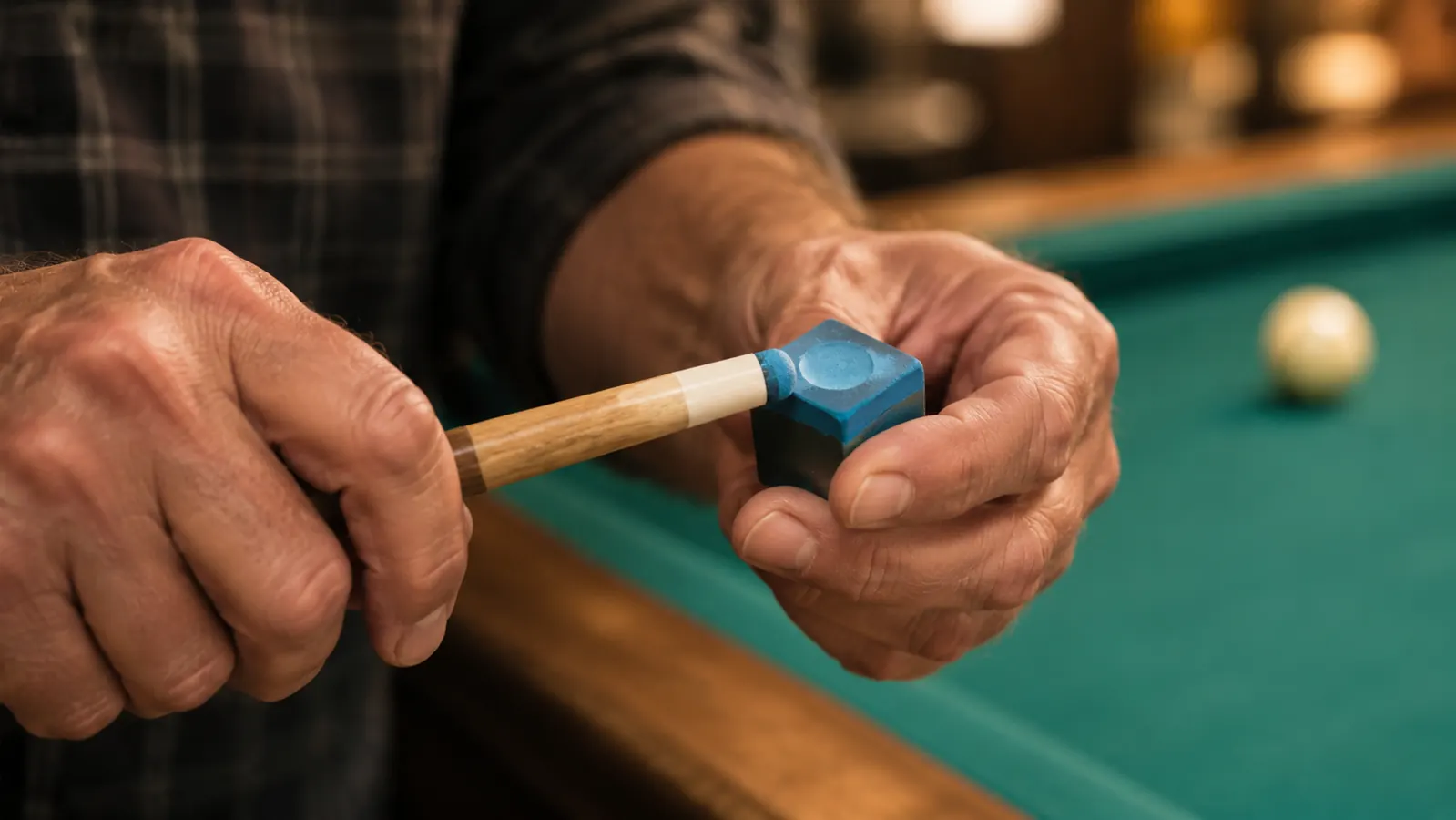
You scuff the cube, rotate the cue a quarter turn, scuff again. What you want is a matte, slightly textured surface across the whole tip, not a puff of powder sitting on top of one glazed spot. The cube from Imperial goes on smooth and even, which is the listing's claim and also what I found at the table. An even coat means the tip grabs the ball the same way no matter where you strike it. A patchy coat means a different hit every time, and you never quite know which one you are going to get.
It cuts the miscues that have nothing to do with your stroke
A miscue is not always a bad stroke. Sometimes the tip just slides. That happens when the chalk is thin on the part of the tip that meets the ball, usually the edge on a draw shot. The listing says the chalk increases friction between the tip and the struck ball and minimizes miscues, which is the whole job in one sentence. I notice it most on hard draw and on anything struck below center. Those are the shots where a thin coat punishes you instantly and a proper coat just does its job.
The coat holds through a whole rack, it does not cake or flake
Cheap chalk crumbles. You scuff it, half ends up on the floor, and the part that stays on the tip flakes off by the third shot. This chalk from Imperial does not cake or flake, at least not in my experience over months of Tuesday nights in a hall with no air conditioning. That matters more than it sounds. If the coat stays put, you are not re-chalking between every shot and you are not hovering over the ball wondering whether the tip is still covered.
Twelve cubes carry you through a whole season of league nights
A box of twelve cubes is a lot of chalk. I play league on Tuesdays plus most weekends in the basement, and I have not come close to running this box down. The cube wears slowly because you are scuffing it, not grinding it into powder. If you are the guy buying a single cube at the counter every couple of months, this box replaces a lot of small errands. Mine sits on the shelf by the table and I pull a fresh one out when the cube in my case gets low.
One cube in the bag, one in the case, one in the basement drawer
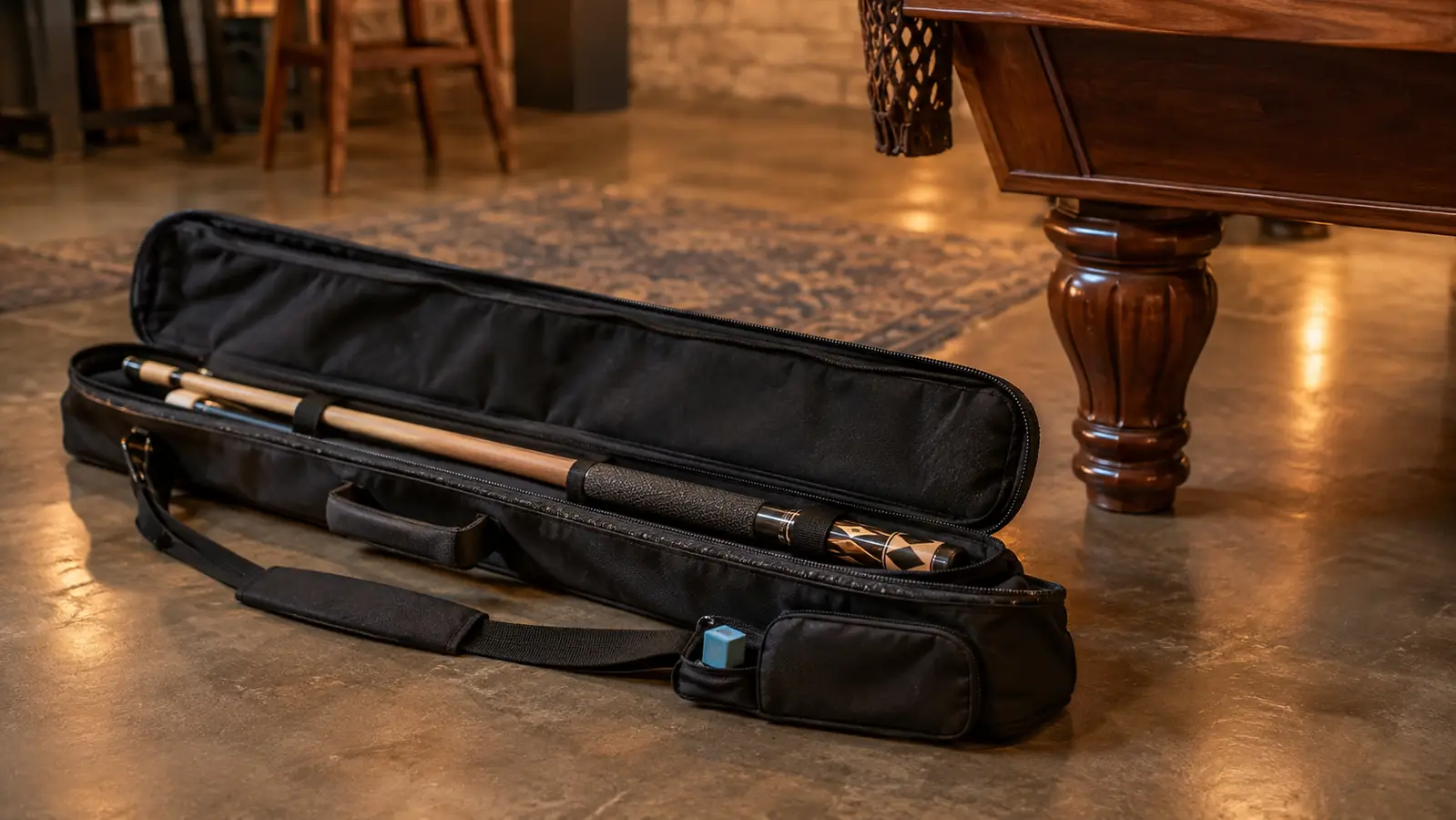
The mistake I made for years was keeping chalk in exactly one place, which meant it was never where I needed it. Twelve cubes solves that problem permanently. One lives in the side pocket of my case. One is in the basement drawer next to the brush. One is in the bag I carry to league. The rest stay in the box. That sounds like a small thing until it is your turn and you are patting your pockets while the other team waits.
You can pick a color close to your cloth and stop the marks
The line comes in a range of colors so you can get something close to your table, and the point of that is fewer marks on the felt. My cloth has been through plenty, but I still do not like contrast smudges all over it. Matching the chalk to the table cuts that down. It also means when you brush the table you are brushing dust, not scrubbing out marks that set in overnight. If you play on a hall table, this is less of an issue, but at home it is.
The box keeps the cubes from grinding into gravel in your case
Loose chalk in a case turns into gravel. It knocks around, chips at the corners, and coats everything else in that pocket with powder, including your glove and your shaft. The protective box keeps the twelve cubes separated and intact until you need them. Mine has been riding in a case for a long time and the cubes still have square corners. That is the box doing its job, and it is not something you think about until you have had a case full of powder.
It works the same on a house cue as on your own
Half the guys I play with pick a house cue off the rack, and house cues have rough tips because nobody takes care of them. Good chalk is the one thing you can do for a cue you do not own. It puts a usable coat on a rock-hard tip and makes it play closer to something decent. I have handed a cube to a teammate more than once after watching him miscue on a shot he makes in his sleep. Two seconds of work on a cue that is never going to be yours.
It makes your pre-shot routine give the same result every time
Chalking is a routine, and a routine only helps if it produces the same result each time. Scuff, quarter turn, scuff, look at the tip. With an even coat you know what you have before you get down on the ball. With a cube that crumbles you get a different tip every rack. That is the whole argument for keeping decent chalk in the case. It makes the last thing you do before a shot repeatable, and repeatable is exactly what practice is supposed to build.
It removes the excuse, which is the part that actually helps
Here is the honest version. Good chalk will not make you a better player. Practice does that, and I have watched too many guys buy gear instead of hitting balls. What good chalk does is remove an excuse. When the tip is covered properly, a miss is your stroke, your aim or your speed, and you can go fix it. When the tip is bare, you get to blame the chalk and learn nothing. I would rather know why I missed. That is worth keeping a box around.
What I'd Skip
Skip the single cube at the counter and skip the fancy chalk holders. A cube does the same job whether it sits in a plastic sleeve or a machined brass holder, and you will not shoot better for the upgrade. I would also skip anything that promises to change how you play. Chalk is friction, nothing more. Buy the box, keep a cube where you actually need it, and put the money toward table time instead. The one thing I would not skip is chalking before every shot, including the easy ones. Especially the easy ones, because that is where a bare tip bites you.
When the tip is bare, you get to blame the chalk and learn nothing. I would rather know why I missed.
Stop losing racks to a tip that had nothing on it
The Master cue chalk from Imperial comes as twelve cubes in a protective box. One for the case, one for the bag, one for the drawer by the table.
Amazon Check Today's Price on Amazon →