
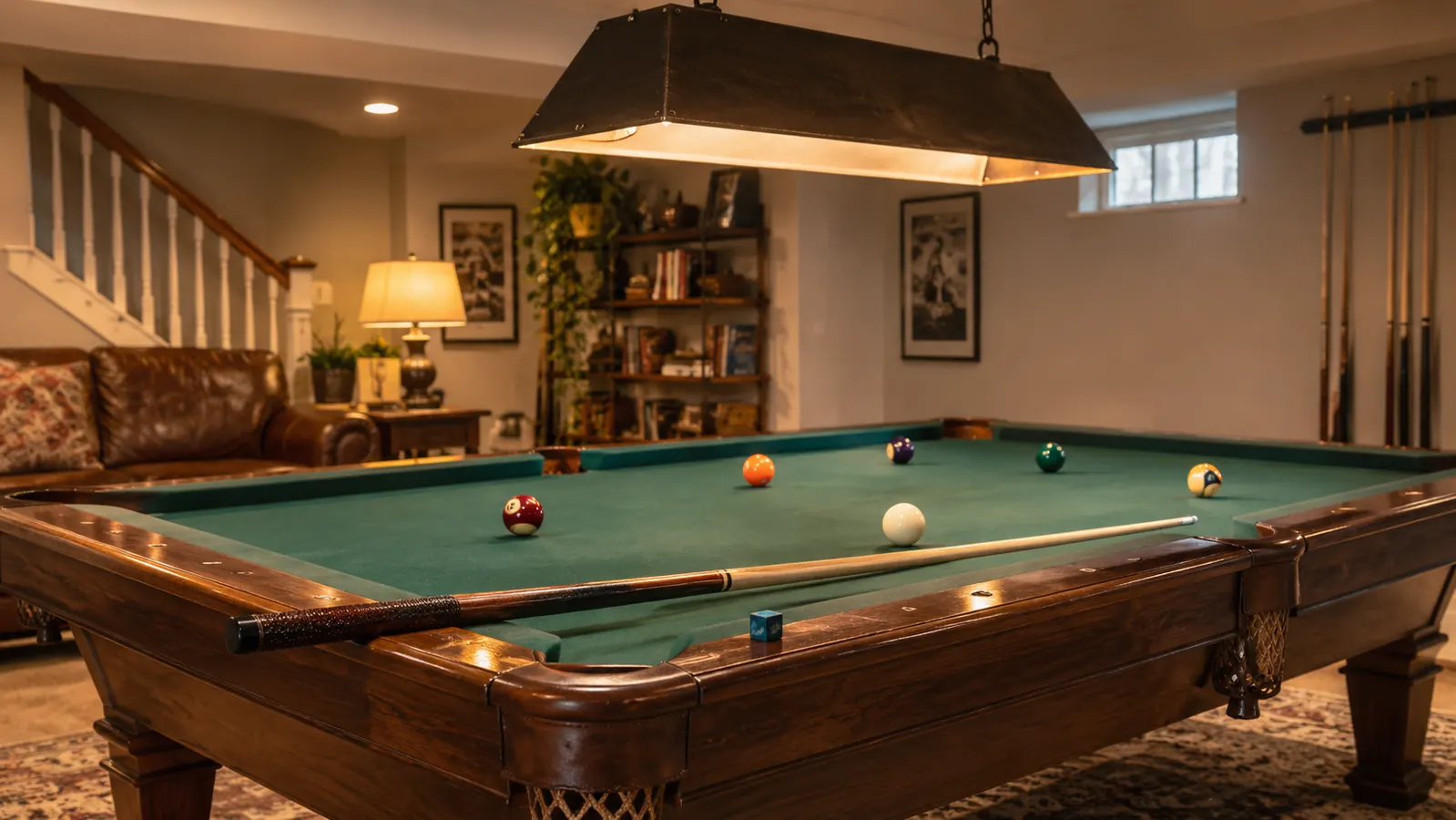
Chalk is the cheapest thing in your bag and the only thing you touch on every single shot. Most players never give it a thought until the cue ball squirts offline on a shot they needed. I have played Tuesday night 8-ball on Long Island for about twenty years, and for most of that time I used whatever no-name cube was sitting in the basket by the rack. Last winter I bought a box of Master cue chalk from Imperial, twelve cubes in a protective box, and played a full league season with nothing else. Here is the honest version. The Master chalk is better, and it is not better in a way that will turn you into a better pool player. It just removes one small thing that can go wrong.
Short answer first. Master cue chalk from Imperial goes on thin and even, holds its grip on off-center hits, and wears down flat instead of hollowing out in the middle. The generic house chalk in the basket at the pool hall is cheaper per cube, and you can buy it almost anywhere, which counts for more than most players admit. If you play league nights and practice at home most weekends, a box of twelve is a sensible buy. If you shoot one rack a month at a bar with a house cue, it is not.
| Master Cue Chalk (Imperial) | Generic house chalk | |
|---|---|---|
| Coating on the tip | Goes on thin and even in two light twists, does not cake or flake | Needs hard grinding, goes on thick and gritty and flakes at the edges |
| Grip on off-center hits | Held on hard draw shots with the cue ball struck low and outside | Felt like the tip skated for a fraction of a second on the same shot |
| Wear pattern | Wears down flat, all four corners stay square for weeks | Bores a hole in the middle in about a week, so the edges do the work |
| Dust on the cloth | Very little residue, and it comes in a range of colors to match the felt | Leaves a haze of dust on the cloth over a night of play |
| Storage | Twelve cubes in a protective box, clean and dry until you need one | Loose cubes in a bag or a shared basket, gritty and dropped on the floor |
| Cost per cube | More per cube than the loose stuff in the basket | The cheapest way to keep a chalk holder filled |
| Buying it at the last minute | Order ahead or find a billiard supply shop | On the counter at any pool hall, at nine at night |
| Bar table with a house cue | More chalk than that situation needs | Perfectly adequate, nobody is drawing the ball three rails |
Where Master Wins
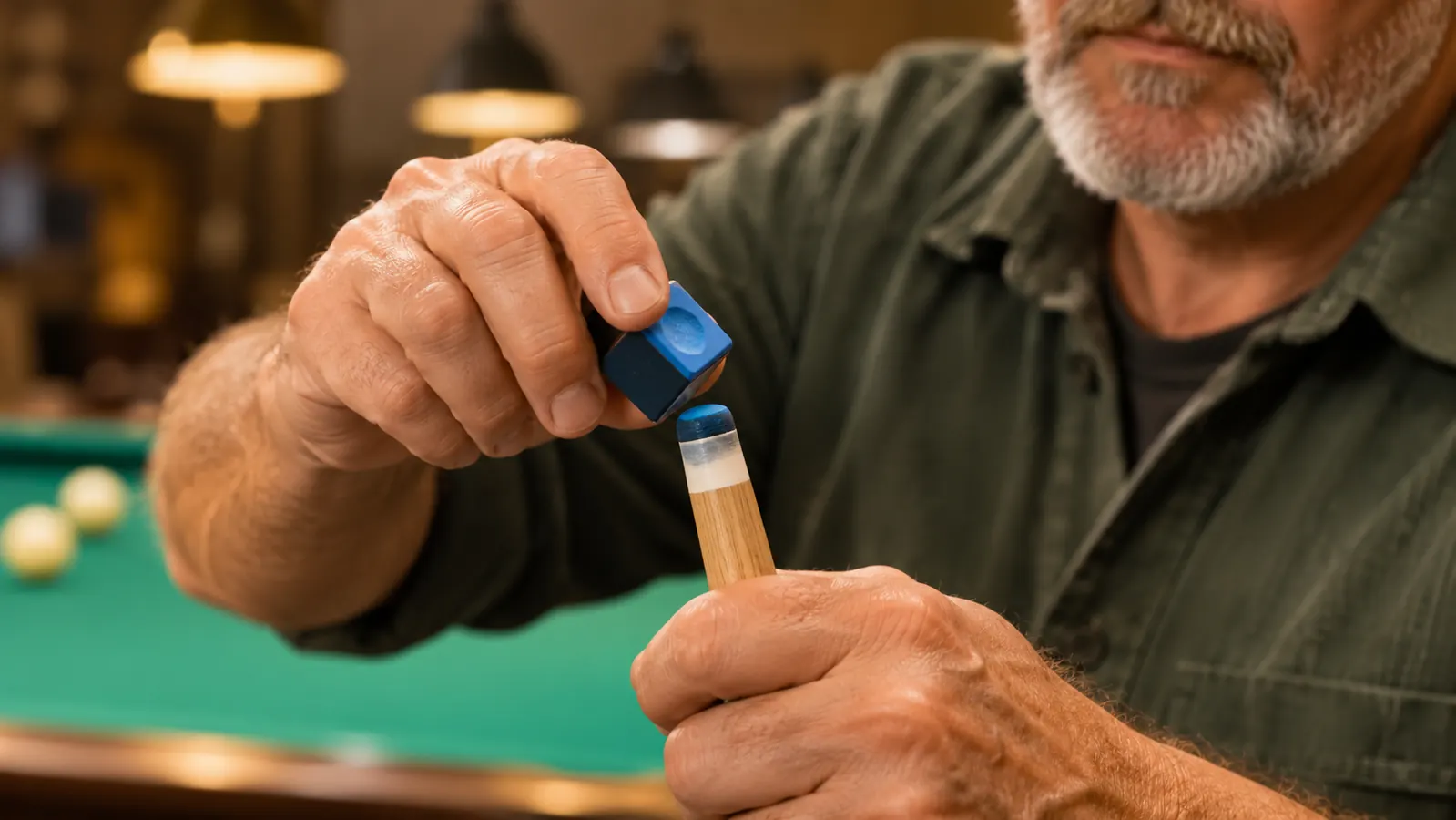
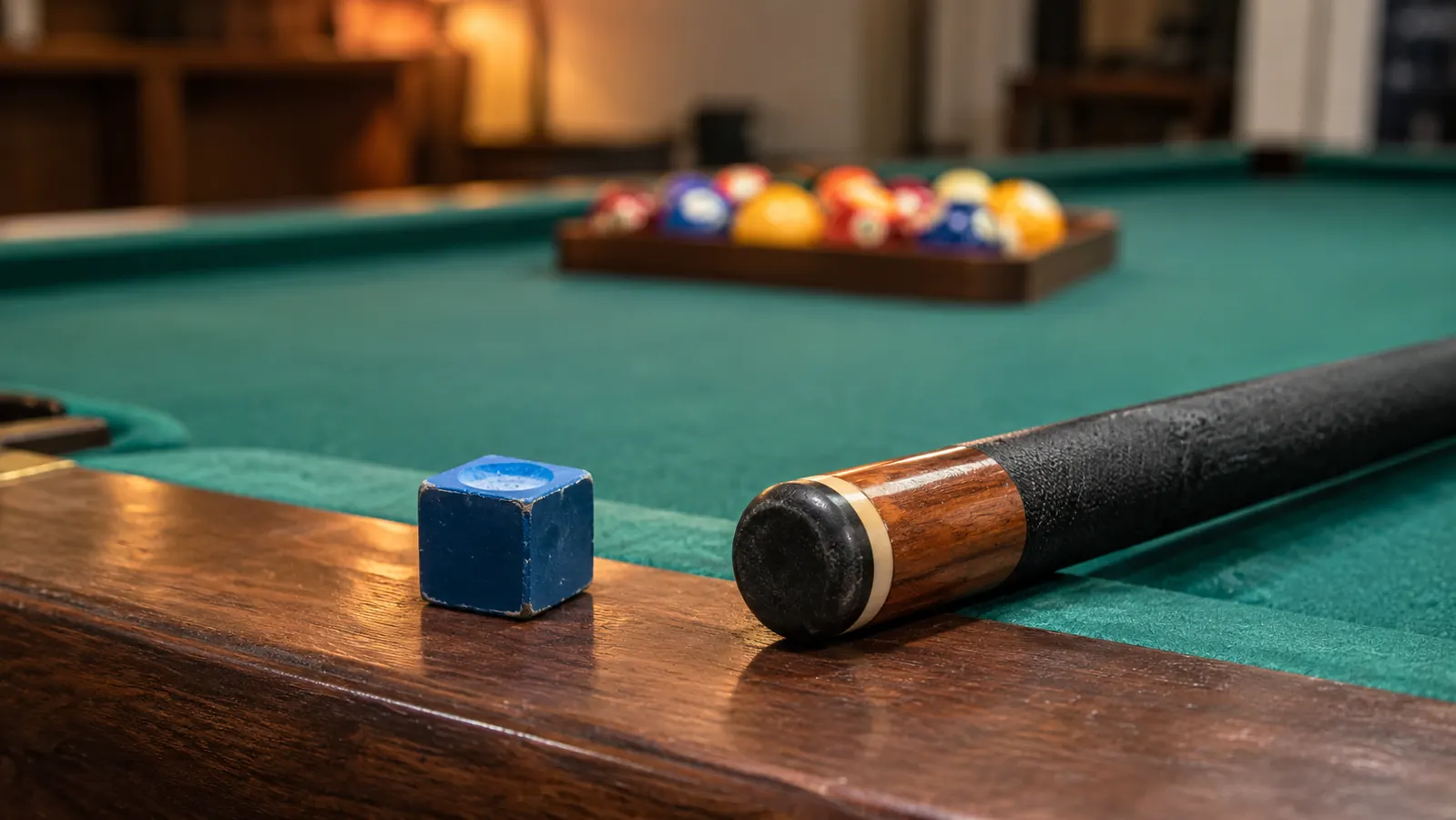
The first thing I noticed was the coating. This chalk goes on thin and even, and it does not cake or flake. Two light twists and the tip is covered. House chalk needed a few hard grinds, and by the second game the cube had a hole bored into the middle of it, which meant the edges of the tip got chalk and the middle got grit. A cube that has hollowed out is a cube that is lying to you about how much chalk is on your tip. The Master cubes wore down flat. All four corners stayed square for weeks, which sounds like a small thing until you realize it means every cube in the box behaves the same way from the first day to the last.
The second thing is what did not happen. Over a full season of league nights and weekend practice I did not miscue once on a shot I had lined up properly. That is not a claim about my stroke. My stroke is the same as it was. It is a claim about the tip having enough friction on it when the cue ball is struck off center on a hard draw. House chalk gave me two of those in one session the month before. The other small win is housekeeping. This chalk leaves very little residue on the felt, and it is sold in a range of colors so you can match it to your table, which keeps the marks down. Fewer marks means less brushing on a Sunday morning, and I have brushed that table plenty.
Where House Chalk Wins
Now the part the packaging never says. Generic house chalk is the cheapest way to keep a chalk holder filled, and cheap has real value. A box of twelve costs more per cube than the loose cubes in the basket, and if you are the guy who shows up at the hall with nothing, the basket is right there. You cannot buy Master chalk at a gas station at nine at night. You order it ahead or you find a billiard supply shop that carries it. If you forget yours on league night, you are chalking with whatever everybody else is using anyway. That is not a small practical advantage, and I would not pretend otherwise.
The second place house chalk wins is the situation it was built for. A bar table with a house cue and four guys waiting is not a place where the quality of the chalk is the variable. Nobody is drawing the ball three rails. The cue is a warped one-piece and the tip has been flat since the last renovation. House chalk is perfectly adequate there, and it is what I use when I am out and somebody hands me a cue. The other honest note is that a lot of the bad reputation cheap chalk carries is not the chalk at all. It is the cube itself, hollowed out in the middle, gritty with dust and somebody else's tip residue. A fresh cheap cube is a different animal from a dead one.
Two light twists instead of four hard grinds
Twelve cubes in a protective box, so there is one in the case, one in the drawer by the table, and a couple for the teammates who never bring their own. Master cue chalk from Imperial, 4.8 out of 5 from more than eight thousand ratings.
Amazon Check Today's Price on Amazon →What Chalk Actually Does on the Table
Chalk does one job. It puts a rough, dry layer between the leather tip and the cue ball so the tip can grip the ball instead of sliding across it. That is it. It does not add spin. It does not help you aim. It does not fix a tip that glazed over last season or a stroke that wobbles on the way through. What it does is remove one way to lose a shot. A miscue on a shot you had lined up properly is not bad luck. It is the tip losing grip at the moment of contact, and most of the time the chalk gave up before the tip did.
Where this shows up is off-center contact. Hit the cue ball dead center with a decent tip and you can almost shoot without chalk. Hit it low and outside on a hard draw, which is a shot every league player faces in a close game, and the tip needs everything the chalk can give it. That is the difference I felt between the two. House chalk on a hard draw felt like the tip was skating for a fraction of a second. The Master chalk felt like the tip bit. Same cue, same tip, same player, same eight-foot table in the same basement.
What it does not do is change your results overnight. I want to be clear on that, because the internet is full of guys who bought something and suddenly ran three racks. It did not happen to me. My league average did not jump. What changed was that I stopped losing the occasional shot to something that was not my stroke, and over a season that is a handful of games. Practice is what makes you a better player. Gear just stops getting in the way of the practice.
How I Compared Them
The test was not complicated. Same cue all season. Same single layer tip I had put on in the fall and kept shaped. My home table is an 8-foot slate table in the finished basement, bought used about twelve years ago, and it is where I did most of the shooting. I kept one Master cube in the case and a second one loose in the drawer by the table so I was never reaching for anything else. For the first month I used the house chalk I had been using for years and counted the miscues on shots I had lined up properly. Two in about ten sessions, both on hard draw shots where I was hitting low and outside.
Then I switched for the rest of the season. Same count, zero. I am not going to pretend that is a scientific study. Ten sessions is not a season, and I miscue less than I did ten years ago because my stroke is better than it was. What I can tell you is that the cubes behaved differently in my hand, and that the difference was obvious inside the first week. The Master cube went on thin and stayed flat. The house cube needed grinding and hollowed out.
I also paid attention to the felt. My table is covered and I brush it. Cheap chalk puts a haze of dust on the cloth over a night of play, that dust ends up on the cue ball, and a dirty cue ball rolls differently than a clean one. Small thing, but it compounds. With the Master cubes I brushed less often and the cloth stayed cleaner between brushings. Mike, my son, noticed it before I said anything, and he is not the type to notice anything about a pool table.
Two miscues in ten sessions on house chalk. None in a full season on Master. Same cue, same tip, same stroke.
A Box of Twelve Lasts Longer Than You Think
Twelve cubes is more chalk than one person needs in a year. That is the point. A cube lives in the case, a cube lives in the drawer by the table, one goes in the pocket of the cue bag for league night. The rest stay in the protective box, clean and dry, which is how chalk should be stored. Chalk that rattles around loose in a bag picks up grit and dust and gets dropped on a floor. A cube that has been on a pool hall floor is a cube you should throw out, not put back on your tip.
I gave two cubes to a teammate in October and he is still on the first one. Another went to Mike for the table in his apartment. I am seven months in and on my fourth cube, counting the two I gave away as gone. So a box of twelve runs roughly a season and a half for one player who shoots three or four times a week. That math is the argument for buying the box instead of a single cube, whatever the per cube difference works out to.
What I Liked
- Goes on thin and even, does not cake or flake
- Held its grip on off-center hits where house chalk felt like it skated
- Wears down flat instead of hollowing out in the middle
- Comes in a range of colors to match the felt, which cuts down on marks
- Twelve cubes in a protective box, easy to keep clean and easy to share
- 4.8 out of 5 from more than eight thousand ratings
Where It Falls Short
- Costs more per cube than the loose chalk in the pool hall basket
- Not something you can pick up at a gas station on the way to league night
- Plain cardboard box rattles around in a cue bag
- Won't fix a glazed tip or a stroke that needs work, and it isn't sold as that
Who Should Buy Which
Buy the box of twelve if you play league or practice at home on your own table and you are tired of chalking four times a shot. Buy it if you have a decent tip on a cue you actually own and you want to stop wondering whether the miscue was you or the cube. Buy it if you play with people who never bring their own chalk, because twelve cubes means you can hand one out and not think about it again for a year.
Stay with house chalk if you play a few times a month at a bar, or if you are still shooting with a house cue, or if you are new enough that the cue ball goes where it goes for reasons you cannot yet explain. There is nothing wrong with that. I played with house chalk for fifteen years and I got better anyway. The chalk was not what was holding me back. My grip was, and my follow through, and both of those took years of Tuesdays to sort out.
The middle ground, and probably the most common case: you own a cue, you play league, and you have never bought chalk in your life. That was me until last winter. A box of twelve from Imperial is a small enough thing that it is worth trying for one season. If you cannot tell the difference, you have lost almost nothing and you have chalk in the drawer for the next five years. If you can tell the difference, you will know it in the first week, on the first hard draw shot that comes up.
One box, one season, one less thing to blame
Master cue chalk from Imperial, twelve cubes in a protective box. If a shot goes wrong this season, it will be your stroke, and that is the only useful thing to be wrong about.
Amazon Check Today's Price on Amazon →