

There is a coffee can on the shelf above my basement table that holds about twelve years of chalking habit. Stubs mostly. A few worn down to something you would mistake for a pebble. Somewhere in that rotation is the third or fourth box of Master Billiard Cue Chalk, the twelve cube box from Imperial, and I have been through enough of them now that I can finally tell you what actually changes and what does not. A week of use tells you nothing about chalk. A dozen cubes tells you whether a cube holds its shape as it wears, whether it still coats evenly after a winter in a cool basement, and whether it ends up on your tip or all over your cloth. That is the review I wish somebody had handed me before I started buying chalk one cube at a time.
Let me get one thing out of the way. Chalk does not make you a better player. Practice does that, and anyone who tells you otherwise is selling something. What good chalk does is stop the cue from getting in the way of the stroke you already have. A tip that is not covered properly will slide off the ball on a firm draw, and then you spend the next frame staring at your mechanics when your mechanics were never the problem. That is the whole promise here. It removes a variable.
The Quick Verdict
A box of twelve that coats evenly, wears down without cracking, and stays dry because it lives in its own box. If you chalk before every shot and you are tired of buying chalk one cube at a time, this is the box I would hand you.
Amazon Check Today's Price →Twelve cubes in a box beats one dried out cube rattling around your case
The box is the part most people skip, and it is the reason the eleventh cube works as well as the first one did.
Amazon Check Today's Price on Amazon →How I've Used It
I play Tuesday night 8-ball in a league at a pool hall about fifteen minutes from the house. Been doing that close to twenty years now. The rest of my table time is at home, on an 8-foot slate table I bought used about twelve years ago and had refelted once since. My son Mike comes over most Sundays and we play until one of us gets disgusted and quits. That is the setting. A basement on Long Island with a dehumidifier running half the year and a table that gets more use than most tables ever see. When the last box arrived, I did what I always do, which is put one cube in my case, one in the drawer by the table, and set the rest of the Imperial box on the shelf with the lid closed.
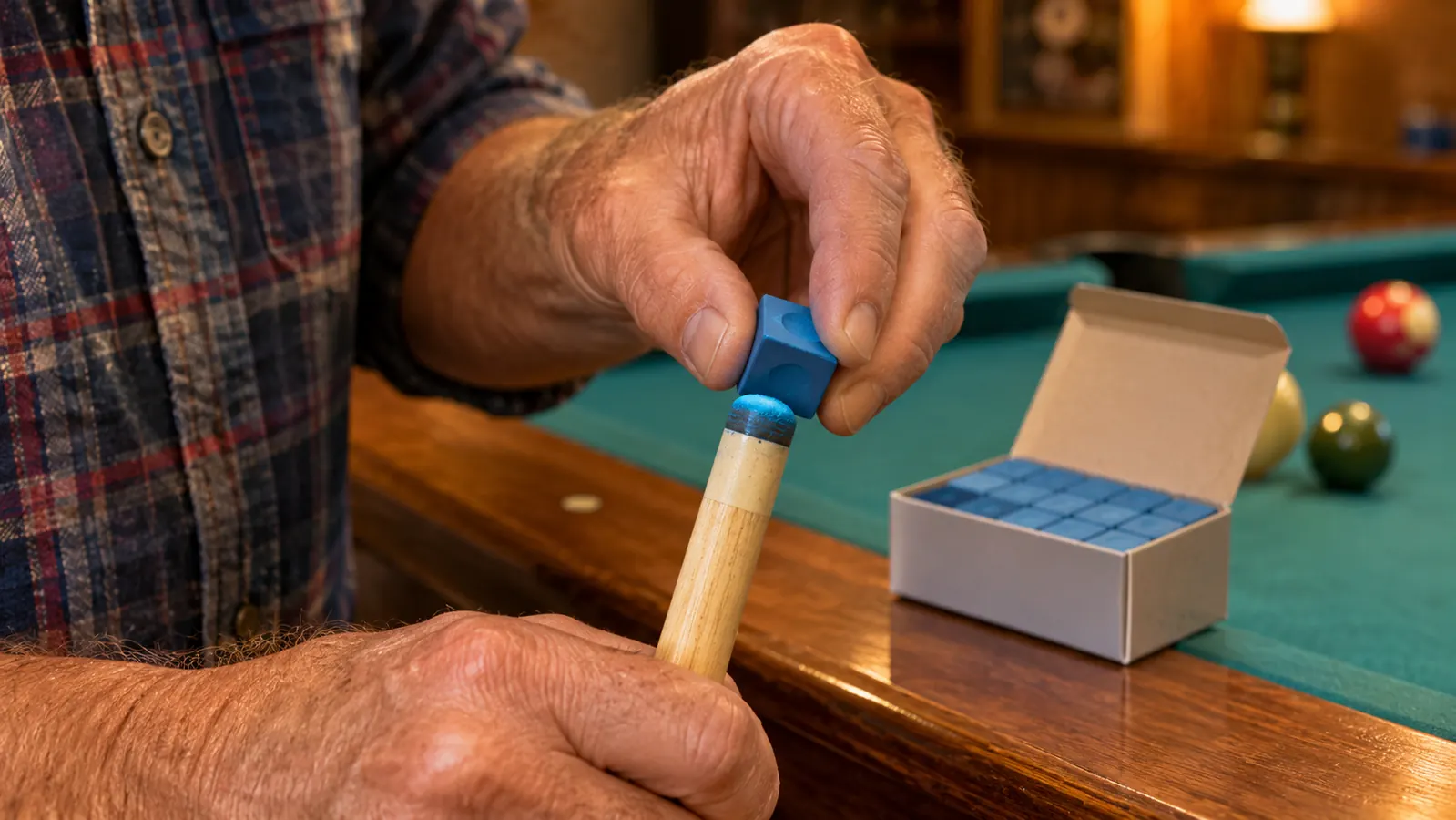
My routine is not fancy. I chalk before every shot. Not every other shot, not when I remember, every shot. I set the cube against the tip and give it a quarter turn, then another quarter turn. Two seconds, maybe. I have never understood the players who grind at it like they are trying to start a fire. All that does is hollow out the middle of the cube and put a cloud of powder in the air for everybody at the table to breathe.
What sent me looking for something better was not a bad shot. It was a cheap cube that had gone hard and glazed on the outside and would not transfer anything to the tip no matter how long I worked at it. I stood there on a Tuesday night scuffing a cue tip with a cube that had given up, and I decided I was done buying chalk one cube at a time out of a bin on the counter.
What Chalk Actually Changes on the Table
The job is friction. The listing for this chalk says it plainly: you apply it to the tip to increase the friction between the cue tip and the ball, which minimizes miscues. That is the entire mechanism and there is nothing mystical about it. A tip with a good even coat grips the cue ball for the fraction of a second the two are actually touching. A tip with a thin coat, a patchy coat, or a coat of hard glazed chalk does not grip. On a center ball hit you will never notice the difference. Put low left on the cue ball with a firm stroke and you will notice it right away, usually with a loud click and the ball going somewhere you did not send it.
The other half of it is consistency. A cube that coats the same way every time means the tip feels the same on the first shot of the frame as it does on the last. When I was working through those cheap cubes, some went on smooth, some went on gritty, and a few would not go on at all. You spend the opening of a rack figuring out your equipment instead of your line. That is a small tax, but you pay it every single frame, and across a season it adds up to a lot of dropped games you cannot explain afterward.
What it does not change is your stroke, your aim, or your ability to see the angle. I want to be clear about that because the language around billiard gear tends to oversell. I have had nights where the chalk did its job perfectly and I still lost three straight to a guy who shoots better than me. That is on me, not the box.
A cube that coats the same way every time means the tip feels the same on the first shot of the frame as it does on the last.
Six Months In: Does It Cake or Flake?
Every chalk maker who ever printed a label has claimed a smooth, even coating that will not cake or flake, so I did not put much stock in that line when I read it. What I can tell you is what the cubes in my box have actually done. They wear evenly. Six months in, a cube goes from a fresh square to a rounded, slightly domed shape, and it stays usable until it is thin enough that your fingers are practically down on the tip. I have not had one crack in half or crumble at a corner, which is more than I can say for the loose cubes I used to buy out of a plastic sleeve.
The basement is the real test. It runs cool and damp for half the year, and chalk left sitting out will pick that up and go hard. This is where the way Imperial packages the stuff earns its keep. Twelve cubes in a closed box on a shelf, and the ones I am not using are exactly as they were the day I opened it. The cube in my case pocket is the one taking the abuse, and even that one has held up better than anything I bought loose.
One honest note about a fresh cube. It is a little soft at the start and it will put more chalk on the tip than you need, and a bit of that ends up on the cloth for the first few shots. Two or three trips around the table and it settles into its groove. Not a defect, just how a new cube behaves, and it is worth knowing before you decide the chalk is dusty.
Twelve sounds like a lot until you do the arithmetic. I chalk before every shot. A league night is six or seven racks, and a slow rack can run forty shots, and that is before home practice. A cube lasts me roughly two months of that. So a box is about a two year supply for one player at one table, with a little left over. If two of you are chalking off the same box at home, cut that in half, and it is still a long run.
How It Stacks Up Against the Cheap Cubes
I want to be fair to the cheap stuff, because for a lot of players it is genuinely fine. A drugstore cube on a bar table on a Friday night will do the job well enough. Where the Master chalk pulls ahead is in the boring middle of the experience. The coating goes on even, it stays even as the cube wears down, and I am not digging a crater into the middle of it the way I did with the soft ones. That last part matters more than people think. A cube that hollows out in the middle is a cube you are fighting with your fingertip for the last third of its life, and you will catch yourself chalking longer to make up for it.
The other difference is the box. It sounds like packaging and it is not. Chalk is a consumable that fails quietly. A cube that has drawn moisture still looks like a cube, and you will not know it has gone bad until a shot slips on you. Keeping eleven spares sealed up in a protective box while one cube does the work is the single most useful thing about buying this way, and it is why I stopped keeping chalk in three different drawers.
The color range is worth mentioning because it is functional, not cosmetic. The chalk comes in a range of colors so you can match it to the felt on your table, which cuts down on the marks you leave behind. If your cloth is a common shade, pick the closest match and your table stays cleaner. If you are particular about your cloth, look at the options before you order rather than taking whatever comes up first, because the wrong pick defeats the whole point of that feature. Nothing about the colors changes how the chalk behaves, so pick with your eyes and then forget about it.
Where It Falls Short
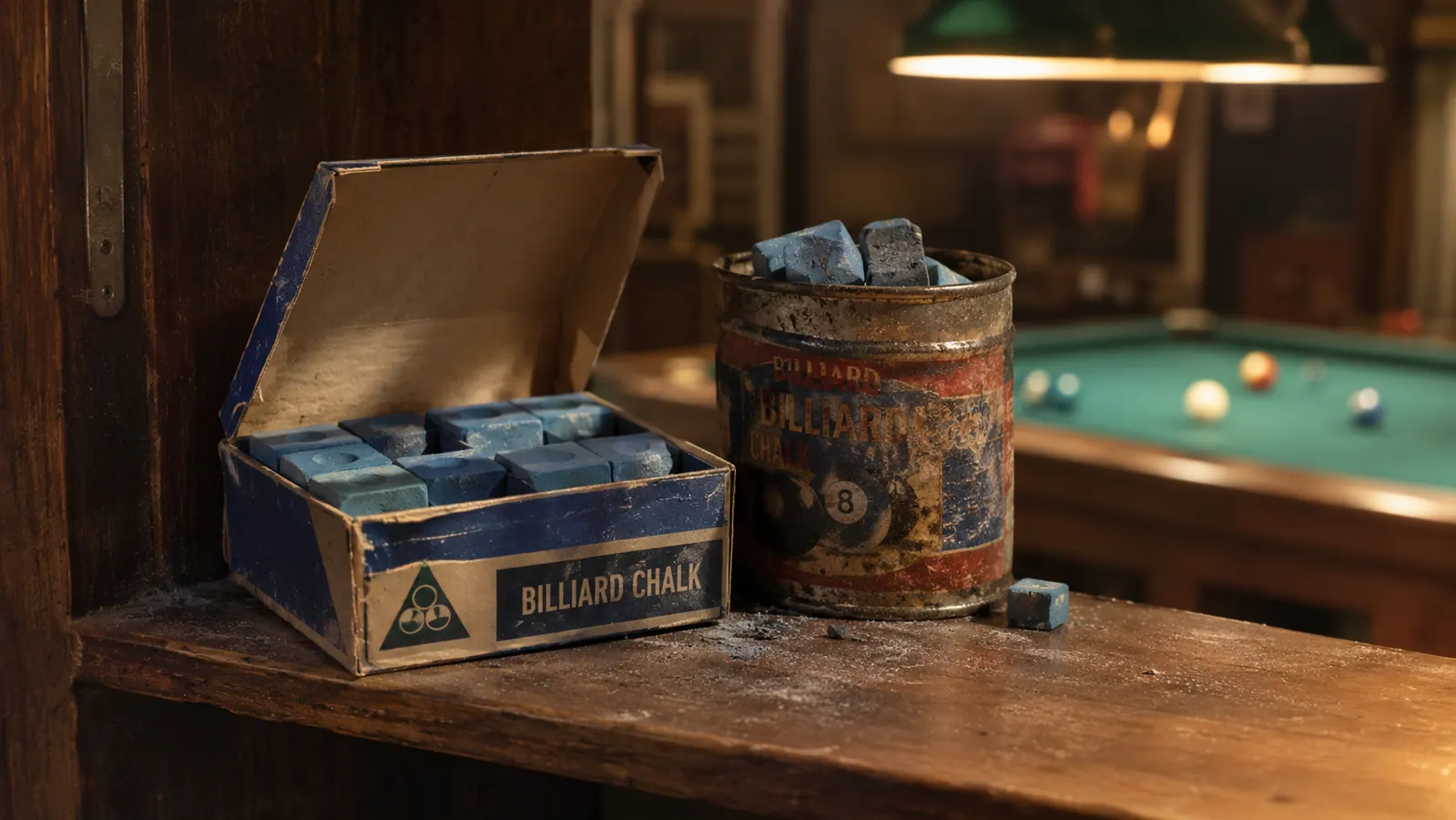
First complaint, and it is a real one. This is a box of twelve. If you wanted to try a single cube before committing, this is not that product. You will be sitting on eleven spares if you do not like it. The consolation is that at this quantity you can hand a few around the league table and be everybody's favorite person for a night, which is roughly how I ended up buying my second box. The first one walked out of my case a cube at a time, handed to guys who asked what I was using.
Second, the color matching is on you. Imperial gives you options and expects you to pick sensibly. That is a small thing, but it is exactly the sort of small thing that annoys people who care about their cloth, and there is no hand holding in the box to help you choose.
And the honest one. If you shoot once a month on a bar table with a house cue, this is more chalk than you will use in a decade, and the difference between it and a cheap cube will be hard for you to feel. That is not a knock on the chalk. It is a statement about who actually needs a dozen.
What I Liked
- Coats evenly and keeps coating evenly as the cube wears down
- Does not crack or crumble partway through a cube
- The protective box keeps the spares dry between sessions
- Twelve cubes runs a league player roughly two years
- Enough color options to match most table cloth
Where It Falls Short
- You have to buy twelve to try one
- A fresh cube puts on more chalk than you need for the first few shots
- Matching the color to your cloth is your job, not the box's
Who This Is For
League players, and anybody with a table at home who chalks before every shot and is tired of buying chalk one cube at a time. If you have ever had a tip let go on a firm draw and could not work out why until you found a hard glazed cube in your case, this is the fix. It also makes sense for a house with more than one player in it, because twelve cubes disappear quickly once two people are chalking off the same box on a Sunday afternoon. Mike has started reaching for my shelf instead of bringing his own, which tells you something about how the stuff compares to what he was using.
Who Should Skip It
If you play four times a year on a bar table with whatever cue is hanging on the wall, buy a single cube and put the rest of your money into table time, which will do more for your game than any piece of gear. If you are brand new and still deciding whether you even like the game, chalk is not where your attention should go. And if you are the type who grinds a cube into a crater out of habit, no chalk survives that, so buy cheap and save the good stuff for when the habit breaks.
The box on the shelf is the whole point, and the eleventh cube proves it
Twelve cubes, kept dry in their own protective box, ready when the one in your case finally gives up on you.
Amazon Check Today's Price on Amazon →