I bought the Cuetec Bowtie Tip Tool after a miscue that cost me a rack. Nothing dramatic about it. Tuesday night league, last ball of the game, and my tip had gone so glassy that the cue ball squirted off line and a two-ball finish turned into a handshake and a loss. I had been playing the same house-cue-quality two-piece for years and treating the tip like a permanent part of the cue, which is a lot like never changing the oil in a truck and then acting surprised when it starts running rough.
Twenty years in a Tuesday 8-ball league and I had shaped maybe four tips in my life, all of them with a scrap of sandpaper from the basement. The domes came out lopsided. The tips held chalk for two racks and then quit. The Bowtie is Cuetec's answer to exactly that problem: a small metal tool with three working surfaces that rides in a pocket and takes about a minute to use. I have been carrying one for months now, on my own cue and on the cues of anybody in the league who hands me something with a tip that looks like a highway shoulder.
The Quick Verdict
Three tools on one small piece of metal, and all three earn their spot. The shaper takes a light hand and the first session is trial and error, but once you learn it your tip stops being the reason you miss.
Amazon Check Today's Price →The Cheapest Rack You Will Ever Win Is the One You Did Not Miscue
A glazed tip costs you position on shots you actually hit well. The Cuetec Bowtie lives in your case pocket and fixes that in under a minute. Check today's price on Amazon.
Amazon Check Today's Price on Amazon →How I've Used It
The tool lives in the side pocket of my case next to a cube of chalk. That is the whole storage system. It measures 2.63 inches long, an inch wide and an inch tall, and it weighs 9.07 grams, so you will not notice it until you reach for it. What comes in the package is the tool and a sheet of instructions. That sounds like overkill until you realize that most people, myself included, have no idea which of the three surfaces does what.
My routine settled in fast. Before league on Tuesday I break the cue down, look at the tip under the basement light, and decide whether it needs shaping or just a scuff. Shaping happens maybe once every three or four weeks on a tip that is holding up well. Scuffing happens most weeks, sometimes twice if I have been practicing a lot of draw. The aerator gets used less, maybe once a month, when a tip starts feeling slick no matter how much chalk I grind into it. The whole thing takes under a minute and it happens while the coffee is still hot.
A typical Saturday goes like this. I carry the cue up from the basement, set it on the workbench by the laundry sink, and hold the tip under the lamp. If the dome is still round and the surface has texture, it gets two passes with the scuffer and goes back in the case. If the dome has flattened on one side, which happens after a week of breaking hard, it gets shaped first. I check the curve against a dime I keep in the drawer, mostly out of habit. The inspection takes about as long as it takes to drink half a cup of coffee. That sounds fussy for a guy who plays Tuesday night eight ball in a pool hall. It is not. It is the difference between a five minute touch-up once a month and a re-tip twice a year.
I also became the guy at league who fixes other people's cues. That was not the plan. Somebody sees you working on your tip before the first rack, and the next thing you know half the team is handing you a house cue with a tip that has been flattened into a mushroom. I have done maybe fifteen of those now, on everything from bar cues to decent two-piece cues somebody bought and never maintained. The tool has held up through all of it. No wobble, no rattle, no visible wear on the cutting surfaces.
What the Three Sides Actually Do
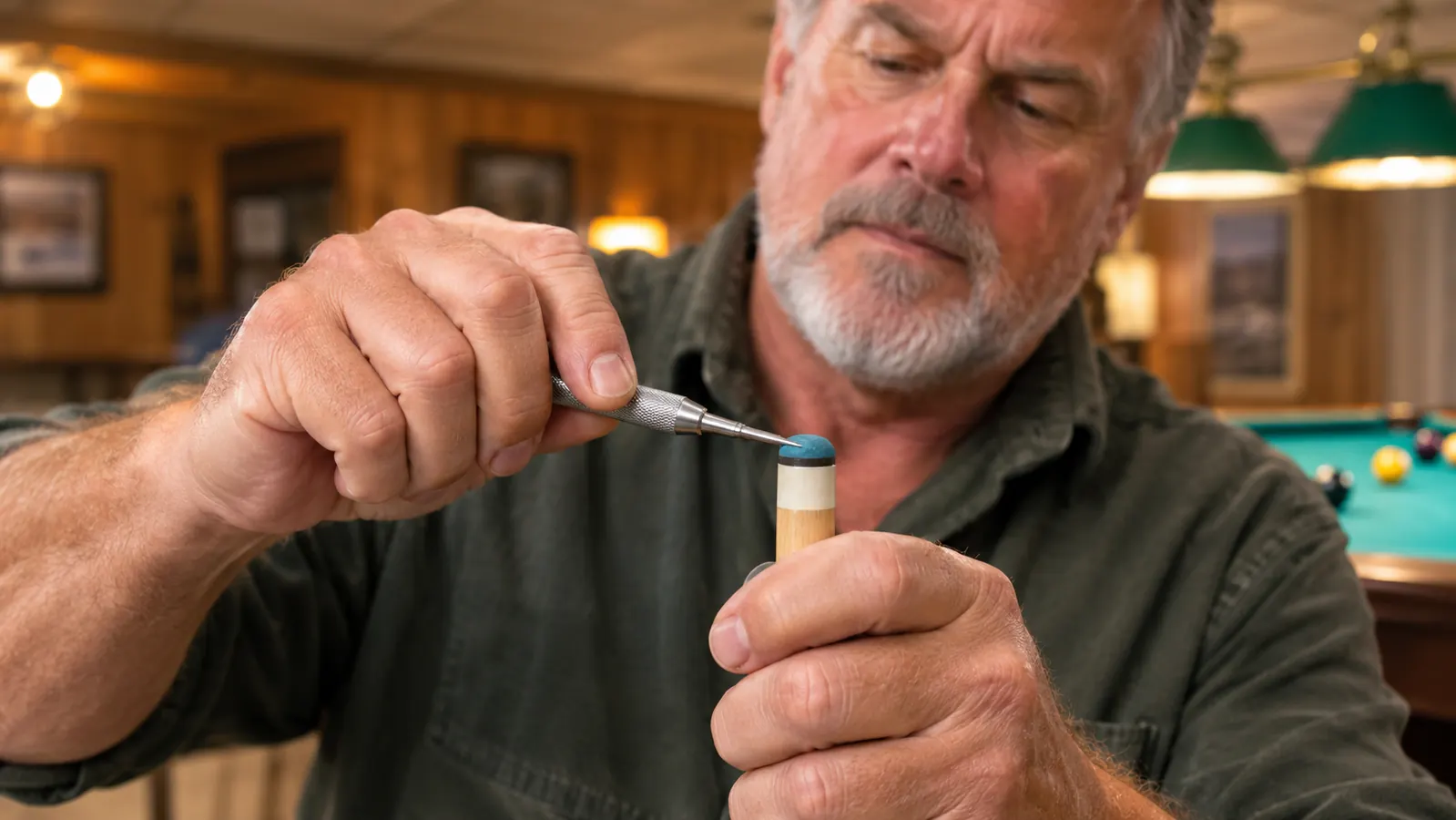
The shaper is the side with the abrasive curve. Its job is to put a dome on the tip, a contour that matches the curve of a cue ball so the contact is closer to a point than an edge. This is the part that matters most and the part that is easiest to overdo. The instructions tell you to work in light strokes and rotate the cue as you go. I did not do that the first time. I bore down like I was sanding a door and took a nickel tip down to a dime in about ninety seconds. Learn from that. Light pressure, rotate, check it against the light, stop before you think you should.
One caution on the shaper. It removes material fast and there is no gauge telling you when to stop. The first cue I worked on besides my own belonged to a teammate, a decent two-piece he had owned for two years and never touched. The tip had mushroomed out over the ferrule and gone hard as a penny. I gave it maybe eight light passes, turning the cue a quarter turn between each one, and stopped when the dome came back. He shot with it that night and said it felt like a different cue. What I did not tell him was that I had been one pass from going too far. On a worn tip the margin is thinner than on a fresh one.
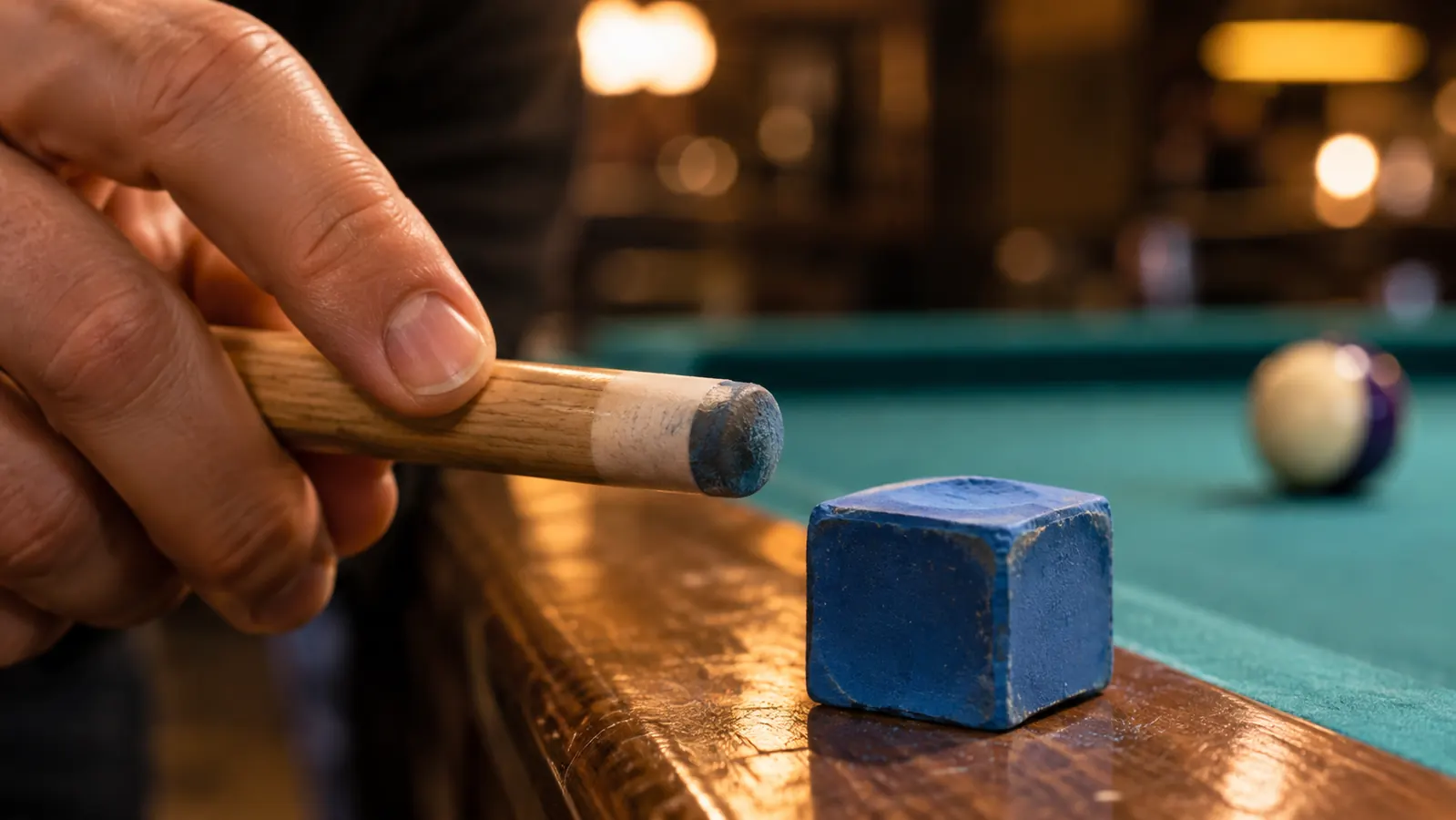
The scuffer is the middle surface and the one I reach for most. It gently roughens the outside of the tip so it holds chalk instead of letting chalk sit on top of it. A glazed tip is the most common reason a decent player miscues, and it is almost never the cue's fault. Two or three passes with the scuffer and a fresh coat of chalk changes the feel immediately. You can tell in the first practice stroke, before you have hit a single ball with any authority.
The aerator is the side with the small pins. It pierces the tip with tiny holes so the chalk has somewhere to grab. Used sparingly it wakes up a tip that has gone slick and will not hold. Used too often it chews a tip up and shortens its life, so I keep it to once a month at most and only when the scuffer is not doing the job. Cuetec put all three surfaces on one piece of metal, and that is the entire idea behind the Bowtie. You are not carrying a shaper, a scuffer and a tip pick. You are carrying one thing that fits in a pocket.
What Changed on the Table
Here is the honest version. The Bowtie did not make me a better pool player. Practice does that, and I still miss my share of cut shots into the side pocket. What it did was remove a variable. Before, my tip condition was a mystery to me. Some nights the cue ball came off the tip clean and predictable. Other nights it squirted, and I would blame my stroke, which meant I would start tinkering with my stroke, which made everything worse for a month. Now I know the tip is right because I checked it an hour before league.
The change I can actually measure is in how consistent my draw and follow are. When a tip is glazed, you unconsciously hit harder to get the same spin. That extra speed is where the accuracy goes. With a scuffed tip holding chalk properly, I get the same action out of my normal stroke, and my position play has gotten less erratic. Not because I found some new technique. Because I stopped over-hitting everything by ten percent to compensate for a tip that had quit working.
Where I notice it most is a shot I practice constantly, a low draw from the head string to bring the cue ball back two rails. On a glazed tip I had to stroke it hard enough that I would occasionally poke at it and miss the pocket altogether. In the first month of scuffing before league, I was making that shot with what felt like a lazy stroke, and the cue ball came back further than I expected. That took a couple of weeks to trust. When you have spent years over-hitting everything, dialing back feels like you are not trying.
The other change is quieter. I stopped thinking about my tip. That sounds small. It is not. Half of playing well is having nothing in your head except the shot in front of you, and gear that needs attention takes attention away from the table. Now the tip is a non-issue and I can get on with missing shots for other reasons.
Where It Falls Short
It is small enough to lose and I nearly did. There is no case, no lanyard, no hole for a keyring. If it falls out of your case on the floor of a pool hall, it is gone, and you will not know it until you reach for it before the first rack.
Worth adding a detail to that. The Cuetec Bowtie went through a full wash cycle in the pocket of my work pants, and I found it in the lint trap of the dryer, which is where small metal objects go to die. I wiped it down, ran a thumb across the shaper and the scuffer, and it was fine. No rust, no dulling I could feel. The good news ends there. I only found it because I was looking. If it had gone out with the lint, I would have ordered a replacement without ever knowing what became of the first one.
The shaper punishes impatience. If you are the kind of person who leans on a tool to make it work, you will take too much off a tip, and then you are looking at a re-tip instead of a five minute touch-up. That is on the user and not the tool, but a first-timer should hear it before he starts.
The warranty is 30 days against manufacturer defects, which is short for something you plan to keep for years. In practice it barely matters, because there is nothing on this tool to break. The instructions are also thin. They tell you what each surface is for and not much about how hard to press or how often the aerator is appropriate. I worked it out by ruining one tip. You will probably work it out faster.
What I Was Doing Before
Sandpaper on a flat surface, which is what most of us learned. It works if you are patient and rotate the cue evenly, and you will get a dome eventually. What sandpaper does not do is scuff and aerate, so I was carrying three things in a sandwich bag: a folded piece of 220 grit, a tip pick, and a rough little scrap of something I cannot identify. The Cuetec Bowtie replaced all of it with one item that lives in my case pocket.
The other approach I tried was doing nothing. Just chalk and hope. That is a real strategy and it works for a while, until the tip compresses and glazes, and then you are leaving the cue ball short on position shots and blaming the cloth.
I am not going to tell you the difference is night and day, because it is not. It is the difference between knowing your equipment is right and guessing at it. Given how much of league night is already guesswork, I will take the part I can control.
What I Liked
- Three tools on one piece of metal that fits in a case pocket
- The shaper puts a clean dome on a tip in a couple of minutes
- The scuffer is the surface I reach for weekly, and it does exactly what it claims
- Solid metal at 9.07 grams, no wobble or rattle after months of use
- Ended the glazed-tip miscues I had been blaming on my stroke
Where It Falls Short
- No case or lanyard, and it is small enough to lose
- Easy to over-shape if you press hard on the abrasive
- The aerator needs a light touch or it chews up a tip
- 30-day warranty is short for a tool you keep for years
- Instructions are thin on technique and frequency
When a tip is glazed, you unconsciously hit harder to get the same spin. That extra speed is where the accuracy goes.
Who This Is For
This is for the player who owns a cue and plays enough to notice when it stops behaving. League players, mostly. People who keep a cue in a case and break it out two or three times a week. It is also for anyone who has ever blamed a miss on the table, the cloth or the cue ball and then looked down and realized the tip resembled the surface of the moon. If you are maintaining one cue and you want to stop handing a five minute job to somebody else, this does it, and it does it in a case pocket.
Who Should Skip It
Skip it if you only ever play with house cues. You are not going to shape a bar cue in the middle of a rack and the house does not want you to. Skip it if you already have a cue repair guy you trust and you like handing the work off. Skip it if you want a single tip pick and nothing else, since two of the three surfaces here will sit unused in your case. And skip it if you are the type to press hard on an abrasive to get it over with, because you will take a tip down past where you wanted it and then you will blame the tool.
One Minute Before League Beats a Re-Tip Next Month
Shaper, scuffer and aerator on one metal tool that lives in your case pocket. Keep the tip right and stop giving away racks to a surface you never checked.
Amazon Check Today's Price on Amazon →