
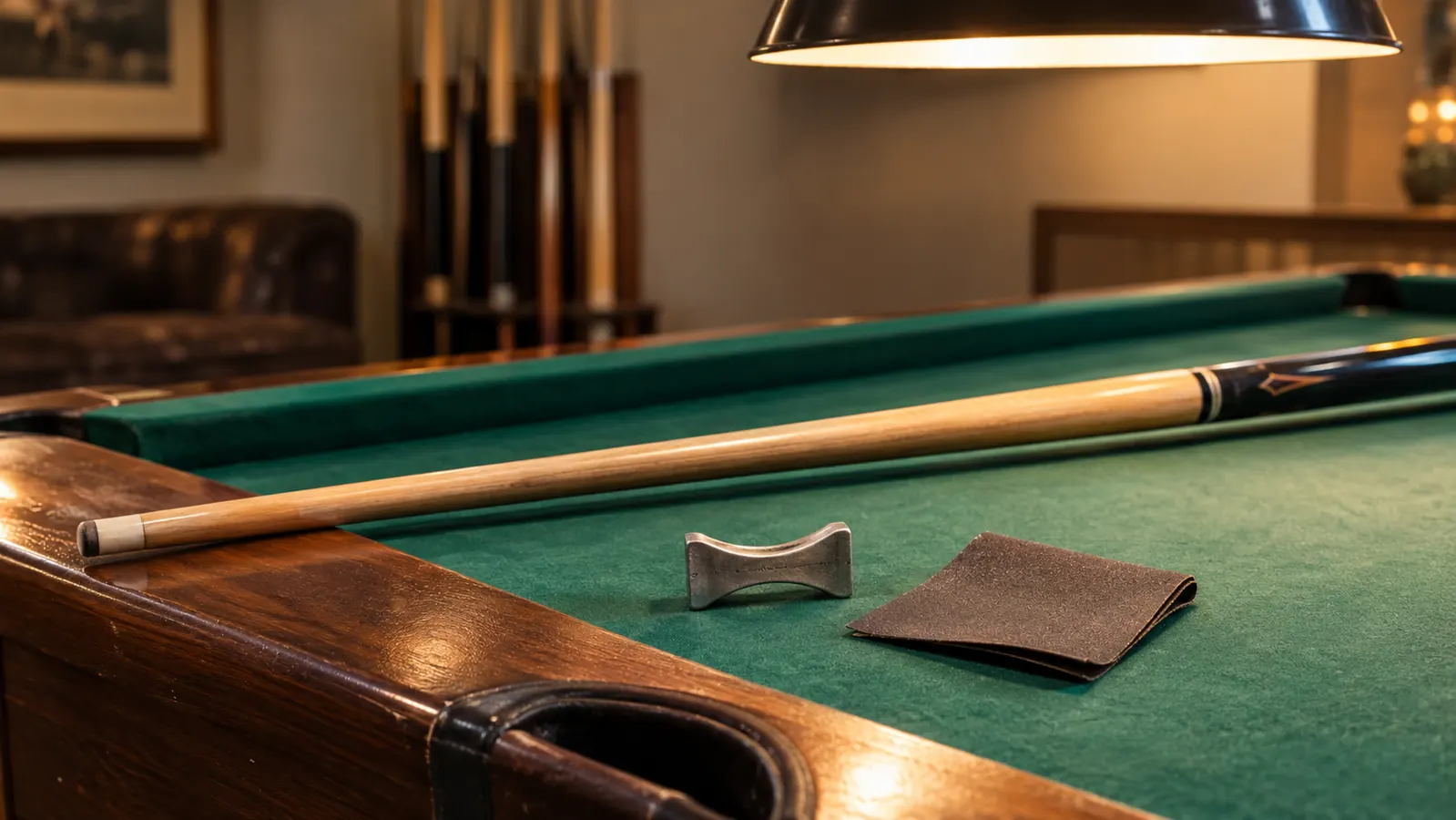
Sandpaper has been shaping cue tips since before either of us picked up a cue. It works. It is also the reason half the tips in my Tuesday night league look like they were chewed on instead of shaped. A flat sheet in a moving hand does not cut a dome. It cuts whatever angle your wrist happened to be at that second. I have shaped tips with 220 grit out of the garage, with the back of a spoon in a pinch, with a scrap of a teammate's sanding block at the hall. Two seasons ago I started keeping the Cuetec Bowtie in my case instead, a small metal three-in-one tool that shapes, scuffs and aerates a tip. After a couple of seasons of using both on my own table in the basement, here is the honest split.
Short answer: sandpaper is the better tool for taking a lot of material off fast, which is exactly what you want on new tip day. The Cuetec Bowtie is the better tool for everything that happens after new tip day, which is roughly 95% of the time you will ever touch a tip. If you are only buying one, buy the Bowtie and borrow a scrap of coarse paper from somebody once a year. If you are reading this because your tip is already in decent shape and you just want it to stay that way, the maintenance tool is the whole answer and the sandpaper is not.
| Cuetec Bowtie | Sandpaper | |
|---|---|---|
| Cutting a dome contour | Shaper cuts a consistent dome, same cut every time | Flat paper in a moving hand cuts whatever angle your wrist is at |
| Roughening the tip for chalk | Scuffer surface, two or three light passes | Fresh grit scuffs fine, worn grit polishes instead of cutting |
| Aerating the tip | Aerator pierces small pinholes so the tip holds chalk | Cannot do it at all |
| Taking a new tip down fast | Not built for heavy material removal | Coarse grit takes a tip down in a fraction of the time |
| Getting started | One small tool to buy and keep | You probably already have a sheet in the garage |
| Learning curve | Three surfaces on one small tool, took me a week to stop grabbing the wrong one | You have used sandpaper since you were a kid |
| Same result over a season | Tool does not wear into a different shape | Grit loads with chalk dust and quits cutting before it looks worn |
| Size and weight | 2.63 by 1 by 1 inches, 9.07 grams, rides in the case pocket | A quarter sheet folds flat and also travels fine |
| Warranty | 30 days against manufacturer defects | None, it is paper |
What the Cuetec Bowtie Actually Does
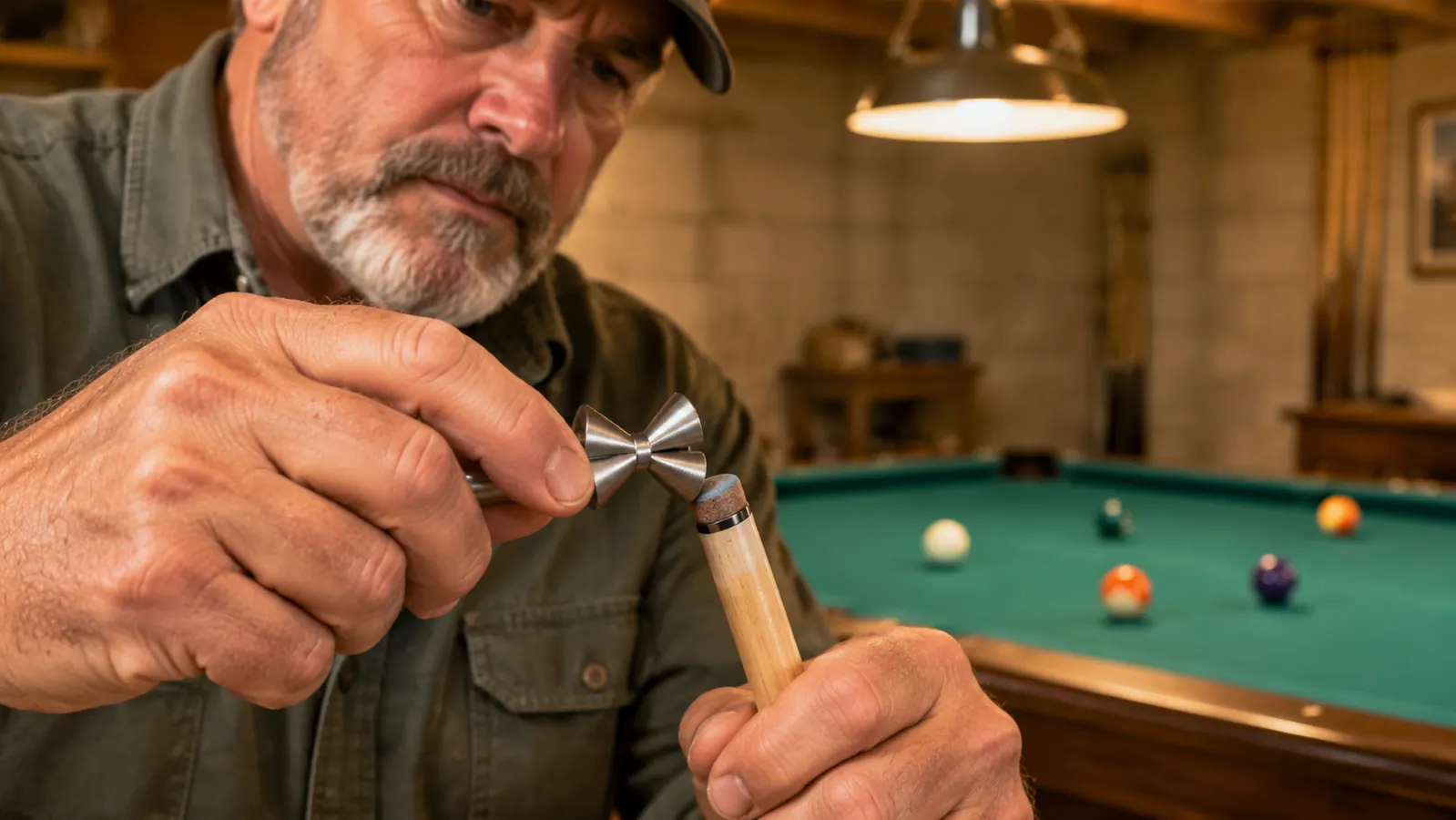
The tool is a small metal plate shaped like the name, 2.63 inches long, an inch wide, an inch tall, and it weighs 9.07 grams. It has three working surfaces on it. One shapes the tip into a dome. One scuffs the surface so chalk has something to grab. One is a cluster of fine points that pierces the tip with small holes. Cuetec ships it with a slip of instructions, and for once the slip is worth the thirty seconds it takes to read.
The shaper is the part that replaces sandpaper for most players. You rest the tool on the rail, set the tip into the curved cut and turn the cue. The cut is fixed. That is the entire point. Your wrist is not deciding the angle, the tool is. Twenty or thirty seconds of turning and the dome comes out concentric with the ferrule instead of leaning off to one side. I keep a nickel in the little drawer under the table as a size check, since a nickel on its face is about the dome most of us are after, and after a few months of turning the cue in that cut my tip sits within a hair of that curve all the way around. The first Sunday I used it I turned the cue, checked, turned it again, checked again, and after about four checks I realized I was checking out of habit and not because anything had moved.
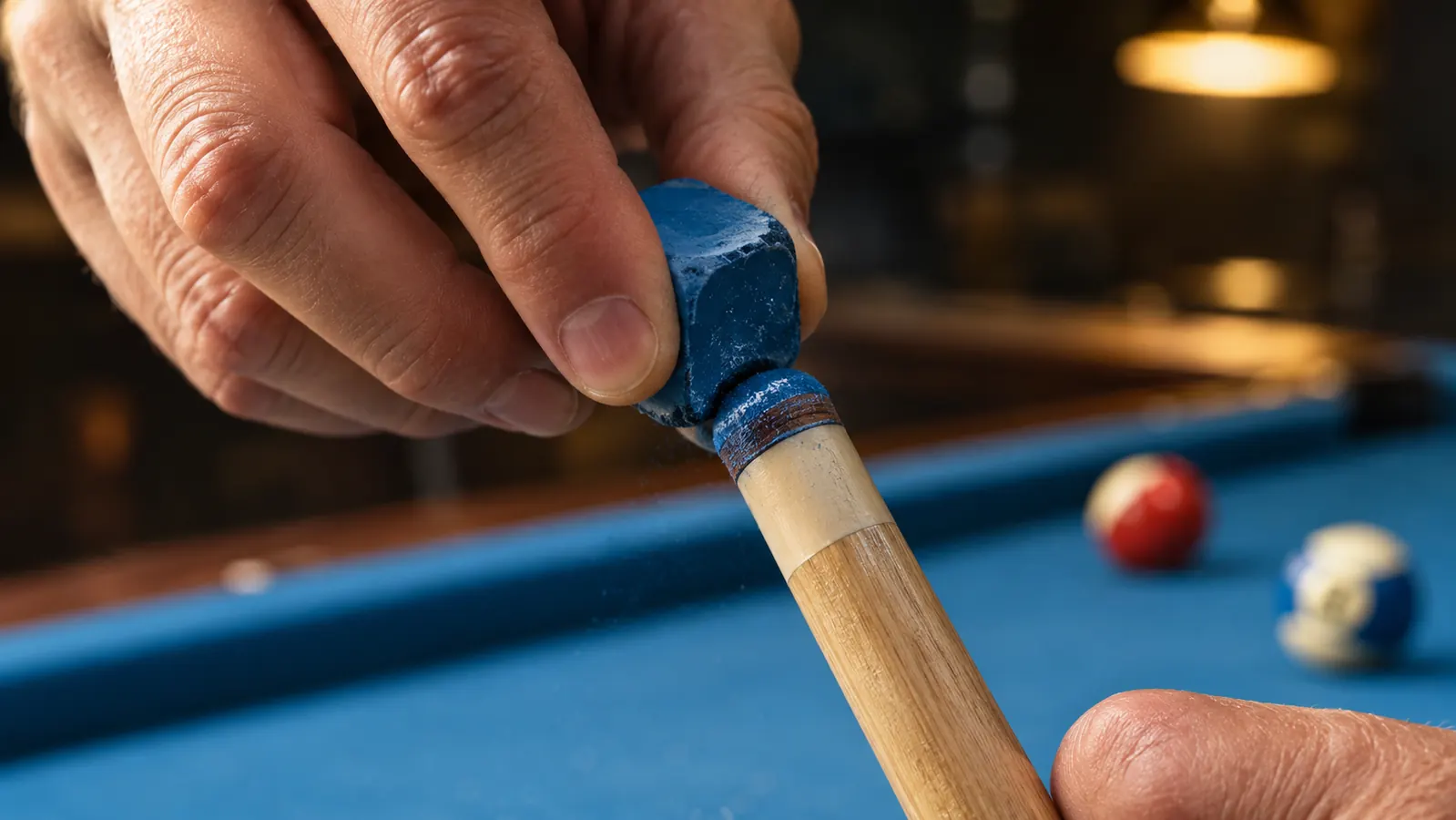
The scuffer handles the weekly maintenance. A few light passes and the surface goes from shiny and glazed to something with a little tooth to it. The aerator I ignored for the first month because it looked like a gimmick. It is not one. A tip that gets scuffed over and over compacts at the surface, and chalk starts sitting on top of it instead of working into it. A dozen small holes every few weeks gives the chalk somewhere to go, and the difference shows up on the second and third rail of a draw shot more than anywhere else.
The aerator is the part I assumed was nonsense, and it is the part that stopped my tip going glassy every three weeks.
What Sandpaper Actually Does
Sandpaper is abrasive glued to a backing. That is all it is, and on a cue tip it does the one job it has always done, which is removing material. A 220 or 240 grit sheet will take a tall new tip down to a workable height faster than any hand tool I own, and it does not care whether the tip is leather, layered or a plain single. Speed is the whole advantage. If you have ever spent twenty minutes hunched over a brand new tip trying to get it down to something playable, you know why the paper stays in the toolbox.
The last time I used a full sheet was a Tuesday night at the hall, about an hour before league, helping a teammate whose tip had gone hard and shiny as a piece of glass. Two minutes with a 240 sheet got the glaze off and got him through the night. That is the honest use case: fast, ugly, effective, and not something you want to repeat every week or the tip stops being a tip and starts being a stub. I put the sheet back on the bench after that and did not touch it again for months.
The problem is not the grit. The problem is the backing. Paper has no shape of its own, so it takes the shape of whatever is pressing it, and whatever is pressing it is your hand. That is fine when the tip is a fresh tall cylinder and you are just knocking the top edge off. It is not fine when you are trying to true up a tip that has gone flat on one side, because the paper follows the error instead of correcting it. You end up polishing the mistake. I have done it. Half the guys in my league have done it. That is why the tip on the house cue at the hall looks like a ramp.
Where the Cuetec Bowtie Wins
It wins on anything that repeats. Shaping a tip once is not hard, but shaping it the same way every three weeks for a whole season is where a hand and a sheet of paper start drifting. The Bowtie gives you the same cut on the first of the month and the last, because nothing about the tool changes between uses. My tip stays round and stays centered on the ferrule, and I have stopped thinking about it between maintenance sessions, which is the actual goal. Gear that gets out of the way is gear that is working.
It also wins on the small stuff that sandpaper cannot do at all. The scuffer brings a glazed tip back in about fifteen seconds. The aerator does a job no sheet of paper can do. And the whole thing lives in the pocket of my case at 2.63 by 1 by 1 inches and 9.07 grams, so it is there when a teammate asks me to look at his tip between games, which happens more than you would think. Cuetec covers it for 30 days against manufacturer defects, which is not a long warranty, but a metal plate does not have many ways to fail.
Where Sandpaper Wins
It wins on removal, and it wins big. When a tip is fresh out of the package and sitting a quarter inch too tall, the paper is the right tool and the Bowtie is the wrong one. The shaper is a finishing cut, not a roughing cut. Trying to take a brand new tip down with it would take you the better part of an evening and you would be there long enough to start getting sloppy. Same story for a tip that has been let go for a year and gone mushroom shaped. Coarse grit first, then the shaping tool once there is something worth shaping.
It also wins the honesty contest on two counts. You almost certainly already own some, so the cost of trying it is nothing. And you already know how to use it, which is worth more than it sounds like. A three-surface tool has a small break-in period where you are still figuring out which side is the scuffer. I was not good at it for the first week. Sandpaper has no such period. You pick it up and you are already competent.
One more thing on that honesty count. Paper wears out and does it quietly. The grit loads up with leather dust and chalk, and then it polishes where it used to cut, and you cannot tell by looking at the sheet. I have thrown out paper that felt perfectly fine in the hand and cut nothing at all. The Bowtie has no equivalent failure mode, because a metal surface does not load up. That matters when you are the guy everybody hands their cue to at the hall.
Your tip is already shaped. Keep it that way without thinking about it.
The Cuetec Bowtie is the maintenance tool, the one that handles the shape, the scuff and the chalk grip in under a minute between league nights. It is the one that stays in the case pocket.
Amazon Check Today's Price on Amazon →The Order I Actually Do It In
New tip day is the only day the sandpaper comes out. I take the tip down with a coarse sheet until it is close to final height, keeping the cue moving and the paper moving so I am not grinding a flat spot into one side. I stop while there is still a little material to work with. That is the part people get wrong, and it is the reason I keep the paper on the bench and not in the case. I do this part with the shaft out of the case and a rag under it so I am not dropping grit onto the slate, and I count. Forty strokes one way, rotate the cue a quarter turn, forty more. That sounds fussy, and it is, but it is the difference between a tip that comes out level and a tip with one shoulder lower than the other, which is what I lived with for years before I started paying attention.
From there the Cuetec takes over for the rest of the tip's life. The shaper goes on first and stays on the tip until the dome is even all the way around. Then a few passes with the scuffer. Then the aerator, and I do that one less often than the scuffing, maybe every third or fourth session. The whole routine from picking the cue up to putting it back down is under a minute, and I do it on a Sunday afternoon while I am already down there.
The rest of the week the cue just plays. That is the thing I did not expect when I switched. When the tip is right and stays right, you stop adjusting your stroke to compensate for it. The cue ball goes where you aimed it because the tip is grabbing the way it is supposed to. Nobody is going to hand you a trophy for that, and it will not fix a crooked stroke, but it removes one small thing that was quietly working against you.
What I Liked
- Shaper cuts the same dome every time, no wrist involved
- Scuffer and aerator handle weekly upkeep in under a minute
- 2.63 by 1 by 1 inches and 9.07 grams, lives in the case pocket
- Metal body does not wear into a different shape over a season
Where It Falls Short
- Not the tool for taking a new tip down fast
- Three surfaces on one small tool, took me a week to stop grabbing the wrong one
- 30 days of warranty against manufacturer defects is not long
- Does nothing for a player who never cleans his tip in the first place
Who Should Buy Which
Buy the Cuetec Bowtie if you already have a tip you like and you want it to stay the shape it is. That covers most league players I know. Buy the Bowtie if you have ever looked down at your tip between shots and could not remember the last time you touched it. Buy the Bowtie if you are tired of a tip that goes shiny and starts sliding off the cue ball on the soft shots. It is a maintenance tool and it is honest about being one.
Keep sandpaper in the toolbox, not the case. You need it on install day and you need it when a tip has been neglected long enough that there is real material to remove. A coarse sheet and a finer sheet will do everything the rough work requires, and then you put them away and let the shaping tool handle the rest. If you are the guy who installs his own tips, you already know this. If you are the guy who pays somebody else to install them, you may never need sandpaper again.
One small tool, one minute a week, and one less thing to think about over the cue ball.
The Cuetec Bowtie shapes, scuffs and aerates. It rides in the case pocket and it is the only tip tool I have used steadily for two seasons.
Amazon Check Today's Price on Amazon →A note on the reviews, since I looked them up myself before buying. The tool has been around long enough that most of the complaints are about the same two things: people expecting it to take a new tip down to size, and people who did not read the slip and used the shaper like a scraper. Neither of those is the tool's fault. Read the slip, use the shaper as a finishing cut, and it does what it says on the package.