
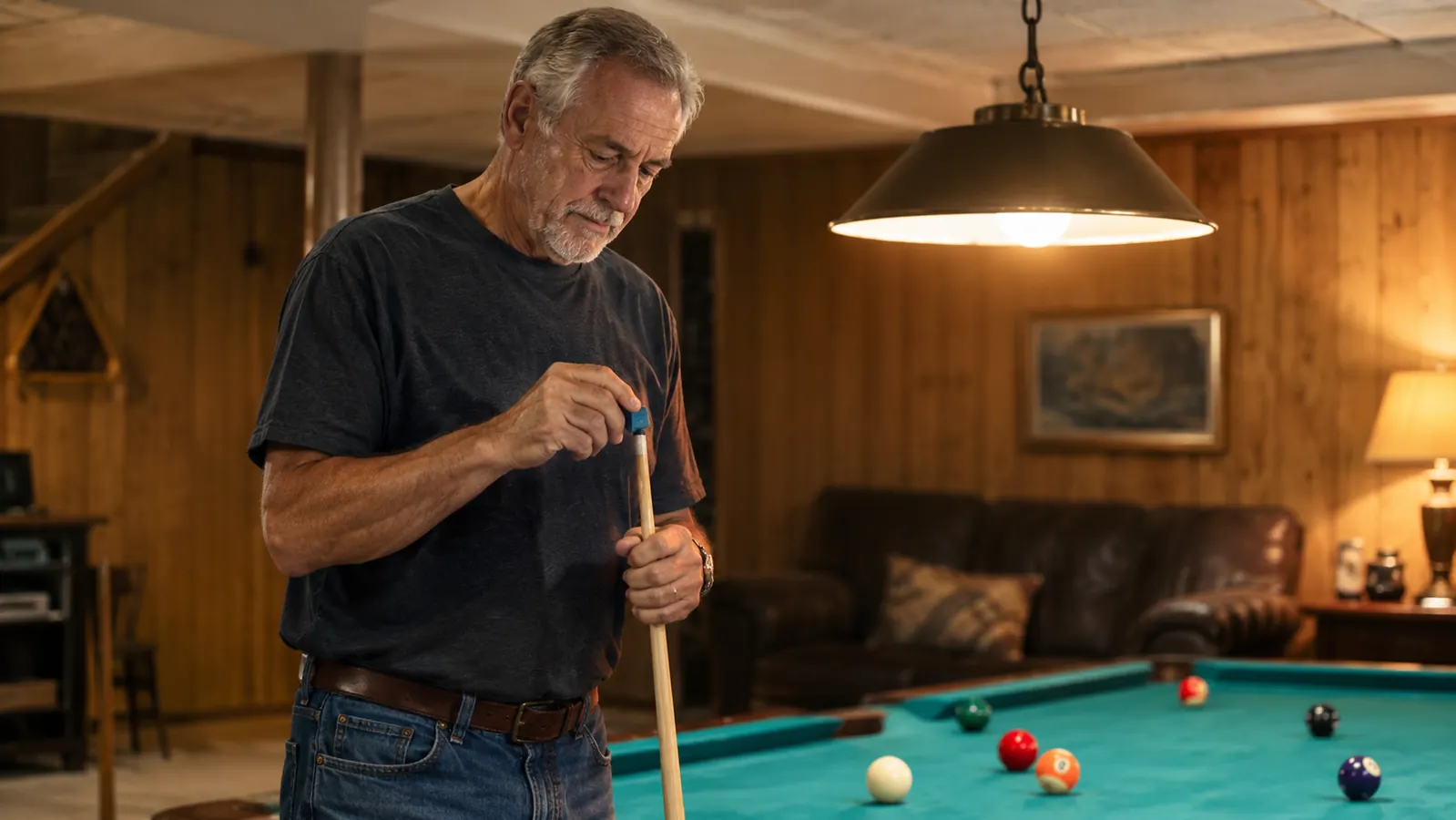
Nobody tells you that most of the dirt on a pool table is your own chalk. I have played Tuesday night 8-ball in the same league for about twenty years, and for most of that time I cleaned the table in my basement the way everybody does. I took the brush out of the drawer, ran it up and down the cloth, and felt like I had done something useful. Then I ran my hand across the felt five minutes later and it was gritty again. The brush was not removing the chalk. It was rearranging it.
That is the honest starting point for this review. The Quick Clean Pool Table Felt Cleaner is a spray and wipe product from David Hodges' Quick-Clean. You spray the cloth, you wipe it with a cloth, and the whole job takes less than a minute. That is the entire pitch, and on paper it sounds like nothing. What nobody tells you is why it works when brushing does not, and there are a few things about living with it that I had to learn the slow way on a used 8-foot table I have had in the basement for about twelve years.
The Quick Verdict
It lifts chalk out of the cloth instead of pushing it deeper, and that is the one thing a brush cannot do. It will not fix stains, burns or worn spots, and the bottle empties faster than you expect.
Amazon Check Today's Price →Your cloth is grey because the brush stopped working
Spray it, wipe it, and the chalk comes up instead of going down. Under a minute per cleaning, no brushing, no vacuuming.
Amazon Check Today's Price on Amazon →What Nobody Tells You About Pool Table Cloth
Cloth is a woven fabric with a nap, and chalk dust works its way down into that nap instead of sitting on top of it. A brush catches the surface fibers and drags them, which lifts some of the dust and pushes the rest deeper. A vacuum pulls at the weave, and on a glued-down bed cloth that is not a thing you want to be aggressive with. Neither one removes what is actually down in the material. That is why a table can look clean and still feel slick and gritty at the same time.
The maker's own claim is that this spray extends the life of your cloth by 40 to 50 percent by eliminating the brushing and vacuuming. I cannot verify a percentage like that on one table in one basement, and I am not going to pretend I can. What I can tell you is that the reasoning behind it makes sense to me. Abrasion is what wears cloth out. Every pass with a stiff brush is abrasion. If the spray lifts the chalk and a cloth carries it away, you are not grinding anything into the weave.
There is a second layer to this that took me a while to see. Chalk is a grit. That is the point of it. When it sits down in the cloth and balls roll over it, that grit works against the fibers every single shot. So the same dust that makes your table feel slick is also sanding your cloth a little bit all night long. Nobody tells you that either. A table that feels gritty is a table that is wearing faster than it should, and the gap between a cloth that lasts four years and one that lasts six may be nothing more than how often somebody took ten minutes with a rag.
The other thing nobody mentions is the surface sitting on your table. Good cloth is not cheap, and recovering a table is a real job. You either pay somebody or you spend an afternoon with a staple puller and a lot of strong opinions. Once I understood that a dirty cloth wears faster, cleaning it stopped being housekeeping and started being maintenance, the same way I change the furnace filter in the fall whether it looks dirty or not.
One more item worth knowing, especially if you just had your table recovered. New cloth slides. The cue ball and the object balls run longer than your brain expects, and you overcut everything for a couple of weeks. The listing says this spray eliminates the table slide you get with new cloth. Wiping the cloth down does change how the balls roll, in the direction of slower and more predictable. Whether that is the product or just the removal of chalk, I cannot separate the two, and I am not going to claim I can. I know what I saw and I know what I cannot prove.
How I Actually Use It
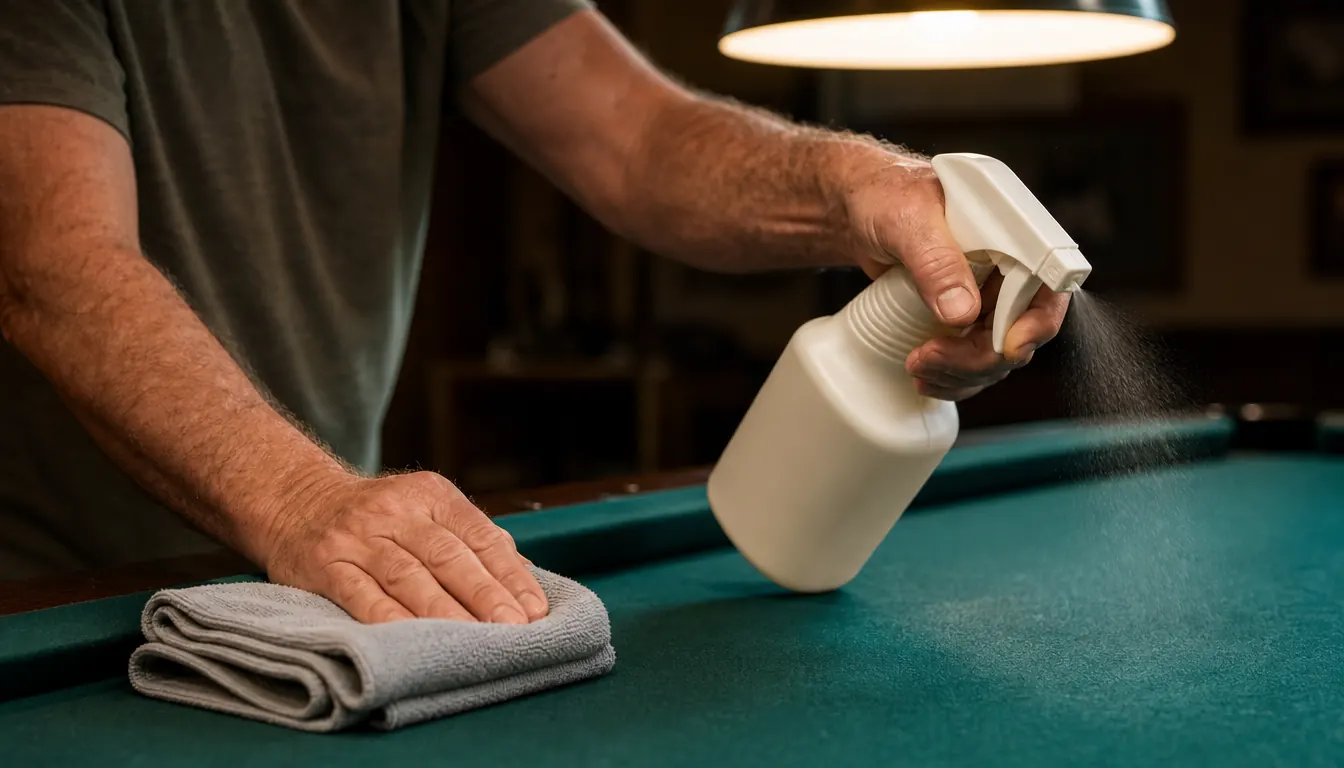
The first time, I did what most people do. I sprayed the whole table, waited, and wiped. That was too much product and too little patience. What works better for me is sections. I work one quarter of the table at a time, spray a light pass, wipe with a folded microfiber cloth, and turn the cloth to a clean face before I move on. Four sections, four clean faces. If you wipe with a dirty cloth you are just moving the chalk around again, and you have wasted the spray on top of it.
The rails and the area around the pockets need the most attention. That is where chalk piles up, because that is where people stand and chalk their cue. I do the rails before the bed, using the same light pass and a clean part of the cloth, and I am careful at the pocket liners and the corner castings. You do not want to soak anything near the seams. A light mist and a wipe is enough. The David Hodges' Quick-Clean bottle is listed at 18 ounces, and it is a spray, not a pour, which is exactly what you want near a seam.
The other thing I had to learn is how little spray you actually need. My instinct was to wet the cloth down, which is wrong twice over. Too much liquid pushes moisture into the weave and toward the seams, and then you have to stand there waiting for it to dry. A light mist that darkens the surface for a second and disappears is right. If you can see standing droplets, you used too much. It took me two cleanings to stop overdoing it, and I probably wasted a third of a bottle learning that lesson.
Under a minute is accurate if you know what you are doing. My first few cleanings took three or four minutes out of caution. Now it is a quick pass before I rack, and the cloth is dry by the time I have the balls out of the pockets. I clean before I play rather than after, because chalk that sits overnight in a humid basement has time to settle in. Your basement may be drier than mine. Mine has a dehumidifier running from May to October for a reason, and that machine does more for the table than any bottle does.
What It Does Not Fix
This is a cleaner, not a restoration. If you have a burn mark from a cigarette, a ring from a drink, or a spot where dye bled, this will not touch it. If the cloth is worn thin under the break area, no spray is going to put material back. It will brighten a dingy cloth considerably, and the maker says it brings older cloth back to its original color and playing speed, which matched what I saw on a cloth that was about four years old. It will not make an eight-year-old cloth new again. Nothing in a bottle will.
It also will not make you a better player, and I want to be plain about that because the marketing on pool products generally is not plain about anything. Practice makes you a better player. What clean cloth does is remove one small variable. The cue ball rolls true, the cloth stops grabbing, and you stop compensating for a table that is fighting you. That is worth something to a league player who plays the same shots every week. It is not the same thing as improving. I still miss the same cut shots I missed before.
The last thing it will not do is anything about moisture. If your basement gets damp, the cloth will play slow and heavy no matter how clean it is. I run a dehumidifier and I keep the table covered, and those two habits do more for how the table plays than any liquid. If you are looking for a spray to solve a humidity problem, you are in the wrong aisle of the store and I am the wrong guy to ask.
What I Liked
- Lifts chalk out of the cloth instead of pushing it deeper, which is the whole reason it exists
- A full table takes under a minute once you have the routine down
- Keep a second microfiber cloth set aside for the table and it never leaves streaks
- Brought a four-year-old cloth back toward its original color and speed
- Eliminates the need for brushing and vacuuming the bed cloth
- Chlorine free, and it did not leave a ring or a light patch on my cloth
Where It Falls Short
- You use it faster than you expect, and a brush is a one-time purchase that never runs out
- The linen scent hangs in a closed basement for an hour or two after you spray
- Does nothing for burns, drink rings, dye spots or thin spots under the break
- A dirty wiping cloth will just move the chalk around and waste the spray
- Easy to over-apply at first, and the excess has to dry before you can play
The brush was not cleaning my table. It was rearranging the chalk.
The Annoyances Nobody Mentions
The scent. The listing says linen, and it is a clean, laundry-ish smell rather than a chemical one. In a finished basement with the windows shut it hangs around for an hour or two. I do not mind it. My son Mike says it smells like a hotel room, which he does not mean as a compliment. If you are sensitive to fragrance, treat that as a real consideration rather than a detail, because right after you spray it is not a faint smell. It fades, but it announces itself first.
The bottle empties faster than you expect. A light pass uses less than you think, but four sections per cleaning adds up, and I am already on my second bottle of David Hodges' Quick-Clean. A brush is one purchase that lasts a decade. The honest math is that you are paying an ongoing amount for cloth life and consistency rather than for a tool. I decided that trade was worth it for a slate table I plan to keep. A guy with a folding table in a garage would probably decide differently, and that is fine, because he is not the customer for this.
The cloth you wipe with matters more than the spray does. My first attempt used an old rag that had been through the wash with fabric softener, and it left streaks I had to go back over. A plain microfiber cloth, folded, with clean faces, is what works. Buy a pack, keep two set aside just for the table, and wash them without softener. It is a small thing that took me two cleanings to figure out, and I would rather you heard it from me than learned it the same way I did.
About the Claim That It Is Safe on All Cloths
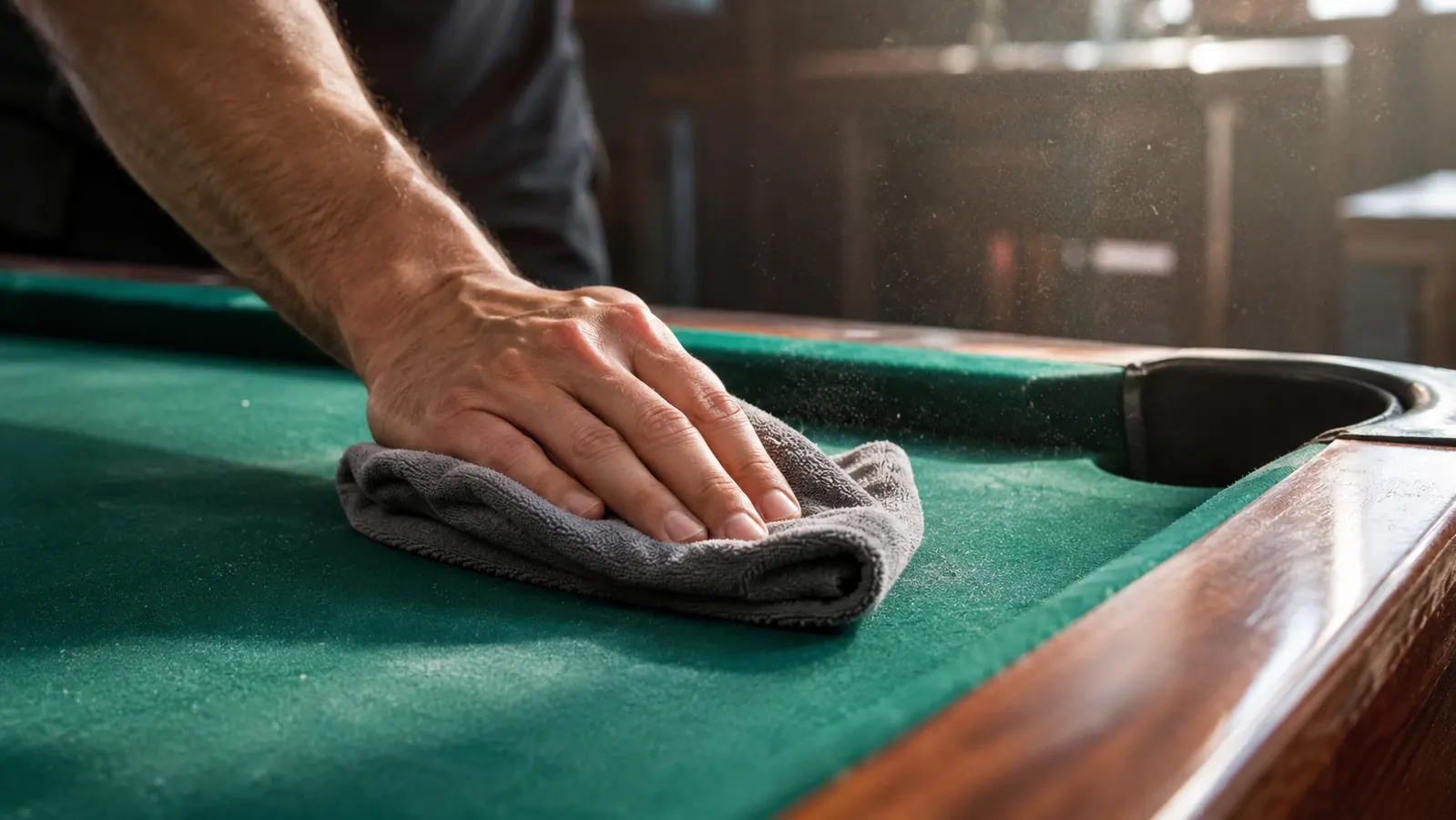
The listing says it is safe on all types and grades of pool table cloth, and that it is chlorine free. I can only speak to one cloth, the worsted cloth on my own table, and I have not tested it on anything else. What I did do is test a corner first, on the cloth under the rail where nobody would ever notice, before I sprayed the bed. Nothing happened. No ring, no light patch, no change in texture once it dried. Twenty years of league-night arguments have taught me to test on the edge before I commit to the middle of anything.
The reason I bothered testing at all is that cloth is the expensive part of a table and it is the part you cannot fix once it goes wrong. A cleaner that lifts chalk is useful. A cleaner that leaves a bleached patch in the middle of your bed cloth is a disaster you look at for the next five years. So I sprayed a small area, wiped it, let it dry, and looked at it with the rest of the basement dark and only the table light on. It came back even. I have not worried about it since.
Brushing, Vacuuming, and What I Do Now
I have not brushed my table since the spring. I have not vacuumed it either. The brush is still in the drawer, and I use it on the rails now and then when I want to knock loose dust off before I wipe, but it is no longer the main event. What replaced it is a spray and a cloth, a few minutes a week, and a cover over the table the rest of the time. That is the entire routine. It is not interesting, which is usually how I know a piece of gear is actually working.
The comparison I keep coming back to is between cleaning and hiding. Brushing hides the chalk by spreading it out evenly so the table looks better. Vacuuming hides it by pulling the top layer off and leaving the rest. Spraying and wiping is the only one of the three that takes the chalk off the table and puts it onto a cloth I can carry to the laundry. Once you see it that way, the routine stops feeling like an extra step and starts feeling like the step you were missing all along.
Who This Is For
This is for the player who owns the table and plays on it regularly. League players with a table at home, guys who host a weekly game, parents with a table in the basement that the family actually uses. It is also for anyone who just had cloth installed and wants good habits from the start, because the first year is when habits get set and a new cloth is when slide is worst. If you already brush once a week and your cloth still looks grey and feels gritty, that is the exact problem this solves. David Hodges' Quick-Clean does what it says on the bottle, and it does it in about a minute.
Who Should Skip It
Skip it if your cloth is already past saving. A spray will brighten a tired cloth, but it will not repair a torn one, and if you have a burn or a bad stain you are going to be unhappy no matter what you wipe on it. Skip it if the table lives in a garage that gets below freezing, because you have bigger problems than chalk. And skip it if you are hoping a product will make you play better, because this is not that and no bottle is. It cleans cloth. That is a smaller claim than most pool products make, and it is the main reason I trust it.
One minute now, or a recovering job later
Spray, wipe, done. If your cloth looks grey and feels gritty no matter how often you brush, this is the step you have been skipping.
Amazon Check Today's Price on Amazon →