

I spent years blaming my cue for shots I should have made. Some nights it was the tip. Some nights it was the cloth. Most nights it was me. I am 61, a retired electrician on Long Island, and I have played Tuesday night 8-ball in a local hall for about 20 years. I also have an 8-foot slate table in my finished basement, bought used about 12 years ago, where I practice most weekends with my son Mike or whichever teammate wants to stop by. When I finally bought a box of Master cue chalk from Imperial, I expected one thing: fewer bare tips. I got that. I also got a lesson in what chalk can and cannot do. This is the honest review I wish I had read before I bought 12 cubes at once.
The product is simple. Master Billiard/Pool Cue Chalk Box, 12 Cubes. Imperial packs 12 cubes in a protective box. There are no moving parts, no app, no dial, no learning curve. You rub a cube on your cue tip and you put it back. That is the whole job. The listing says the chalk delivers a smooth and even coating that will not cake or flake, and that it increases friction between the tip and the ball to minimize miscues. I can speak to the first part from use. I can speak to the second part from a season of league nights where I paid attention.
The Quick Verdict
Good chalk in a plain box. It smooths out your prep and cuts down on bare tips, but it will not fix a worn tip or a rushed stroke.
Amazon Check Today's Price →The box that ended my bare-tip problem, not my bad stroke
Master cue chalk from Imperial comes as 12 cubes in a protective box. I keep one on the table and the rest in the box. If you are still using a cracked cube from a bar rack, this is the easy fix.
Amazon Check Current Price on Amazon →How I've Used It
I keep the box on the shelf under my basement table and one cube in the table storage bin. The rest stay in the box because 12 loose cubes in a cue case is a mess waiting to happen. At the hall, I carry two cubes in my case and leave the box at home. That is not a knock on the box. It is just how I travel. The box is plain and does what a box should do, which is keep the cubes together and keep the edges from getting beaten up in a bag.
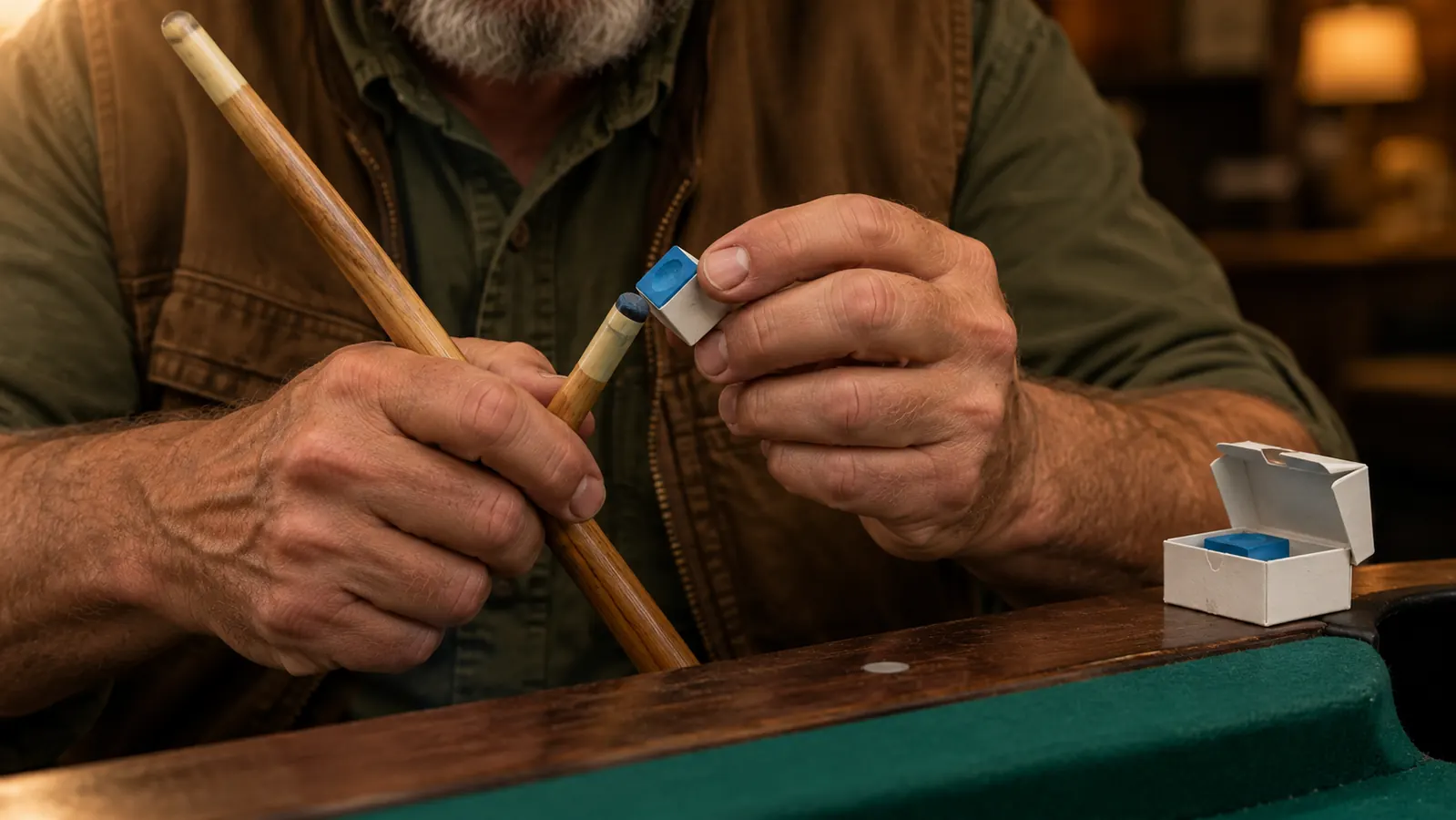
My routine is the same as it has been since I was a kid. I chalk before every shot. Not a grind, not a twist, just a light coat across the tip. With the Master chalk, that light coat is enough. The cube covers the tip evenly and I do not get the little bare patch on one side that I used to get with the chalk in the rack at the hall. I noticed that in the first week. By the second month, I stopped thinking about it, which is the best thing I can say about a piece of table gear.
I have used this chalk on my own cue, the two-piece house-cue-quality stick I played with for years before I started upgrading. I have also used it on a teammate's cue when he asked to try a cube. Same result. It goes on smooth. It does not leave a gritty mess on the ferrule. It does not crumble in your hand. The listing says it will not cake or flake. In my box, that held up.
What Nobody Tells You About Cue Chalk
Here is the part nobody tells you. Chalk is not a performance part. It is a prep part. It does not add spin. It does not fix a tip that has been flattened into a pancake. It does not make a crooked stroke straight. What it does is give the tip something to grip. If the tip is smooth and the chalk is bare, the cue can slide off the ball. That is a miscue. The Master chalk gives you a consistent coat, so the tip has a better chance to do its job. That is the whole promise, and it is enough.
The second thing nobody tells you is that most players use too much chalk. They grind the cube into the tip like they are trying to start a fire. That builds up a crust. Then they wonder why the tip feels dead. With this chalk, I use less. A light coat, maybe two passes, and I am done. The coating is even. It does not cake. That matters because a caked tip can glaze over and then you are back to miscues. The chalk did not make me a better player. It made my prep more consistent.
The third thing is that color matters more than you think, but not in the way the ads suggest. Imperial offers a variety of colors so you can match the chalk to your felt and cut down on visible marks. I have a standard table cloth and I do not obsess over it. But if you have a nice home table and you hate chalk dust on the cloth, matching the chalk to the felt is a practical move. It is not a style thing. It is a cleaning thing.
The fourth thing is that a box of 12 is a commitment. You are not buying one cube and seeing how it goes. You are buying a supply. For me that was fine. I play at home most weekends and in league on Tuesdays. A cube lasts me a while, and I like knowing there is another one in the box. If you are the type who tries a new chalk every month, a 12-cube box is more than you need. That is not a flaw in the chalk. It is a mismatch with your habit.
The Part That Actually Matters: Consistency
I tracked my miscues for a month of Tuesday league play, not because I am a scientist, but because I am retired and I have time. Before the Master chalk, I could count on at least one ugly miscue a night, usually on a draw shot where I got a little quick. In that month, I miscued twice. Same cue. Same tip. Same stroke, more or less. The only change was the chalk. That is not a transformation. It is a small edge. But in 8-ball, a small edge on a shot you need to stop is the difference between a run and a turn at the table.
The coating is the reason. It goes on smooth and even. When I look at the tip after a few shots, I see a full face of chalk, not a patchy one. It did not shed all over my fingers. The listing says it will not flake. I did not have a pile of dust in the box. I did not have chunks breaking off. That is a low bar, but I have used chalk that failed it.
The 12-cube box is also a small quality-of-life thing. I used to buy chalk one cube at a time and lose it. Now I have a box. When a cube gets low, I swap it. When a friend needs one, I hand one over. That sounds trivial until you are at the hall and the only chalk in your case is a broken nub. The box solves a stupid problem. Stupid problems are the ones that cost you focus.
I also like that I can keep one cube in the basement and two in my case without worrying about running out. That is not a performance claim. It is just convenience. The chalk is good enough that I do not think about it during a match, and that is the point. If you are thinking about your chalk, you are not thinking about the table.
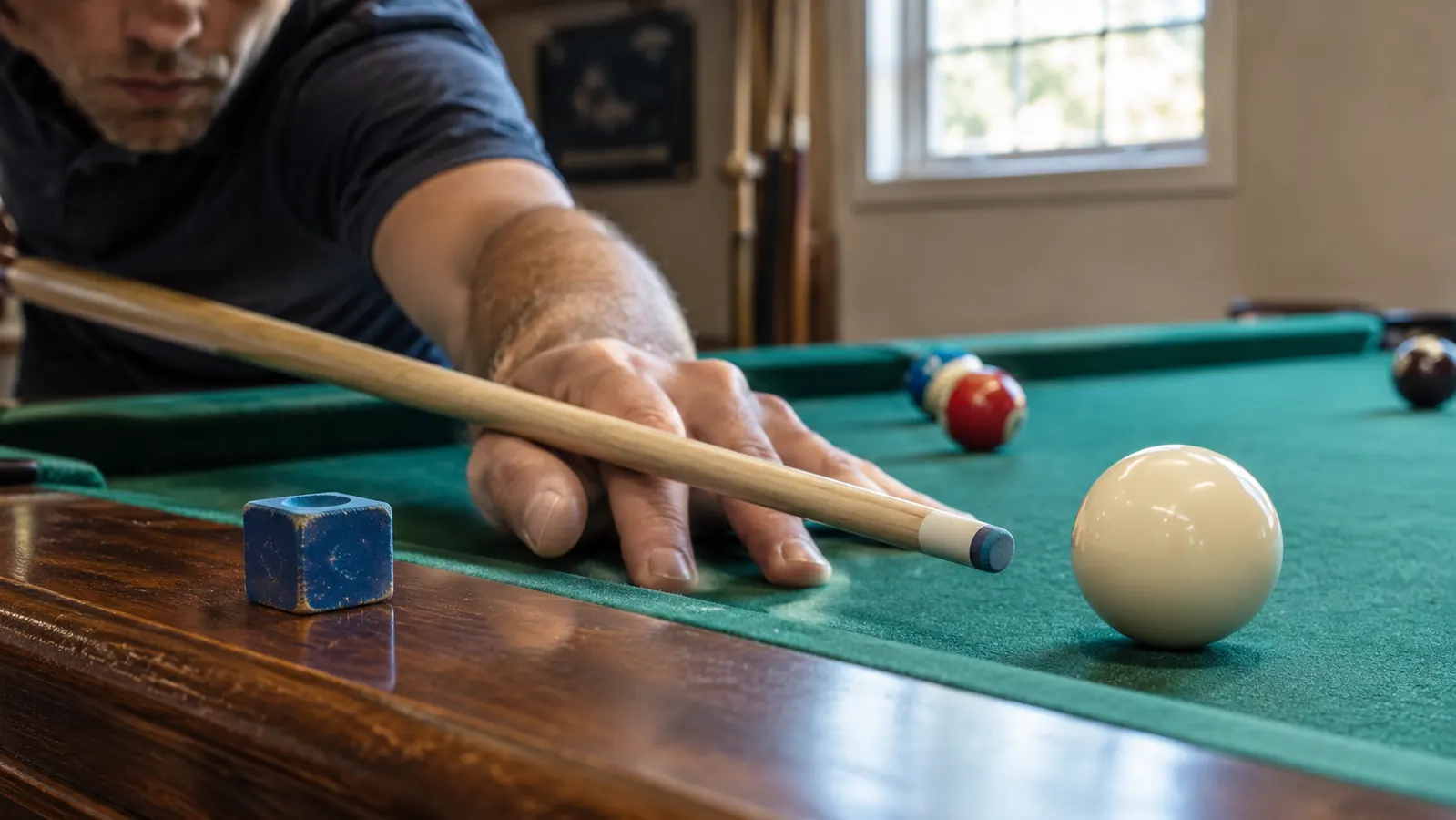
One shot tells the story better than the miscue count. On my basement table, there is a long draw shot into the side pocket that I use to warm up. It is not a hard shot, but it needs a clean tip. With the bar chalk, I would sometimes see the cue ball slide instead of bite. With the Master chalk, the tip grabs the same way most nights. I am not saying the chalk made the shot. I am saying I stopped worrying about the tip before I pulled the trigger.
I miscued twice in a month of league play. Before this chalk, I could count on at least one a night. Same cue, same tip, same stroke.
What It Will Not Fix
If your tip is worn down to the backing, this chalk will not save you. If your tip is glazed and hard, it will not save you. If you stab at the ball instead of stroking through it, it will not save you. I say that because chalk reviews tend to turn into promises. This is a box of chalk. It is good chalk. It is not a cue repair kit and it is not a lesson.
The box is also not something I would call heavy duty. It is a protective box, and it does that job on a shelf. If you jam it into a crowded cue case, the corners will show it. That is a small con. I keep the box at home and carry two cubes, so it does not bother me. If you are the kind of player who throws everything in one bag, plan on a zip bag for the cubes.
The last limit is the one that matters most. This chalk will not make you a better player overnight. Practice does that. Gear just stops getting in the way. If you are looking for a purchase that fixes your aim, you are going to be disappointed. If you are looking for a purchase that removes one small variable from your pre-shot routine, this is it.
What I Liked
- 12 cubes in one protective box, so you are not hunting for a single cube.
- Smooth, even coat that did not cake or flake in my box.
- Cut down on bare tips and miscues when my tip was in good shape.
- Variety of colors lets you match the chalk to your felt.
Where It Falls Short
- It will not fix a worn, glazed, or misshapen tip.
- The box is a storage box, not a travel case.
- 12 cubes is more than a casual bar player needs.
- It will not replace practice or a repeatable stroke.
The Box and the Little Annoyances
The box is the part I have the most mixed feelings about. It is a protective box, and it keeps 12 cubes together. That is exactly what the listing says it does. It is not a travel case. The lid is simple and the box lives on a shelf in my basement. Mine is fine because I do not abuse it. If you are hard on gear, plan to move the cubes to something sturdier for the road.
The cubes themselves are consistent. I have not found a dud in the box. They are not so soft that they disappear in a week. They hold their shape well enough to keep a clean edge for chalking. I do not have a lab test for that. I have a season of use and a tip that still looks like a tip. That is enough for me.
How It Compares to the Chalk in the Rack
The chalk in the rack at the hall is a mystery. It might be good. It might be a cube that has been dropped on the floor and put back. It is usually worn into a shape that does not fit the tip. That is the real competition. The Master chalk is better because it is consistent. You know what you are getting. You are not sharing a cube with 40 other players. That alone is worth the switch for a league player.
I have used other name-brand chalk over the years. Some are a little grittier. Some are a little cleaner. The Master chalk sits in the middle for me. It goes on smooth, it stays on the tip, and it does not make a mess. I would not tell you to throw away a chalk you already like. I would tell you that if your current chalk is a bar rack cube, this is a clear step up.
I also noticed the chalk does not leave a heavy ring on the cue ball. That is not a scientific measurement. It is a look at the cue ball after a rack. The cloth stays cleaner. The balls stay cleaner. If you play on a home table that you paid to have covered, that matters more than it sounds.
Who This Is For
This is for the league player who owns his own cue and is tired of the chalk in the rack. It is for the home table owner who wants a box on the shelf and a cube that is not covered in somebody else's hand sweat. It is for the player who understands that a miscue is usually a prep problem or a stroke problem, and who wants to rule out the prep problem first. If you play a few times a week and you keep a cue case, the Master chalk from Imperial is an easy yes.
It is also for the player who likes a tidy table. The variety of colors lets you match the chalk to your felt, and the smooth coating means less crumb on the cloth. I am not a neat freak about my basement table. I am also not going to pretend I do not notice when the cloth is covered in chalk marks. This helps.
Who Should Skip It
If you play once a month on a bar table and use the house cue, skip it. You do not need 12 cubes. You need the cube that is already sitting on the rail. If you already have a chalk you like and it is doing the job, skip it. The Master chalk is better than the worst chalk I have used. It is not so much better than every other decent chalk that you need to throw yours out.
If your tip is in bad shape, skip it until you get the tip fixed. Chalk is not a bandage. If you are looking for a cube that adds English and makes your stroke smooth, skip it. That cube does not exist. If you are the kind of player who loses every small item he owns, maybe buy a smaller pack. Twelve cubes is a lot to lose. But if you can keep a box on a shelf, it is the better buy.
If your tip is bare and your chalk is a mystery, start here
Twelve cubes in a protective box, with a smooth coat that does not cake or flake. It will not make you a league champion. It will stop chalk from being the weak link.
Amazon Check Current Price on Amazon →